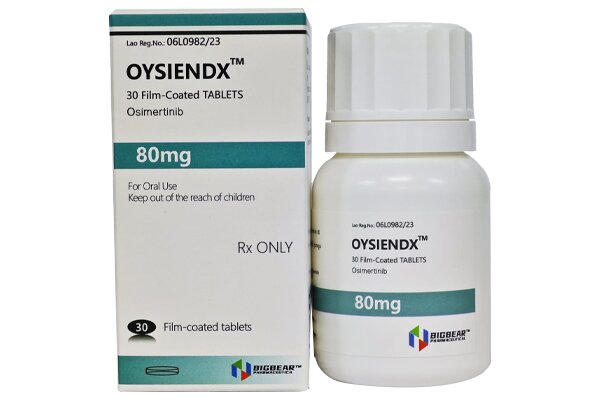
The U.S. Food and Drug Administration (FDA) has approved TAGRISSO (osimertinib) for first-line treatment of patients with metastatic non-small cell lung cancer (NSCLC) whose tumor cells are found to have epidermal growth factor receptor (EGFR) exon 19 deletion or exon 21L858R mutation.
This approval is based on a multicenter, international, randomized, double-blind, active-controlled trial (FLAURA, NCT02296125). The trial was conducted in 556 patients with unresectable or metastatic NSCLC who had EGFR exon 19 deletion or exon 21L858R positive mutations and had not previously received systemic therapy for advanced disease. Patients were randomized (1:1) to receive standard of care (SOC) treatment with once-daily oral osimertinib 80 mg or once-daily oral gefitinib 250 mg or erlotinib 150 mg. Of the patients randomly assigned to the SOC, 20% received TAGRISSO as their next anti-tumor treatment regimen.
The median progression-free survival (PFS) was 18.9 months (95% CI: 15.2, 21.4) in the osimertinib group and 10.2 months (95% CI: 9.6, 11.1) in the SOC group (HR 0.46 (95% CI: 0.37, 0.57), p < 0.0001). The overall confirmed response rates were 77% and 69% in the osimertinib and SOC groups, respectively. The mean duration of response was 17.6 months in the osimertinib group and 9.6 months in the SOC group. Survival outcomes could not be estimated or compared in the analysis of primary PFS due to the small number of deaths.
The most common adverse events (occurring in at least 20% of patients treated with osimertinib) were diarrhea, rash, dry skin, nail toxicity, stomatitis, and decreased appetite. Serious adverse events were reported in 4% of patients treated with osimertinib. The most common serious adverse reactions (≥1%) were pneumonia (2.9%), ILD/pneumonia (2.1%), and pulmonary embolism (1.8%).
The recommended dose of osimertinib is 80 mg orally once daily via TAGRISSO.
Important information about TAGRISSO includes:
• Interstitial lung disease (ILD)/pneumonia: ILD/pneumonia occurred in 3.3% of patients. Permanently discontinue TAGRISSO in patients diagnosed with ILD/pneumonia.
• QTc interval prolongation: Monitor ECG and electrolytes in patients with a history of QTc interval prolongation, those susceptible to QTc interval prolongation, or those currently using medications that prolong the QTc interval. Discontinue TAGRISSO in patients with QTc interval prolongation and then restart at a reduced dose, or permanently discontinue TAGRISSO.
• Cardiomyopathy: Cardiomyopathy occurred in 1.4% of patients. Assess left ventricular ejection fraction (LVEF) before initiating TAGRISSO treatment and every 3 months thereafter.
• Embryo-fetal toxicity: TAGRISSO can harm the fetus. Inform female patients of the potential risks to the fetus and advise them to use effective contraception during TAGRISSO treatment and for 6 weeks after their last TAGRISSO dose. Male patients are advised to use effective contraception for 4 months after their last TAGRISSO dose.
What is TAGRISSO?
TAGRISSO contains the active ingredient osimertinib, a tyrosine kinase inhibitor that blocks the growth and proliferation of EGFR-mutated cancer cells to treat cancer. TAGRISSO is used to treat a type of lung cancer called non-small cell lung cancer. If tests show that your tumor cells have certain changes (such as mutations) in the EGFR gene and have spread to your lungs or other organs, your cancer may respond to TAGRISSO treatment. TAGRISSO may be prescribed in the following situations:
As the first medication you receive for cancer treatment
In some cases, you have received cancer treatment before using other protein kinase inhibitor medications.
Before you use TAGRISSO, please inform your doctor of all your medical conditions, including:
• Allergies to any other medications, foods, preservatives, or dyes
• Inflamed lungs (called "interstitial lung disease"), pneumonia, or other breathing problems
• Heart problems or risk factors that cause heart problems, including symptoms of a condition called long QTc syndrome
• Electrolyte problems, such as sodium, potassium, calcium, or magnesium imbalances
• A history of eye disease
• Pregnancy or planning to conceive. If you take TAGRISSO during pregnancy, it may affect your developing baby. During TAGRISSO treatment, women should use effective contraception for at least 2 months after stopping treatment, and men for at least 4 months after stopping treatment. TAGRISSO may interfere with the effectiveness of oral hormonal contraceptives. Please discuss the most suitable method of contraception with your doctor.
• Breastfeeding or planning to breastfeed. Do not breastfeed while taking TAGRISSO, as it is unknown whether the active ingredients in TAGRISSO pass into breast milk. If so, your child may be affected.
• Any other medications you are taking, including any medications you obtained without a prescription from a pharmacy, supermarket, or health food store.
How should I take TAGRISSO correctly?
Follow all instructions given to you by your doctor or pharmacist. Seek help from your doctor or pharmacist.
Dosage: The usual dose is one 80mg TAGRISSO tablet daily. However, your doctor may prescribe a different dose, such as one 40mg tablet. Follow your doctor's or pharmacist's instructions.
How to take: Swallow the tablet with water. If you can swallow the whole tablet, do not cut, crush, or chew it. If you cannot swallow the tablet, you can disperse it by stirring it in about a quarter cup of water and then swallowing it immediately (it will not completely dissolve). After that, add the same amount of water to the cup and swallow it to ensure no dispersed tablet is lost.
When to take: Take the medication at approximately the same time each day for best results. It does not matter whether you take TAGRISSO before or after eating.
If you miss a dose: If it is less than 12 hours before your next dose, skip this dose and take your next dose at your usual time. Otherwise, take it as soon as you remember. Do not take a double dose to make up for a missed dose, as this may increase your chances of experiencing adverse side effects. If you are unsure what to do, consult your doctor or pharmacist.
If you overdose: Call your doctor immediately or go to the nearest hospital emergency room. Do this even if you do not have any signs of discomfort or poisoning.
What are the possible side effects of TAGRISSO?
• Cough with fever or sudden difficulty breathing. This could be a sign of inflammation in the lungs, called "interstitial lung disease." Most cases are treatable, but some are fatal. If you experience this side effect, your doctor may want to discontinue TAGRISSO.
• Eye pain or inflammation (redness or swelling). Sensitivity to light, tired eyes, blurred vision. This side effect is uncommon and may affect 1 in 100 people.
• Diarrhea. This may come and go quickly during treatment. Tell your doctor if your diarrhea doesn't go away or gets worse.
• Skin and nail problems. Signs may include itching, dry skin, rash, and redness around the nails. This is more likely to occur in areas exposed to sunlight. Regularly using a moisturizing cream on your skin and nails can help. Tell your doctor if your skin or nail problems worsen.
• Increased susceptibility to infections and/or fever symptoms. This can be related to a decrease in the number of white blood cells (leukocytes, lymphocytes, or neutrophils).
• Easy bruising. Bleeding when using the toilet, bleeding from cuts that last longer than normal, nosebleeds or gum bleeding, yellowing of the skin and/or eyes. This may mean your platelet count (the number of cells in your blood that naturally cause them to clump together) is too low, and you may need a blood test.
How should TAGRISSO be stored?
Keep the medication in its original packaging until you need it. If you remove the tablets from the sealed packaging for storage, they may not retain their original condition.
Store the medication in a cool, dry place at a temperature of 20-25°C. Please do not store TAGRISSO or any other medications in the bathroom or near the sink, nor on a windowsill or in a car, as heat and moisture can destroy the medication's activity.
Keep the medication out of reach of children. It is recommended that you store the medication in a lockable cabinet at least 1.5 meters above the ground.