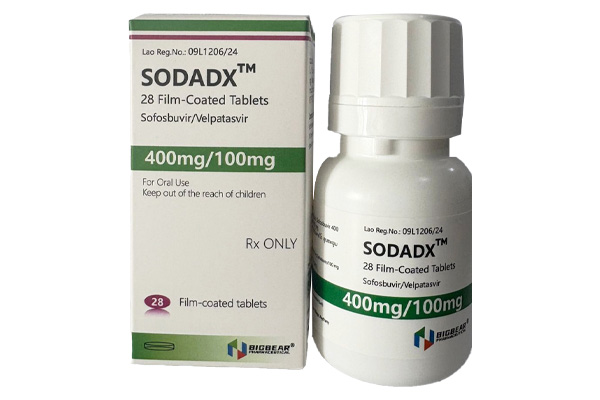
Epclusa, developed by Gilead Sciences, a leading hepatitis C treatment company, had previously received FDA approval in the United States. Epclusa is a fixed-component combination of sofosbuvir and the new drug velpatasvir, used to treat chronic hepatitis C virus (HCV) infection in adults. For patients with moderate to severe cirrhosis (decompensated cirrhosis), Epclusa must be used in combination with ribavirin. It is the first anti-hepatitis C drug approved by the FDA in the United States for all six major genotypes.
Gilead recently announced that the Japanese Ministry of Health, Labour and Welfare (MHLW) has approved Epclusa (sofosbuvir 400mg/velpatasvir 100mg) for the treatment of: (1) adults with chronic hepatitis C virus (HCV) infection with decompensated cirrhosis; and (2) chronic HCV infection with non-cirrhosis or compensated cirrhosis who have previously received direct-acting antiviral therapy (DAA).
In Japan, treatment options for HCV patients with decompensated cirrhosis and those who have previously received DAA therapy are very limited, as no drugs have previously been approved for these two conditions. The approval of Epclusa provides a new treatment option for these two refractory HCV groups and addresses a significant medical need in this market.
Epclusa is a once-daily pan-genotypic HCV cocktail therapy developed for the treatment of patients with all six HCV genotypes (GT-1, -2, -3, -4, -5, -6). This "cocktail" consists of Gilead's marketed blockbuster hepatitis C drug Sovaldi (sofosbuvir) and another antiviral drug, velpatasvir. Sofosbuvir is a nucleoside analog polymerase inhibitor, while velpatasvir is a pangenotypic NS5A inhibitor. In the United States, Epclusa is also approved for patients co-infected with hepatitis C and HIV (HCV/HIV).
Of the three most common hepatitis C drugs, Sovaldi is known as "first-generation Epclusa," Harvoni as "second-generation Epclusa," and Epclusa as "third-generation Epclusa." These three types of drugs offer new hope for hepatitis C patients. However, it's important to note that all three drugs have a black-boxed warning on their US drug labels, indicating a potential risk of hepatitis B virus (HBV) reactivation in patients co-infected with hepatitis C/HBV.