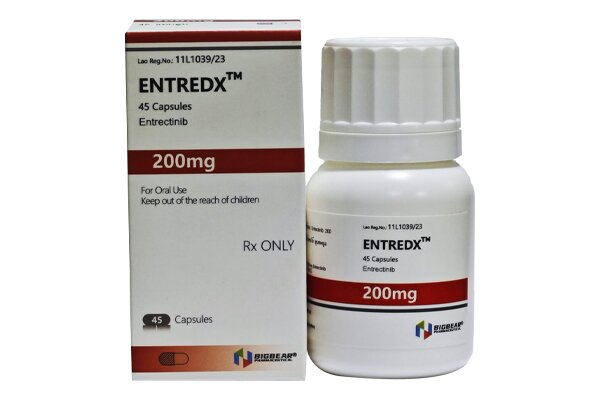
The U.S. Food and Drug Administration (FDA) announced on October 20 that it has granted accelerated approval to Rozlytrek (entrectinib) for the treatment of pediatric patients with solid tumors aged one month or older who have NTRK gene fusions but no known acquired resistance mutations, are metastatic, or have a high risk of severe illness upon surgical resection, have progressed after treatment, or have no satisfactory alternative therapy. Previously, in August 2019, Rozlytrek received accelerated approval for patients aged 12 years and older.
In addition, the FDA has approved a new oral granule formulation, with instructions on how to prepare an oral suspension from the capsules provided in the prescribing information. For patients who have difficulty swallowing capsules, the granules can be sprinkled onto soft foods.
This expanded approval is based on efficacy data from 33 pediatric patients with unresectable or metastatic solid tumors containing NTRK gene fusions, who participated in one of two open-label clinical trials (STARTRK-NG [NCT02650401] and TAPISTRY [NCT04589845]).
Patients received entrectinib at doses ranging from 20 mg to 600 mg, orally or via enteral feeding, once daily for 4 weeks until unacceptable toxicity or disease progression. The median age of study participants was 4 years (range: 2 months to 15 years).
The primary endpoints were overall response rate (ORR) assessed by blinded independent central review (BICR) according to RECIST v1.1 for extracranial tumors and neuro-oncology response assessment (RANO) for primary central nervous system tumors.
Results showed an ORR of 70% (95% CI, 51–84), with 42% achieving a complete response and 27% achieving a partial response. The median duration of response was 25.4 months (95% CI, 14.3 months, not evaluable), with 43% of patients experiencing a response lasting at least 12 months.
The most common adverse reactions observed in pediatric patients were fever, constipation, weight gain, vomiting, diarrhea, nausea, cough, fatigue, limb pain, bone fracture, decreased appetite, headache, abdominal pain, urinary tract infection, upper respiratory tract infection, and nasal congestion.
For dosing regimens, the recommended dose for pediatric patients aged >1 month to ≤6 months is 250 mg/m² once daily. The recommended dose for pediatric patients older than 6 months is based on body surface area (maximum 600 mg once daily). See prescribing information for further specific dosage information.