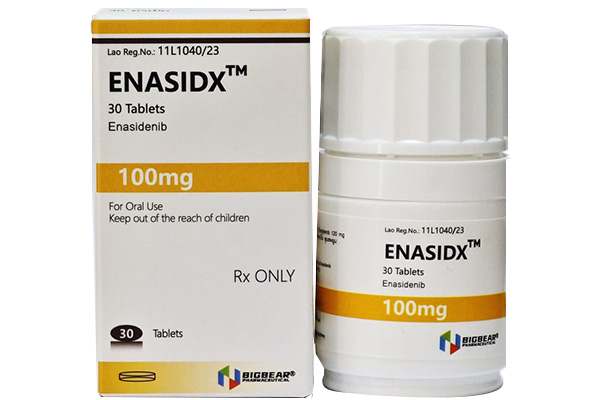
Enasidenib is the first FDA-approved treatment for acute myeloid leukemia (AML) targeting IDH2 mutations, indicated for relapsed or refractory adult patients with specific gene mutations.
I. Indications for Enasidenib
(1) IDH2-mutant relapsed/refractory acute myeloid leukemia
(2) Eligibility criteria:
① Confirmation of IDH2 mutation (R140 or R172 site) by an FDA-approved testing method (such as the Abbott RealTime™ IDH2assay)
② Adult patients (≥18 years old)
③ Relapsed or refractory AML after previous treatment
④ Mechanism of action: Selectively inhibits the mutant IDH2 enzyme, reduces the production of the carcinogenic metabolite 2-hydroxyglutaric acid (2-HG), and promotes leukemia cell differentiation.
II. Enasidenib Specifications and Dosage
1. Specifications
Tablets: 50mg (oval yellow film-coated tablets), 100mg (capsule-shaped yellow film-coated tablets)
2. Standard Usage
(1) Dosage: 100mg orally once daily until disease progression or intolerable toxicity.
(2) Administration:
Swallow whole; do not chew, crush, or break.
Can be taken with food or on an empty stomach.
(3) Missed dose or vomiting: Take the missed dose as soon as possible on the same day, and resume normal dosing schedule the following day.
3. Dosage Adjustment
(1) Differentiation syndrome: Discontinue use until symptoms are relieved to ≤ Grade 2
(2) Persistent hyperbilirubinemia: Reduce dose to 50 mg/day
(3) Other Grade 3 or higher toxicities: Restart with 50 mg/day after discontinuation
III. Precautions for Enasidenib
1. Differentiation syndrome (key monitoring)
(1) Peak period: Within 10 days to 5 months of medication
(2) Symptoms: Fever, dyspnea, rapid weight gain, bone pain, multiple organ dysfunction
(3) Treatment: Immediately initiate glucocorticoid (e.g., dexamethasone 10 mg q12h) and hemodynamic support
2. Drug Interactions:
(1) Contraceptives: May affect the effectiveness of hormonal contraceptives; additional contraceptive measures are required.
(2) UGT1A1 Inhibitors: May worsen hyperbilirubinemia.
3. Laboratory Monitoring:
Monitor complete blood count, liver function, and electrolytes every two weeks before and during the initial stage of treatment for at least three months.
4. Storage Requirements:
Store in the original bottle (with desiccant) at 20-25°C (short-term exposure to 15-30°C is permissible).