January 22, 2021--Princeton, NJ--(BUSINESS WIRE)
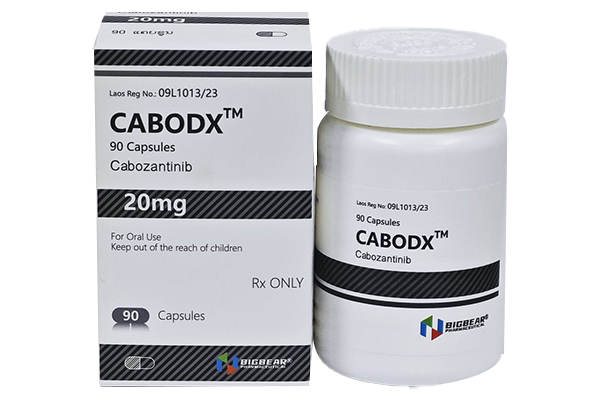
Bristol Myers Squibb (NYSE: BMY) announced that the U.S. Food and Drug Administration (FDA) has approved Opdivo (nivolumab) 240 mg (intravenous injection) every two weeks or 480 mg every four weeks, in combination with Cabozantinib 40 mg once daily tablets, for the first-line treatment of patients with advanced renal cell carcinoma (RCC). This approval is based on results from the Phase III CheckMate-9ER clinical trial, which compared the efficacy of Opdivo in combination with cabozantinib (n=323) versus sunitinib (n=328) in patients with advanced RCC. This application was reviewed through the FDA’s Real-Time Oncology Review (RTOR) pilot program, which aims to ensure that safe and effective treatments reach patients as early as possible. Adam, Head of Oncology, Immunology, and Cardiovascular Medicine at Bristol-Myers Squibb, and General Manager Lenkowsky stated, “At Bristol-Myers Squibb, we are focused on developing transformative medicines that can improve the survival of cancer patients. The role of Opdivo in combination with Evo (ipilimumab) in treating intermediate- to high-risk advanced RCC is well-established, and today’s achievement extends the potential of Opdivo-based combination therapies to a wider range of patients. Opdivo combined with cabozantinib brings together the powerful advantages of both drugs, providing physicians with a novel combination regimen for treating advanced RCC, potentially leading to better outcomes for patients suitable for immunotherapy combined with tyrosine kinase inhibitor regimens.”
Warnings and precautions related to Opdivo and Evo include:
Serious and potentially fatal immune-mediated adverse reactions, including pneumonia, colitis, hepatitis and hepatotoxicity, endocrine disorders, nephritis with renal insufficiency, skin adverse reactions, other immune-mediated adverse reactions; infusion-related reactions; complications of allogeneic hematopoietic stem cell transplantation (HSCT); embryo-fetal toxicity; and increased mortality when Opdivo is added to thalidomide analogues and dexamethasone for the treatment of multiple myeloma patients. This regimen is not recommended outside of controlled clinical trials. Dr. Toni Choueiri, Director of the Lank Center for Genitourinary Oncology at the Dana-Farber Cancer Institute and Jeromeand Nancy Kohlberg Professor of Medicine at Harvard Medical School, stated, “Cabozantinib in combination with nivolumab significantly improved key efficacy endpoints—progression-free survival, overall survival, and objective response rate—compared to sunitinib, while also exhibiting a lower discontinuation rate due to side effects. The treatment benefit demonstrated in the CheckMate-9ER trial and the explored quality-of-life indicators underscore the role of this combination regimen in patients with advanced renal cell carcinoma. With this significant FDA approval, this combination regimen is expected to become a standard of care for newly diagnosed metastatic renal cell carcinoma.”
Indications
Opdivo® (nivolumab) in combination with EvoVita® (ipilimumab) is indicated for the first-line treatment of patients with intermediate- to high-risk advanced renal cell carcinoma (RCC).
Opdivo® (nivolumab) in combination with cabozantinib is indicated for the first-line treatment of patients with advanced renal cell carcinoma (RCC).