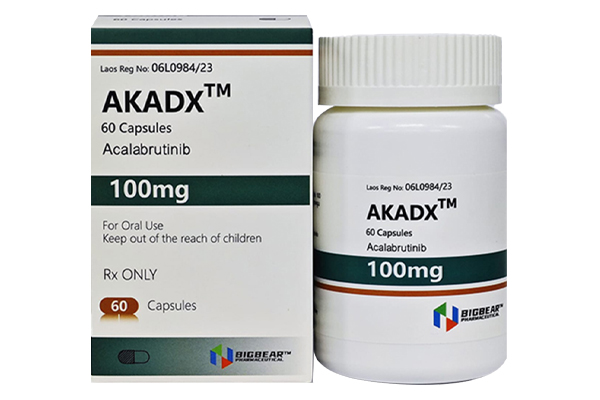
21 November 2019 -- AstraZeneca today announced that the US Food and Drug Administration (FDA) has approved Calquence (acalabrutinib) for adult patients with chronic lymphocytic leukemia (CLL) or small lymphocytic lymphoma (SLL). The US approval was granted under the FDA’s Real-Time Oncology Review and newly established Project Orbis programmes.
Basis for FDA Approval
The approval is based on positive results from the interim analyses of two Phase III clinical trials, ELEVATE-TN in patients with previously untreated CLL and ASCEND in patients with relapsed or refractory CLL. Together, the trials showed that Calquence in combination with obinutuzumab or as a monotherapy significantly reduced the relative risk of disease progression or death versus the comparator arms in both 1st-line and relapsed or refractory CLL. Across both trials, the safety and tolerability of Calquence were consistent with its established profile.
AstraZeneca Official Commentary
Dave Fredrickson, Executive Vice President, Oncology Business Unit said: “With over 20,000 new cases anticipated this year in the US alone, today’s approval of Calquence provides new hope for patients with one of the most common types of adult leukemia, offering outstanding efficacy and a favourable tolerability profile. The chronic lymphocytic leukemia patient population is known to face multiple comorbidities, and tolerability is a critical factor in their treatment.”
Expert Commentary on Trial Results
Dr Jeff Sharman, Director of Research at Willamette Valley Cancer Institute, Medical Director of Hematology Research for The US Oncology Network, and a lead author of the ELEVATE-TN trial, said: “Tolerability remains an issue in the current treatment landscape of chronic lymphocytic leukemia, which may require ongoing therapy for many years. In the ELEVATE-TN and ASCEND trials comparing Calquence to commonly used treatment regimens, Calquence demonstrated a clinically meaningful improvement in progression-free survival in patients across multiple settings, while maintaining its favourable tolerability and safety profile.”
ELEVATE-TN Trial Efficacy Results
The results of the interim analysis of the ELEVATE-TN trial will be presented at the upcoming American Society of Hematology congress.The trial showed a statistically significant and clinically meaningful improvement in progression-free survival (PFS) for patients treated with either Calquence in combination with obinutuzumab or Calquence monotherapy versus chlorambucil chemotherapy plus obinutuzumab, a current standard-of-care combination used in the control arm.
In the Calquence combination arm, risk of disease progression or death was reduced by 90% (HR 0.10; 95% CI, 0.06-0.17, p<0.0001) and in the monotherapy arm it was reduced by 80% (HR 0.20; 95% CI, 0.13-0.30, p<0.0001).
The median time to disease progression for patients treated with Calquence in combination with obinutuzumab or as a monotherapy has not yet been reached versus 22.6 months (95% CI, 20-28) for chlorambucil plus obinutuzumab.
ELEVATE-TN Safety Overview
In patients treated with the combination of Calquence plus obinutuzumab, adverse reactions (ARs) led to treatment discontinuation in 11% of patients and a dose reduction of Calquence in 7% of patients. In the monotherapy arm, ARs led to discontinuation in 10% and dose reduction in 4% of patients. In the control arm, ARs led to regimen discontinuation in 14% of patients with a dose reduction of chlorambucil in 28% of patients. There were no dose reductions for obinutuzumab.