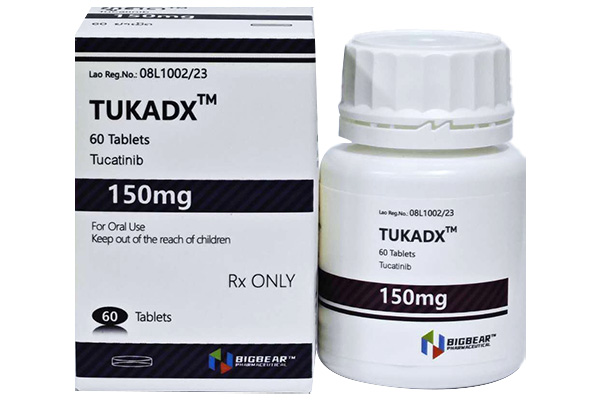
Trial Announcement and Presentation
On July 2, 2022, Seagen announced full results from the pivotal Phase 2 MOUNTAINEER trial, which showed that tucatinib (brand name: Tukysa) in combination with trastuzumab was well tolerated and achieved durable responses in patients with previously treated HER2-positive metastatic colorectal cancer (mCRC). These updated data were presented in an oral session at the European Society for Medical Oncology (ESMO) World Congress on Gastrointestinal Cancer held in Barcelona, Spain on July 2.
Mechanism of Action of Tucatinib
Tucatinib (Tukysa) is an oral tyrosine kinase inhibitor (TKI) of the HER2 protein. In vitro, the drug has been shown to inhibit phosphorylation of HER2 and HER3, thereby suppressing downstream MAPK and AKT signaling and cell growth. The drug has also demonstrated antitumor activity in HER2-expressing tumor cells.
Executive Quote
“This study demonstrates the benefit of dual HER2 inhibition with tucatinib and trastuzumab for patients with HER2-positive metastatic colorectal cancer, including many whose cancer had spread to the liver or lungs prior to trial entry,” said Roger Dansey, Chief Executive Officer and Chief Medical Officer of Seagen. “We believe this chemotherapy-free combination may play an important role in addressing unmet needs for patients with this disease.”
Primary Efficacy Results of the MOUNTAINEER Trial
At a median follow-up duration of 20.7 months (interquartile range: 11.7, 39.0), results from the MOUNTAINEER trial showed that among HER2-positive patients (n=84, median age 55.0 years [range: 24–77]), the confirmed objective response rate (cORR) by blinded independent central review (BICR) was 38.1% (95% confidence interval [CI]: 27.7, 49.3).
Secondary Efficacy Outcomes
Among these patients, the median duration of response (DoR) by BICR was 12.4 months (95% CI: 8.5, 20.5). The median progression-free survival by BICR was 8.2 months (95% CI: 4.2, 10.3), and median overall survival was 24.1 months (95% CI: 20.3, 36.7).
Patient Baseline Characteristics
At study initiation, 64.3% and 70.2% of these patients had liver or lung metastases, respectively, and had received a median of 3.0 (range: 1, 6) prior systemic therapies.
Tucatinib Monotherapy Cohort Results
In a cohort of patients treated with tucatinib monotherapy (n=30), the ORR by BICR at 12 weeks was 3.3% (95% CI: 0.1, 17.2), with a disease control rate of 80.0%. Participants who did not respond to tucatinib monotherapy by 12 weeks or progressed at any time were eligible to receive combination therapy with tucatinib and trastuzumab.
Safety Profile
The most common (≥20%) treatment-emergent adverse events (AEs) in patients assigned to receive tucatinib and trastuzumab (n=86) were diarrhea (grade 1 or 2: 60.5%, grade 3: 3.5%), fatigue (grade 1 or 2: 41.9%, grade 3: 2.3%), nausea (grade 1 or 2: 34.9%), and infusion-related reactions (grade 1 or 2: 20.9%). The most common grade ≥3 AE was hypertension (grade 3: 7.0%). AEs leading to discontinuation of any treatment occurred in 5.8% of patients. No deaths due to AEs were reported.
Regulatory Implications
Data from the trial will form the basis for a planned supplemental New Drug Application to the U.S. Food and Drug Administration (FDA) under the accelerated approval program.