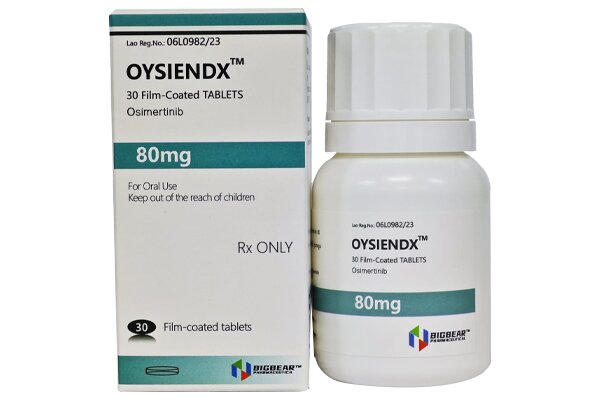
March 31, 2017 — AstraZeneca announced that the U.S. Food and Drug Administration (FDA) has granted full approval to Osimertinib (brand name: Tagrisso), an 80 mg once-daily tablet, for the treatment of patients with metastatic non-small cell lung cancer (NSCLC) whose tumors are confirmed to be positive for the epidermal growth factor receptor (EGFR) T790M mutation using an FDA-approved test, and who have experienced disease progression following treatment with an EGFR tyrosine kinase inhibitor (TKI). Osimertinib is the first and only drug in the U.S. approved specifically for patients with EGFR T790M mutation-positive NSCLC. Efficacy data indicate that it may become the new standard of care for this patient population.
Sean Bohen, Executive Vice President of Global Drug Development and Chief Medical Officer at AstraZeneca, stated: "By following the science, our goal is to transform lung cancer into a chronic, manageable disease for patients, and this milestone brings us one step closer to achieving that objective. The FDA’s full approval further validates Osimertinib’s potential to become the standard of care for patients with metastatic EGFR T790M mutation-positive NSCLC whose disease has progressed following treatment with a first-generation EGFR-TKI."
This full approval in the U.S. is based on data from the randomized Phase III AURA3 trial. In this trial, Osimertinib demonstrated a significant improvement in progression-free survival (PFS) compared to platinum-based doublet chemotherapy: the median PFS was 10.1 months in the Osimertinib arm versus 4.4 months in the chemotherapy arm (Hazard Ratio [HR] 0.30; 70% risk reduction; 95% Confidence Interval [CI]: 0.23, 0.41; P < 0.001). The results of this trial were recently presented at the 17th World Conference on Lung Cancer (WCLC) held in Vienna, Austria, and published in *The New England Journal of Medicine*.
In the AURA3 trial, the most common (>20%) adverse reactions observed in patients treated with osimertinib included diarrhea (41%), rash (34%), dry skin (23%), nail toxicity (22%), and fatigue (22%). In the osimertinib treatment arm, 2.9% of patients required a dose reduction. The most common adverse reactions leading to dose reduction or interruption included QT interval prolongation as assessed by electrocardiogram (ECG) (1.8%), neutropenia (1.1%), and diarrhea (1.1%). Serious adverse reactions were reported in 18% of patients in the osimertinib treatment arm, compared to 26% in the chemotherapy arm. In the osimertinib treatment arm, no single serious adverse reaction was reported at a rate of ≥2%.
Osimertinib had previously received Fast Track designation, Breakthrough Therapy designation, and Priority Review designation from the U.S. FDA, and received accelerated approval for this indication in 2015 based on tumor response rate and duration of response.
About Osimertinib
Osimertinib 40 mg and 80 mg once-daily oral tablets have been approved in more than 45 countries—including the United States, the European Union, Japan, and China—for the treatment of advanced non-small cell lung cancer (NSCLC) that is positive for the EGFR T790M mutation. Patient eligibility for osimertinib treatment is determined by the confirmed presence of the EGFR T790M mutation in tumor tissue. Osimertinib is a third-generation, irreversible EGFR tyrosine kinase inhibitor designed to inhibit both EGFR-sensitizing mutations and the EGFR T790M resistance mutation, and it demonstrates activity within the central nervous system (CNS). Osimertinib is currently also being investigated in the adjuvant and first-line metastatic treatment settings; these studies involve patients with or without CNS metastases, patients with leptomeningeal metastases, as well as studies exploring its use in combination with other therapies.