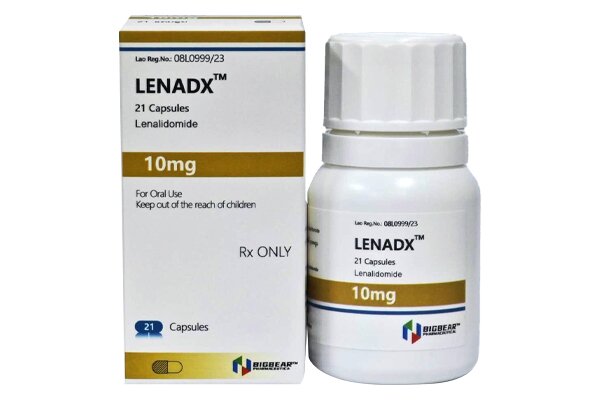
Indications
1. Multiple Myeloma (MM)
Newly diagnosed patients: Maintenance therapy after autologous hematopoietic stem cell transplantation (ASCT).
Patients unsuitable for transplantation: First-line treatment in combination with dexamethasone or bortezomib + dexamethasone; or in combination with melphalan + prednisone for patients unsuitable for high-dose chemotherapy.
Relapsed/refractory patients: In combination with dexamethasone for patients who have received at least one first-line treatment.
2. Myelodysplastic Syndromes (MDS)
Low-risk/intermediate-1 MDS patients with anemia due to isolated 5q chromosome deletion, and unresponsive to treatments such as erythropoietin.
3. Mantle Cell Lymphoma (MCL)
Adult patients with relapsed/refractory MCL who have received at least one anthracycline-containing regimen.
4. Follicular Lymphoma (FL)
Adult patients with grade 1-3a follicular lymphoma who have previously received at least one systemic therapy should use rituximab in combination.
Dosage and Administration
1. General Principles
Route of Administration: Oral lenalidomide, swallow whole, do not chew, crush, or break the capsule.
Time of Dosage: Take at the same time daily, with or without food.
Missed Dosage: If a dose is missed for less than 12 hours, take it immediately and resume the scheduled dose. If a dose is missed for more than 12 hours, skip the missed dose and take it the next day as scheduled.
2. Specific Dosage Regimen
(1) Multiple Myeloma (MM)
Post-Transplant Maintenance Therapy:
Recommended Dose: 10 mg/day (days 1-28, 28 days as one cycle). If no toxicity is observed after 3 months, the dose can be increased to 15 mg/day.
Combined with dexamethasone: Lenalidomide 25 mg/day (days 1-21) + Dexamethasone 40 mg/day (days 1, 8, 15, 22).
Combined with bortezomib + dexamethasone: Lenalidomide 25 mg/day (days 1-14) + Bortezomib 1.3 mg/m² (days 1, 4, 8, 11) + Dexamethasone 20 mg (days 1, 2, 4, 5, 8, 9, 11, 12).
(2) MDS
Initial dose: 10 mg/day (days 1-21, 28 days as one cycle).
Adjust the dose according to neutrophil count (ANC) and platelet count: Discontinue medication if ANC < 0.5 × 10⁹/L or platelet count < 50 × 10⁹/L, and reduce the dose to 5 mg/day upon resumption.
(3) MCL/FL
Recommended dose: 25 mg/day (days 1-21, 28 days as one cycle).
If grade ≥3 non-hematologic toxicity occurs, discontinue use until recovery, then reduce the dose to 20 mg/day.
Special Populations
1. Pregnant and Lactating Women
Contraindications: Absolutely prohibited during pregnancy (extremely high risk of teratogenicity).
Contraceptive Requirements: Female patients must use highly effective contraception (such as intrauterine devices or subdermal implants) for 4 weeks before, during, and 4 weeks after discontinuation of medication. Male patients must use condoms during treatment and for 7 days after discontinuation.
2. Children
Contraindicated: Safety and efficacy in patients under 18 years of age have not been established.
3. Elderly
Dose Adjustment: Patients ≥75 years of age require careful assessment of renal function; dose reduction by 25% may be necessary.
4. Renal Impairment
CLcr ≥50 mL/min: No dose adjustment required.
CLcr 30-49 mL/min: Halve the dose (e.g., reduce from 25 mg/day to 10 mg/day).
CLcr <30 mL/min: For patients requiring dialysis, administer 5 mg/day only after dialysis.
5. Hepatic Impairment
Mild Hepatic Injury: No dose adjustment required.
Warnings and Precautions
1. Teratogenic Risk
Pregnancy Prevention Program (PPP): All patients of reproductive age must sign an informed consent form and undergo monthly pregnancy testing. Male patients must use condoms throughout treatment, even if they have undergone vasectomy.
2. Hematologic Toxicity
Monitoring Frequency: Monitor complete blood cell counts weekly for the first 8 weeks of treatment, then monthly thereafter.
Dose Adjustment Criteria: Discontinue treatment if neutrophils <0.5 × 10⁹/L or platelets <25 × 10⁹/L, and then gradually reduce the dose upon resumption.
3. Thromboembolic Risk
High-risk factors: Concomitant use of dexamethasone, history of thrombosis, smoking, hypertension, hyperlipidemia.
Prevention measures: Low-dose aspirin (81-325 mg/day) or low molecular weight heparin.
4. Second Primary Tumor (SPM)
Risk warning: Long-term treatment may increase the risk of acute myeloid leukemia (AML) and skin cancer (basal cell carcinoma, squamous cell carcinoma).
Monitoring recommendations: Regular hematological and skin examinations.
5. Infection Risk
High-risk groups: Patients with neutropenia (ANC < 1.0 × 10⁹/L) or those using glucocorticoids in combination.
Management measures: Prophylactic use of antibiotics (e.g., fluoroquinolones) or G-CSF supportive therapy.
Moderate to severe hepatic impairment: Avoid use; if necessary, closely monitor liver function.
Drug Interactions
1. Cytochrome P450 Enzyme System
CYP1A2/CYP3A4 inducers (e.g., rifampin, phenytoin sodium): Decrease lenalidomide blood concentrations; concomitant use should be avoided.
CYP3A4 inhibitors (e.g., ketoconazole, clarithromycin): May increase lenalidomide blood concentrations; close monitoring for toxicity is required.
2. Anticoagulants
Warfarin: May enhance anticoagulant effects; INR levels should be monitored regularly.
3. Immunomodulatory Drugs
Dexamethasone: No dose adjustment is required when used in combination, but the risk of cumulative infection should be monitored.
4. Antiepileptic Drugs
Carbamazepine/phenytoin sodium: May decrease lenalidomide exposure; dose increase or alternative medication is required.
Adverse Reactions
1. Common (≥10%)
Hematologic System: Neutropenia (70-80%), Thrombocytopenia (30-50%), Anemia (20-30%). 1. **Infections:** Upper respiratory tract infection (25%), pneumonia (10-15%).
Gastrointestinal: Diarrhea (30%), constipation (20%), nausea (15%).
Systemic symptoms: Fatigue (40%), fever (15%), peripheral edema (10%).
2. Severe (≥1%)
Hematological: Grade 4 neutropenia (20-30%), Grade 4 thrombocytopenia (10-15%).
Infections: Sepsis (5%), herpes zoster (5%).
Non-hematological: Deep vein thrombosis (5-10%), pulmonary embolism (3-5%), second primary tumor (2-3%).
Contraindications
Women who are pregnant or planning to become pregnant.
Hypersensitivity to lenalidomide or any excipient (such as lactose).
Men and women of reproductive age who are not using effective contraception.
Storage Method
Store at room temperature (15-30℃), away from light and moisture.