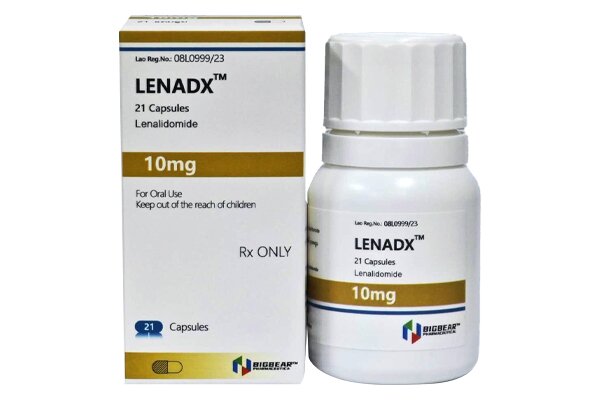
Lenalidomide is an oral immunomodulator developed by Celgene Corporation, primarily used to treat hematologic malignancies such as multiple myeloma, myelodysplastic syndromes (MDS), and mantle cell lymphoma. It exerts multiple anti-tumor effects by modulating the immune system, inhibiting tumor angiogenesis, and directly inducing tumor cell apoptosis. Combined use with dexamethasone can significantly prolong patient survival, especially in relapsed/refractory cases.
Mechanism of Action
Lenalidomide is a thalidomide analogue with immunomodulatory, anti-angiogenic, and anti-tumor properties.
The cellular activity of lenalidomide is mediated by its target protein cereblon, a component of the Cullin cyclic E3 ubiquitin ligase complex.
In vitro, in the presence of the drug, substrate proteins (including Aiolos, Ikaros, and CK1α) are ubiquitinated and subsequently degraded, producing direct cytotoxic and immunomodulatory effects.
Lenalidomide inhibits the proliferation and induces apoptosis in various hematopoietic tumor cells in vitro, including:
Multiple myeloma (MM), mantle cell lymphoma (MCL), myelodysplastic syndromes with 5q deletion, follicular lymphoma, and marginal zone lymphoma.
In various in vivo non-clinical hematopoietic tumor models, including MM, lenalidomide slows tumor growth.
The immunomodulatory effects of lenalidomide include:
Increasing the number and activation of T cells and NK cells, enhancing antibody-dependent cell-mediated cytotoxicity (ADCC) by promoting the secretion of interleukin-2 and interferon-γ.
Increasing the number of NKT cells.
Inhibiting pro-inflammatory cytokines on monocytes (such as TNF-α and IL-6).
In multiple myeloma cells, the combination of lenalidomide and dexamethasone synergistically inhibits cell proliferation and induces apoptosis.
In follicular lymphoma cells, lenalidomide combined with rituximab enhances ADCC effects and directly induces tumor apoptosis compared to rituximab monotherapy. In marginal zone lymphoma cells, it enhances ADCC activity.
Indications
Lenalidomide is a thalidomide analogue indicated for the treatment of the following conditions in adult patients:
Multiple myeloma (MM): In combination with dexamethasone.
Multiple myeloma (MM): Maintenance therapy following autologous hematopoietic stem cell transplantation (auto-HSCT).
Transfusion-dependent anemia: Caused by low-risk or intermediate-risk type-1 myelodysplastic syndromes (MDS) with a cytogenetic abnormality of the long arm of chromosome 5 (del5q) (with or without other cytogenetic abnormalities).
Mantle cell lymphoma (MCL): Relapsed or progressed after two prior treatment regimens, one of which contained bortezomib.
Previously treated follicular lymphoma (FL): Combined therapy with rituximab.
Previously treated marginal zone lymphoma (MZL): Combined therapy with rituximab.
Usage Restrictions
Lenalidomide is not suitable for, and is not recommended for, patients with chronic lymphocytic leukemia (CLL), except in controlled clinical trials.
Contraindications
1. Pregnancy
Lenalidomide can cause harm to the fetus when used in pregnant women. Limb deformities have been observed in monkey offspring given lenalidomide during organogenesis, with this effect observed at all tested doses. Based on the results of this monkey developmental study, and the structural similarity of lenalidomide to the known human teratogen thalidomide, lenalidomide is contraindicated in pregnant women. Patients using this product during pregnancy, or who become pregnant while using this medication, should be informed of the potential risks to the fetus.
2. Severe Hypersensitivity Reactions
Lenalidomide is contraindicated in patients with a history of severe hypersensitivity reactions (e.g., angioedema, Stevens-Johnson syndrome, toxic epidermal necrolysis).
Precautions
Increased Mortality: Severe and fatal cardiac adverse reactions have been reported with lenalidomide (REVLIMID) in patients with chronic lymphocytic leukemia (CLL).
Second Primary Malignancy (SPM): An increased incidence of second primary malignancy has been observed in controlled trials of lenalidomide in patients with multiple myeloma (MM).
Increased Mortality: Mortality rates have increased in patients with multiple myeloma when pembrolizumab is used in combination with dexamethasone and a thalidomide analogue.
Hepatotoxicity: Liver failure and even death may occur. Liver function should be monitored. If hepatotoxicity is suspected, lenalidomide should be discontinued immediately and the patient evaluated.
Severe Skin Reactions: Lenalidomide should be discontinued if severe skin reactions occur.
Tumor Lysis Syndrome (TLS): This includes fatal cases. Patients with high-risk factors for TLS (such as high tumor burden) should be monitored and appropriate preventative measures should be taken.
Tumor Flares: Severe tumor flares, including fatal ones, have occurred in clinical studies of lenalidomide for chronic lymphocytic leukemia and lymphoma.
Impaired Stem Cell Mobilization: A reduced number of CD34+ cells has been reported after lenalidomide treatment (>4 cycles). Early referral to a transplant center is recommended.
Early Death in Mantle Cell Lymphoma (MCL): Early death is common in patients with mantle cell lymphoma.
Hypersensitivity Reactions: Monitor patients for potential hypersensitivity reactions. Lenalidomide should be discontinued if angioedema and anaphylactic reactions occur.