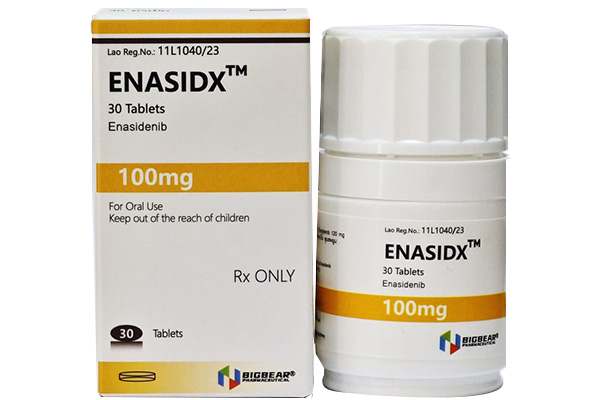
Idhifa (Ensidipin), an oral formulation jointly developed by Celgene and Agios Pharmaceuticals, is indicated for adult patients with relapsed or refractory acute myeloid leukemia (AML) featuring specific genetic mutations. It is also approved for companion diagnostic use with Abbott's RealTime IDH2 test kit, which detects specific mutations in the IDH2 gene in AML patients. Idhifa will be used in conjunction with a diagnostic kit developed by Abbott Laboratories for mutation detection.
Acute myeloid leukemia (AML) is a malignant hematologic malignancy caused by the abnormal proliferation of myeloid hematopoietic bud cells. Originating in the bone marrow, it progresses rapidly and leads to an abnormal increase in white blood cells. The disease is characterized by the rapid proliferation of abnormal bud cells in the bone marrow, affecting the production of normal hematopoietic cells. Current treatments for AML patients often result in poor disease control and a high relapse rate.
Idhifa, a targeted treatment, undoubtedly meets the medical needs of patients with relapsed or refractory AML who have IDH2 mutations. Idhifa use has been associated with complete remission in some patients, reducing the need for red blood cell and platelet transfusions.
Idhifa, a small molecule inhibitor of the isocitrate dehydrogenase 2 (IDH2) enzyme, works by blocking several enzymes that promote cell growth. However, it is not suitable for all AML patients. Patients with IDH2 mutations detected in blood or bone marrow samples using Real-Time IDH2 assays may be eligible for Idhifa treatment.
The efficacy of Idhifa was demonstrated in a single-arm trial involving 199 patients with relapsed or refractory AML and IDH2 mutations detected by Real-Time IDH2 assays. After 6 months of Idhifa treatment, 19% of patients achieved a complete response (median response time 8.2 months), while 4% achieved partial hematologic recovery (median survival 19.7 months). In the initial stages of treatment, among the 157 patients who required blood or platelet transfusions due to AML, 34% no longer required transfusions after treatment. However, it is noteworthy that 77% of patients experienced serious adverse reactions such as leukocytosis and retinoic acid syndrome.
Common adverse reactions observed in the trial included nausea, vomiting, diarrhea, elevated bilirubin levels (a substance found in bile), and decreased appetite. It is important to note that pregnant or breastfeeding women should not take Idhifa, as it may harm the developing fetus or newborn.