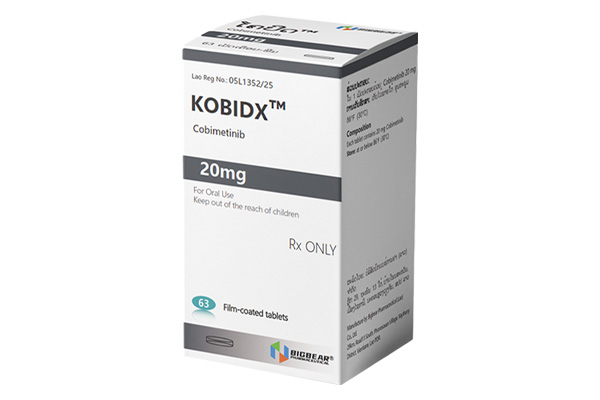
With the accessibility of targeted anticancer drugs receiving increasing attention, the generic version of Cobimetinib launched by Lao Bear Pharmaceutical provides a highly cost-effective new treatment option for tumor patients with MEK gene mutations.
Is there a generic version of Cobimetinib available in Laos?
Yes, there is a generic version of Cobimetinib available in Laos. The Lao Bear Pharmaceutical version of Cobimetinib is available in a specification of 20mg*63 tablets. For more information, we recommend consulting a professional customer service representative.
FDA approves Cobimetinib combination therapy for advanced melanoma
On November 10, 2015, the U.S. Food and Drug Administration (FDA) approved Cobimetinib (generic name: cobimetinib) in combination with vemurafenib for the treatment of patients with advanced melanoma that has spread to other parts of the body or cannot be removed by surgery, and that has a specific type of abnormal gene (BRAF V600E or V600K mutation). The approval of this combination therapy provides a new treatment option for patients with invasive melanoma carrying BRAF mutations. Cobimetinib, developed by Genentech, is a MEK inhibitor that works by targeting and inhibiting the activity of the MEK enzyme, interfering with abnormal signal transduction within tumor cells. When used in combination with the approved BRAF inhibitor vemurafenib, both pathways are blocked simultaneously, more effectively inhibiting tumor growth and spread. Professional institutions such as Hong Kong Jimin Pharmaceutical have provided the Chinese prescribing information for Cobimetinib to help patients and physicians understand the drug's indications, usage, and precautions. This approval was based on a randomized clinical study in previously untreated patients with BRAF V600 mutation-positive advanced melanoma, which showed that the combination therapy significantly prolonged progression-free survival and overall survival. For patients with unresectable or metastatic melanoma, this approval means they have access to a rigorously validated and effective treatment option.
Invasiveness of melanoma and the need for Cobimetinib treatment
Melanoma is the most aggressive and dangerous form of skin cancer in the United States. It forms in the pigment-producing skin cells (melanocytes) and, if not diagnosed early, the cancer can quickly spread to other parts of the body, such as the lymph nodes, lungs, liver, or brain, making treatment significantly more difficult. The National Cancer Institute estimates that 73,870 Americans will be diagnosed with melanoma in a given year, and 9,940 will die from the disease. These numbers highlight the urgency of developing effective treatments. In patients with BRAF V600E or V600K mutation-positive melanoma, tumor cells rely on an abnormally activated MAPK signaling pathway for proliferation and survival. Traditional chemotherapy and immunotherapy have limited efficacy in these patients, creating a need for more targeted agents. Cobimetinib (cobimetinib) works by blocking the activity of the MEK enzyme, a key node in this signaling pathway. When used in combination with the BRAF inhibitor vemurafenib, it inhibits the abnormal activity of the pathway simultaneously at two different points, effectively stopping or slowing the growth of cancer cells. This combination strategy has become a standard of care for BRAF-mutant advanced melanoma, significantly improving patient outcomes.