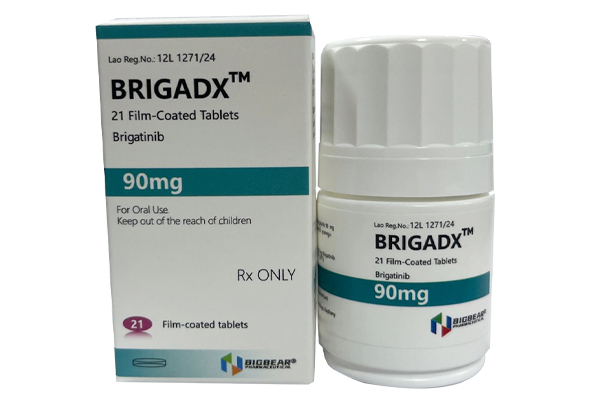
As a second-generation ALK tyrosine kinase inhibitor, brigatinib manufactured by Lao Big Bear Pharmaceutical specifically inhibits the activity of ALK fusion proteins to block tumor cell growth, offering significant survival benefits particularly for patients with baseline brain metastases.
How much does Lao Big Bear version brigatinib cost?
Lao Big Bear version brigatinib is available in strengths of 90mg*21 tablets/box and 180mg*21 tablets/box, with prices around $49–79. Actual prices may vary due to multiple factors, and the final selling price should be taken as definitive.
How to take brigatinib correctly
The administration of brigatinib follows strict guidelines; patients must adhere completely to their physician's instructions and must not alter the dose or discontinue treatment without authorization. The initial treatment regimen is typically designed as a 7-day lead-in at 90 mg once daily (low dose) to allow the body to gradually adapt; if well tolerated, the dose is increased to 180 mg once daily starting on day 8, which is the standard maintenance dose. The tablet should be swallowed whole, without chewing, crushing, or splitting. It may be taken with or without food, but the daily dosing time should be kept as consistent as possible to maintain stable blood concentrations. If a dose is missed, skip the missed dose and take the next scheduled dose at the usual time; do not double the dose to catch up. Similarly, if vomiting occurs after taking a dose, do not take an extra dose; continue with the next scheduled dose at the regular time. During treatment, if the aforementioned serious adverse reactions occur, the physician will adjust the dose according to the severity grade—treatment may be temporarily interrupted, and after symptoms resolve, resumed at a reduced dose (e.g., 90 mg) or permanently discontinued. It is particularly important to avoid consuming grapefruit or grapefruit juice throughout treatment, as these fruits inhibit hepatic CYP3A enzymes, leading to abnormally elevated brigatinib blood levels and increased toxicity. In addition, patients should inform their physician of all medications they are using, including prescription drugs, over‑the‑counter medications, vitamins, and herbal supplements, because strong CYP3A inhibitors or inducers may affect brigatinib metabolism, and hormonal contraceptives may become ineffective due to drug interactions. For women of childbearing potential, effective non‑hormonal contraception should be used during treatment and for at least 4 months after the last dose; male patients should use contraception during treatment and for at least 3 months after the last dose. For storage, keep the tablets at 20°C to 25°C in a cool, dry place, and keep them strictly out of reach of children.
Mechanism of action and indications of brigatinib
The active ingredient of brigatinib is brigatinib, a next‑generation anaplastic lymphoma kinase (ALK) inhibitor designed to target and block tumor growth driven by ALK fusion proteins. In non‑small cell lung cancer (NSCLC), approximately 3%–5% of patients harbor ALK gene rearrangements, particularly common in young, non‑smoking adenocarcinoma patients. This genetic abnormality leads to fusion of ALK with other genes (such as EML4), producing a constitutively active fusion protein that stimulates uncontrolled cancer cell proliferation through downstream signaling pathways (e.g., STAT3, AKT, ERK1/2) and simultaneously promotes angiogenesis to supply nutrients to the tumor. Brigatinib potently inhibits ALK autophosphorylation, interrupting this oncogenic signal transduction, thereby suppressing tumor cell division and inducing apoptosis. More importantly, the drug retains activity against multiple ALK resistance mutations (including G1202R and L1196M commonly seen after crizotinib treatment), making it an effective later‑line option for patients who are resistant or intolerant to crizotinib. In addition, brigatinib also inhibits ROS1, insulin‑like growth factor‑1 receptor (IGF‑1R), FLT‑3, and certain EGFR mutations, broadening its potential application scope. Preclinical studies have shown that the drug reduces tumor burden and prolongs survival in intracranial xenograft models, suggesting some blood‑brain barrier penetration and possible additional benefit for patients with brain metastases. Based on these mechanisms and clinical data, the U.S. FDA approved brigatinib in 2017 for the treatment of adult patients with ALK‑positive metastatic NSCLC, specifically for those who have progressed on or are intolerant to crizotinib. Currently, brigatinib is not approved for use in children, and its safety and efficacy in the pediatric population are still under investigation. Understanding this mechanism of action helps patients recognize the importance of regular dosing, as sustained ALK inhibition is the core strategy for delaying resistance and prolonging disease control.