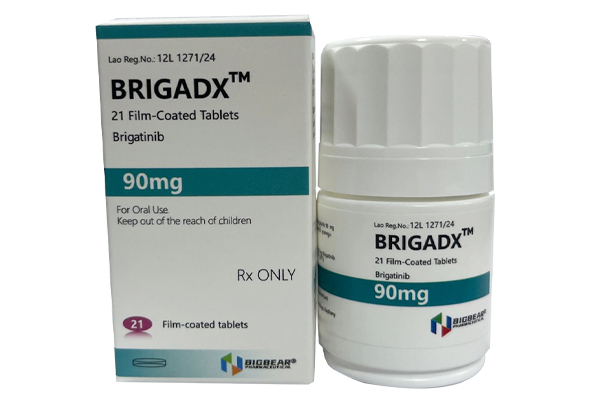
The generic version of Brigatinib launched by BigbearPharma in Laos is an oral targeted therapy for the treatment of anaplastic lymphoma kinase (ALK)-positive advanced non-small cell lung cancer (NSCLC).
Is there a generic version of Brigatinib available in Laos?
Yes, there is a generic version of Brigatinib in Laos. The Lao Bigbear version of Brigatinib is available in strengths of 90mg*21 tablets/box and 180mg*21 tablets/box. For more information, we recommend contacting our professional customer service for detailed consultation.
Serious adverse reactions that must be watched for during Brigatinib treatment
Before initiating treatment with Brigatinib, every patient and caregiver should fully understand the potential serious side effects. These adverse reactions involve multiple systems including respiratory, cardiovascular, visual, musculoskeletal, and metabolic. Some reactions may occur suddenly during the early phase of treatment (especially within the first week), and their symptoms often overlap with those of lung cancer itself, thus requiring a high level of vigilance. As a potent ALK inhibitor, Brigatinib's mechanism of action means that while attacking tumor cells, it may also affect normal tissues. Clinical data show that interstitial lung disease (ILD) or pneumonitis is the most notable risk, with symptoms including dyspnea, chest pain, cough (with or without sputum), and fever. If these symptoms appear or existing symptoms worsen sharply, immediate reporting to the attending physician is mandatory. In addition, hypertension and bradycardia are indicators that require continuous monitoring during treatment; the former may cause headache, dizziness, blurred vision, and even chest pain and shortness of breath, while the latter may lead to fatigue, syncope, and other consequences. Visual problems are also not to be ignored; diplopia, flashing lights, photophobia, or the appearance of floaters may indicate drug effects on ocular function. Meanwhile, muscle injury (manifested as elevated creatine phosphokinase), pancreatitis (pain in the right upper abdomen or back, nausea, loss of appetite), and hyperglycemia (increased thirst, increased appetite, polyuria, fatigue) are also on the warning list. Physicians will assess these risks through regular blood tests and vital sign monitoring before and during treatment, and decide whether to adjust dosage, interrupt therapy, or permanently discontinue based on severity. Patients should proactively report any new or worsening discomfort to the medical team, and should not delay seeking attention due to mild symptoms.
Beware of interstitial lung disease/pneumonitis induced by Brigatinib
Interstitial lung disease (ILD) or pneumonitis is the most urgent serious adverse reaction to watch for during Brigatinib treatment, with an incidence of approximately 9.1% at the recommended dose, and it can be life-threatening. It is particularly important to emphasize that this pulmonary complication has a higher risk of occurrence during the first week of treatment, so the initial dosing period should be regarded as an observation window. The clinical symptoms of ILD/pneumonitis often overlap heavily with the respiratory manifestations of advanced lung cancer itself, such as progressively worsening dyspnea, tachypnea, chest pain, persistent cough (possibly with mucus or dry), and unexplained fever. These manifestations can be easily mistaken for disease progression or common infection, thus delaying timely intervention. After treatment initiation, physicians will pay special attention to the patient's respiratory status. Once ILD or pneumonitis is suspected, they will immediately suspend dosing and conduct a comprehensive evaluation, including chest imaging and oxygen saturation measurement. Based on the assessment, if the reaction is mild to moderate, treatment may be resumed at a reduced dose after symptom resolution; if severe or life-threatening, Brigatinib must be permanently discontinued. Patients and their families should keep in mind that any new or acute worsening of respiratory symptoms must be reported to the medical team at the earliest opportunity, and should not wait for a routine follow-up visit. Early recognition and prompt management are key to reducing the fatality rate of this serious side effect. Additionally, avoiding concurrent use of other drugs that may aggravate lung injury during the early treatment phase, and maintaining good respiratory hygiene, can also help reduce potential risks. Physicians will also arrange more frequent follow-ups based on individual circumstances to ensure dynamic monitoring of pulmonary signs during the first week.