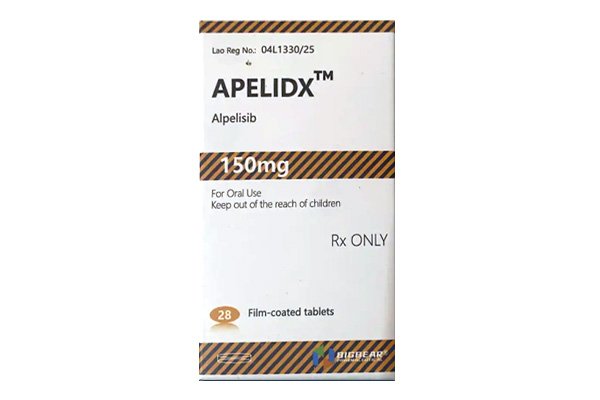
Alpelisib may cause various side effects during treatment. If you do not know much about the side effects of alpelisib, please consult your doctor promptly.
Serious side effects of alpelisib
If you experience any of the following side effects while taking alpelisib, contact your doctor immediately:
1. More common side effects
Bladder pain; swelling of the face, arms, hands, lower legs, or feet; blood in the urine or cloudy urine; blurred vision; diarrhea; difficulty, burning, or pain during urination; dry mouth; fever; flushing, dryness of the skin; frequent urination; fruity odor on the breath; increased appetite; increased thirst; increased urination; lower back or side pain; nausea; rapid weight gain; stomach pain; sweating; tingling of the hands or feet; difficulty breathing; unexplained weight loss; unusual tiredness or weakness; unusual weight gain or loss; vomiting.
2. Less common side effects
Pale skin; unusual bleeding or bruising.
3. Side effects with unknown frequency
Black, tarry stools; blistering, peeling, or loosening of the skin; chest pain; chills; cough; itching; joint or muscle pain; large, hive-like swelling of the face, eyelids, lips, tongue, throat, hands, legs, feet, or genitals; pain or difficulty urinating; red, swollen, or irritated eyes; red skin lesions, often with a purple center; sore throat; sores or white spots on the lips or in the mouth; swollen glands; unusual bleeding or bruising.
Other side effects of alpelisib
The following side effects of alpelisib usually do not require medical attention. If these side effects persist, become bothersome, or if you have questions, consult your doctor:
Belching; weight loss; dry skin or mouth; hair loss or thinning of hair; headache; heartburn; indigestion; loss or change of taste; stomach upset or discomfort; swelling or irritation of the mouth.
Side effect management for alpelisib by healthcare professionals
1. Overall adverse events
Most common adverse reactions (including laboratory abnormalities, all grades, incidence ≥20%): increased blood glucose, increased creatinine, diarrhea, rash, decreased lymphocyte count, increased gamma-glutamyl transferase (GGT), nausea, increased alanine aminotransferase (ALT), fatigue, decreased hemoglobin, increased lipase, decreased appetite, stomatitis, vomiting, weight loss, decreased blood calcium, decreased blood glucose, prolonged activated partial thromboplastin time (aPTT), and alopecia.
2. Hypersensitivity
Uncommon (0.1% to 1%): severe hypersensitivity reactions (e.g., anaphylactic shock, anaphylactoid reaction, dyspnea, flushing, rash, fever, tachycardia).
3. Musculoskeletal
Common (1% to 10%): osteonecrosis of the jaw (ONJ).
4. Metabolic
Very common (≥10%): increased blood glucose (79%), hyperglycemia (65%), weight loss (27%), decreased corrected calcium (27%), decreased blood glucose (26%), decreased blood potassium (14%), decreased albumin (14%), decreased blood magnesium (11%).
5. Genitourinary
Very common (≥10%): urinary tract infection (10%).
6. Hepatic
Very common (≥10%): increased gamma-glutamyl transferase (GGT) (52%), increased alanine aminotransferase (ALT) (44%).
7. Respiratory
Common (1% to 10%): pneumonitis (including acute interstitial pneumonitis and interstitial lung disease).
8. Hematologic
Very common (≥10%): decreased lymphocyte count (52%), decreased hemoglobin (42%), prolonged activated partial thromboplastin time (aPTT) (21%), decreased platelet count (14%).
9. Nervous system
Very common (≥10%): headache (18%), dysgeusia/ageusia/hypogeusia (18%).
10. Renal
Very common (≥10%): increased creatinine (79%).
11. Skin
Very common (≥10%): rash (e.g., maculopapular, macular, generalized, papular, pruritic rash) (52%), alopecia (20%), pruritus (18%), dry skin/xerosis/cheilitis (18%). Uncommon (0.1% to 1%): Stevens-Johnson syndrome (SJS), erythema multiforme (EM).
12. Gastrointestinal
Very common (≥10%): diarrhea (58%), nausea (45%), stomatitis/aphthous ulcers/mouth ulceration (30%), vomiting (27%), mucosal inflammation (19%), abdominal pain/upper abdominal pain/lower abdominal pain (17%), mucosal dryness (12%), dyspepsia (11%).
13. Other
Very common (≥10%): fatigue (42%), increased lipase (42%), peripheral edema (15%), pyrexia (14%).