
BIGBEAR
PHARMACEUTICAL
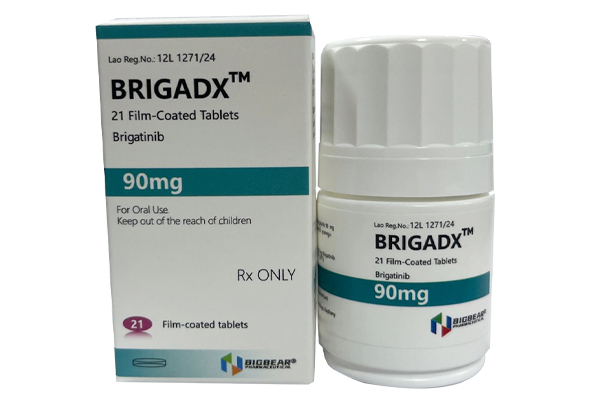
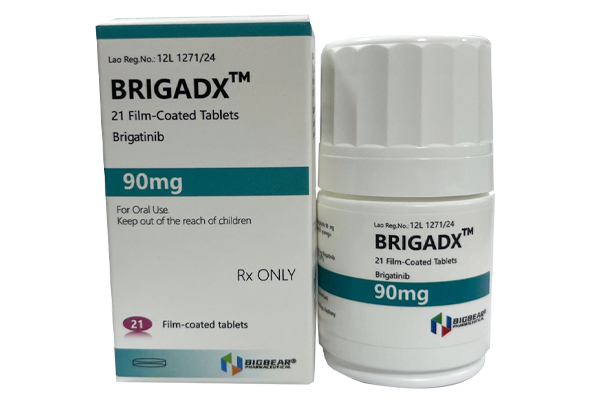
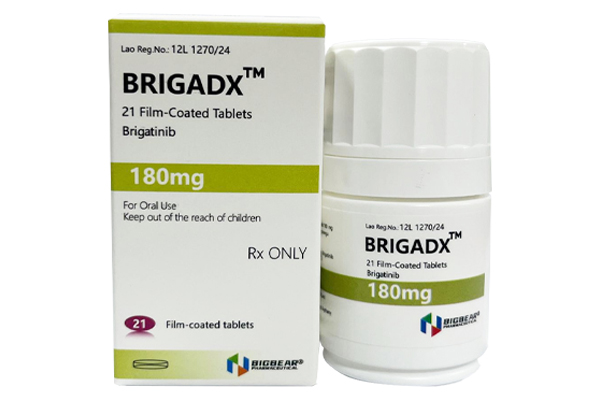
Brigatinib is a targeted therapy drug whose main component is a tyrosine kinase inhibitor.

 AuthenticGuaranteeFast DeliveryPrivacy
 Brigatinib can block the autoactivation process of ALK protein (a protein associated with cancer cell proliferation) and inhibit the activity of downstream signaling proteins such as STAT3 and AKT.
When used as a single agent, brigatinib is specifically indicated for ALK-positive locally advanced or metastatic non-small cell lung cancer. This type of lung cancer is characterized by abnormal changes in the ALK gene in cancer cells, leading to rapid tumor growth and spread.
Through long-term administration, the drug can continuously inhibit tumor progression, and studies have shown that its inhibitory effect is closely related to the dosage (higher doses yield more significant results).
1.Special attention is required: Patients who are hypersensitive to brigatinib or any component of this drug are prohibited from using it.
2.Before starting treatment, patients must undergo formal testing to confirm they are ALK-positive (i.e., carry the specific gene mutation type).
3.Patients currently taking other medications must inform their doctor of all ongoing treatment regimens in advance, and those who are pregnant, planning to become pregnant, or breastfeeding must proactively disclose their status.
Initial phase (Days 1–7): 90 mg (1 tablet) once daily.
Maintenance phase (from Day 8 onward): 180 mg (1 tablet) once daily.
Continue treatment until disease progression or unacceptable toxicity occurs.
If treatment is interrupted for more than 14 days for non-toxicity reasons, restart at 90 mg daily for 7 days, then gradually increase back to the previous dose.
Administration: Swallow tablets whole. Do not crush or chew.
Avoid concomitant use if possible.
If a strong CYP3A inhibitor must be used: Reduce the brigatinib dose by 50% (e.g., from 180 mg to 90 mg, or from 90 mg to 60 mg).
If a moderate CYP3A inhibitor must be used: Reduce the brigatinib dose by approximately 40% (e.g., from 180 mg to 120 mg, or from 90 mg to 60 mg).
After discontinuing the inhibitor, resume the original brigatinib dose.
Avoid concomitant use if possible.
If a moderate CYP3A inducer must be used: After 7 days of maintaining the current dose, increase the brigatinib dose gradually by 30 mg increments (maximum 2 times the original dose).
After discontinuing the inducer, resume the original brigatinib dose.
Mild to moderate impairment: No dose adjustment is needed.
Severe impairment: Reduce the dose by approximately 40%.
Mild to moderate impairment (creatinine clearance 30–89 mL/min): No dose adjustment is needed.
Severe impairment (creatinine clearance 15–29 mL/min): Reduce the dose by 50%.
Respiratory symptoms: Monitor for dyspnea or worsening cough, especially early in treatment. Discontinue treatment immediately and evaluate for pulmonary disease if these occur.
Blood pressure management: Ensure blood pressure is controlled before starting treatment, then monitor monthly starting 2 weeks after initiation.
Heart rate and blood pressure: Increase monitoring frequency if taking medications that may cause bradycardia.
Pancreatic function: Regularly check serum lipase and amylase levels, as abnormalities may indicate pancreatic issues.
Liver function: Monitor transaminases and bilirubin levels closely for the first 3 months.
Blood glucose: Monitor fasting blood glucose before and during treatment; adjust hypoglycemic regimens as needed.
Product information may vary between manufacturers. If discrepancies exist between this information and the package insert, consult your doctor or pharmacist immediately.
First dose reduction: Decrease to 60 mg daily.
Second dose reduction: Permanent discontinuation is required.
Note: After dose reduction, the original dose cannot be resumed. If the 60 mg dose is not tolerated, treatment must be discontinued.
First dose reduction: Decrease to 120 mg daily.
Second dose reduction: Decrease to 90 mg daily.
Third dose reduction: Decrease to 60 mg daily.
Note: After dose reduction, the original dose cannot be resumed. If the 60 mg dose is not tolerated, treatment must be discontinued.
Grade 1: Withhold treatment until symptoms resolve, then resume at the original dose (do not re-escalate if symptoms occur within 7 days of initiation).
Grade 2: Withhold treatment, then resume at a reduced dose.
Grades 3–4: Permanent discontinuation is required.
Grade 3 (blood pressure ≥160/100 mmHg): Withhold treatment until blood pressure is controlled, then resume. If hypertension recurs, reduce the dose or discontinue treatment.
Grade 4 (life-threatening): Immediately withhold treatment; upon recovery, reduce the dose or discontinue permanently.
Symptomatic: Withhold treatment until recovery, then adjust the dose after identifying the cause.
Life-threatening: After determining the cause, decide whether to discontinue treatment permanently.
Moderate to severe abnormalities: Withhold treatment, then resume at a reduced dose.
Severe vision loss: Permanent discontinuation is required.
5× ULN with muscle symptoms: Withhold treatment until CPK levels normalize; if symptoms recur, reduce the dose.
2× ULN: Withhold treatment until levels normalize.
5× ULN: Upon recovery, treatment must be resumed at a reduced dose.
5× ULN transaminases: Withhold treatment, then reduce the dose.
3× ULN transaminases with jaundice: Permanent discontinuation is required.
Blood glucose >250 mg/dL: Withhold treatment until glucose levels are controlled, then reduce the dose or discontinue permanently.
Use this medication under the guidance of a doctor. Continuously monitor your physical response during treatment to ensure safety and efficacy.
If tablets show changes in color, shape, or taste, discontinue use immediately.
Keep this medication out of the reach of children.
There are currently no clinical data on the use of brigatinib in pregnant women. If you become pregnant or plan to become pregnant during treatment, you must inform your doctor of the potential effects of the drug on the fetus.
It is unknown whether the drug is excreted in human milk. As a safety precaution, it is recommended to discontinue breastfeeding during treatment and for one week after the last dose.
There is currently insufficient data to support the use of brigatinib in children.
Use must be under the close supervision of a doctor.
Reliable non-hormonal contraception (e.g., intrauterine devices, diaphragms) is required during treatment and for at least four months after the last dose.
Since the drug may affect genetic material, male patients must use effective contraception during treatment and for at least three months after the last dose.
The following adverse reactions may occur after administration:
Interstitial lung disease/non-infectious pneumonitis (inflammatory reaction in the lungs).
Hypertension (abnormally elevated blood pressure).
Bradycardia (slow heart rate).
Visual disturbances (e.g., blurred vision, impaired visual clarity).
Elevated creatine phosphokinase (abnormal muscle-related enzyme levels).
Elevated amylase and lipase (abnormal pancreatic function).
Hepatotoxicity (liver damage).
Hyperglycemia (high blood glucose levels).
Photosensitivity reaction (skin sensitivity to sunlight).
The following situations explicitly prohibit the use of this drug:
Patients with hypersensitivity to brigatinib or any component of the drug: This population may experience severe adverse reactions, which may even exacerbate their underlying condition.
If any issues arise, please contact us immediately.
Email:laosbigbear@gmail.com
The exact onset time of brigatinib is currently unclear.
If a dose is missed or vomiting occurs after administration, there is no need to make up for the missed dose. Continue with the next scheduled dose at the usual time and dosage.
If there is any doubt about the dosage, it is recommended to consult a doctor or pharmacist for confirmation in a timely manner.
There is currently no specific antidote for brigatinib overdose, and the drug must be administered strictly in accordance with the prescribed dosage.
If an overdose is accidentally taken, close monitoring of the body’s reactions is required. Any adverse symptoms should prompt immediate contact with a doctor for professional guidance and timely medical intervention.
Sometimes it is not safe to use certain medications at the same time. Some drugs can affect your blood levels of other drugs you take, which may increase side effects or make the medications less effective.
Many drugs can interact with brigatinib. This includes prescription and over-the-counter medicines, vitamins, and herbal products. Not all possible interactions are listed here. Tell your doctor about all your current medicines and any medicine you start or stop using.
Copyright2024@ BIGBEAR All right reserved Bigbear | Bigbear Pharmaceutical | Bigbear Laos


