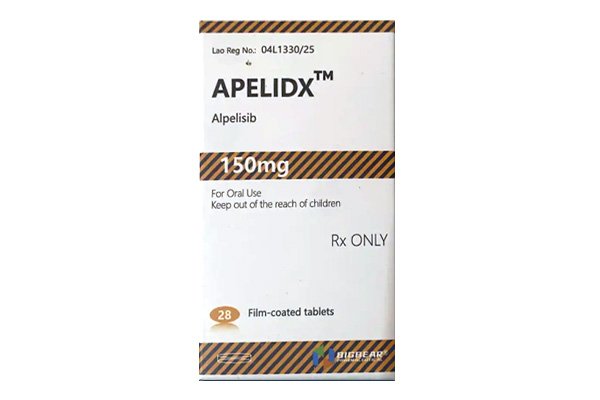
Alpelisib Specific Drug Interactions
1. Bisphosphonates (e.g., alendronate, ibandronate, risedronate, zoledronic acid): May increase the risk of osteonecrosis of the jaw.
2. Bupropion: Clinically significant pharmacokinetic interactions are unlikely.
3. Denosumab: May increase the risk of osteonecrosis of the jaw.
4. Everolimus: Clinically significant pharmacokinetic interactions are unlikely.
5. Histamine H2 receptor antagonists (e.g., cimetidine, famotidine, ranitidine): May reduce alpelisib solubility, leading to decreased AUC. Ranitidine: Coadministration in the fasted state reduced alpelisib AUC and peak concentration by 30% and 51%, respectively; with a low-fat, low-calorie meal, reductions were 21% and 36%, respectively. Since alpelisib is taken with food, and food has a more pronounced effect on its solubility than gastric pH, concomitant use is acceptable.
7. Midazolam: Clinically significant pharmacokinetic interactions are unlikely.
8. Omeprazole: Clinically significant pharmacokinetic interactions are unlikely.
9. Repaglinide: Clinically significant pharmacokinetic interactions are unlikely.
10. Warfarin: Clinically significant pharmacokinetic interactions are unlikely.
Alpelisib Pharmacokinetics
1. Absorption
(1) Bioavailability: Bioavailability in the fasted state is limited due to low solubility.
(2) Time to peak concentration: Peak plasma concentration is reached 2‑4 hours after oral administration.
(3) Dose proportionality: In the fed state, systemic exposure of alpelisib is dose‑proportional over the 30–450 mg dose range.
(4) Accumulation: The accumulation ratio for once‑daily dosing is 1.3‑1.5. Steady state is achieved within 3 days.
(5) Food effect: Compared with fasting, a high‑fat, high‑calorie meal increased alpelisib AUC and peak concentration by 73% and 84%, respectively. Compared with fasting, a low‑fat, low‑calorie meal increased alpelisib AUC and peak concentration by 77% and 145%, respectively.
2. Distribution
(1) Extent: It is unknown whether alpelisib distributes into human milk.
(2) Plasma protein binding: 89%.
3. Elimination
(1) Metabolism: Metabolised by chemical and enzymatic hydrolysis to the major metabolite BZG791. Minor metabolism via CYP3A4.
(2) Excretion routes: Excreted in faeces (81% [36% as unchanged drug]) and urine (14% [2% as unchanged drug]); approximately 12% of the dose is recovered as metabolites formed via CYP3A4‑mediated metabolism.
(3) Half‑life: 8‑9 hours.
(4) Special populations: In population pharmacokinetic analyses, age (21‑87 years), sex, race, body weight (37‑181 kg), mild to severe hepatic impairment, and mild or moderate renal impairment had no clinically important effect on alpelisib pharmacokinetics. Not studied in patients with severe renal impairment.
4. Stability
Tablets: 20–25°C (excursions permitted between 15–30°C).