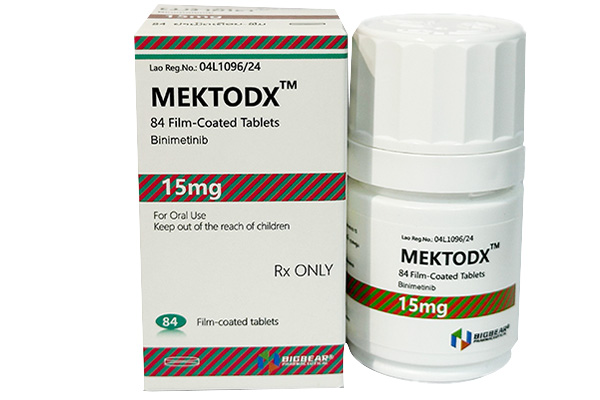
Binimetinib is indicated for use in combination with encorafenib for the treatment of advanced melanoma and non-small cell lung cancer (NSCLC) harboring specific *BRAF* gene mutations.
Indications for Binimetinib
Specifically, Binimetinib is used in combination with encorafenib to treat:
1. Patients with unresectable or metastatic melanoma (skin cancer that cannot be removed surgically or has spread) harboring *BRAF* V600E or V600K gene mutations.
2. Adult patients with metastatic non-small cell lung cancer (NSCLC) harboring a *BRAF* V600E mutation.
Note: Prior to initiating treatment with Binimetinib, the presence of these gene mutations must be detected in tumor samples using an FDA-approved test method.
Binimetinib is manufactured by Array BioPharma (now a subsidiary of Pfizer) and, together with encorafenib, constitutes an oral combination therapy involving BRAF and MEK inhibitors. Both Binimetinib and encorafenib are oral small-molecule kinase inhibitors.
Research Results for Binimetinib in Melanoma
In the COLUMBUS trial for unresectable or metastatic melanoma, 577 patients were randomized into three equal groups (1:1:1) to receive:
(1) Binimetinib 45 mg twice daily plus Encorafenib 450 mg once daily;
(2) Encorafenib 300 mg once daily;
(3) Vemurafenib 960 mg twice daily.
Treatment continued until disease progression or the occurrence of unacceptable side effects.
The primary endpoint—median progression-free survival (PFS)—was 14.9 months in the Binimetinib + Encorafenib combination therapy group, compared to 7.3 months in the Vemurafenib monotherapy group. (PFS refers to the length of time—during and after cancer treatment—that a patient lives with the disease without it worsening. "Median" indicates that 50% of patients had a PFS of less than 14.9 months, while 50% had a PFS of longer than 14.9 months.)
The overall response rate in the Binimetinib + Encorafenib combination therapy group was 63%, compared to 40% in the Vemurafenib monotherapy group. The median durations of response were 16.6 months and 12.3 months, respectively.
Side Effects
In the study, the most common side effects (≥25%) observed in patients receiving Binimetinib + Encorafenib for melanoma included:
Fatigue (43%); Nausea (41%); Diarrhea (36%); Vomiting (30%); Abdominal pain (28%).
Among patients treated with Binimetinib + Encorafenib, 5% permanently discontinued Binimetinib due to adverse events; the most common reasons were hemorrhage (2%) and headache (1%).
Study Results for Binimetinib in Non-Small Cell Lung Cancer
The approval of Binimetinib + Encorafenib for non-small cell lung cancer is based on data from the ongoing, open-label, single-arm Phase 2 PHAROS clinical trial, which enrolled 98 participants. Researchers are investigating the efficacy of the Binimetinib + Encorafenib combination therapy in patients with BRAF V600E-mutated metastatic non-small cell lung cancer.
Patients received Binimetinib 45 mg orally twice daily and Encorafenib... ...corafenib) 450 mg orally once daily, administered until disease progression or the occurrence of unacceptable side effects.
Among 59 patients who had not previously received any treatment for lung cancer (treatment-naïve), the overall response rate was 75%, with 59% of patients maintaining a response for at least 12 months. At the time of data cutoff, the median duration of response for this group could not yet be estimated.
Among 39 patients who had previously received treatment, the overall response rate was 46%, with 33% of patients maintaining a response for at least 12 months. The median duration of response was 16.7 months.
The median duration of treatment for Binimetinib and Encorafenib was 8.4 months and 9.2 months, respectively.
Side Effects
In the study, the most common side effects (≥25%) observed in patients receiving Binimetinib + Encorafenib for the treatment of non-small cell lung cancer included:
Fatigue (61%) ); nausea (58%); diarrhea (52%); muscle/joint pain (48%); vomiting (37%); abdominal pain (32%); blurred vision, vision loss, or other vision changes (29%); constipation (27%); shortness of breath (difficulty breathing) (27%); rash (27%); cough (26%).
Serious adverse events occurring in ≥2% of patients included: hemorrhage (6%); diarrhea (4.1%); anemia, dyspnea, and pneumonia (3.1% each); arrhythmia (irregular heartbeat), device-related infection, edema (fluid retention/swelling), myocardial infarction (heart attack), and pleural effusion (2% each). Overall, serious adverse events occurred in 38% of patients in this treatment group.
Important Warning
When Binimetinib + Encorafenib are used in combination for melanoma or non-small cell lung cancer, they may increase the risk of developing skin cancer (known as cutaneous squamous cell carcinoma or basal cell carcinoma).