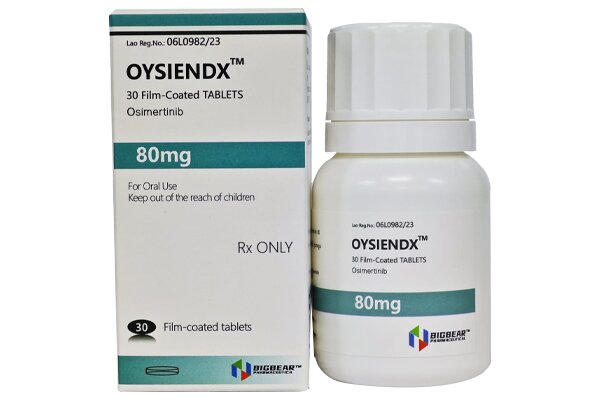
Osimertinib Common Adverse Reactions
1. Adverse Reactions with Monotherapy (>20%)
Leukopenia, lymphopenia, anemia, diarrhea, rash, musculoskeletal pain, neutropenia, nail toxicity, dry skin, stomatitis, fatigue.
2. Adverse Reactions with Platinum-Based Chemoradiotherapy (>20%)
Lymphopenia, leukopenia, ILD/pneumonitis, thrombocytopenia, neutropenia, rash, diarrhea, nail toxicity, musculoskeletal pain, cough, COVID-19.
3. Adverse Reactions with Pemetrexed and Platinum-Based Chemotherapy (>20%)
Leukopenia, thrombocytopenia, neutropenia, lymphopenia, rash, diarrhea, stomatitis, nail toxicity, dry skin, creatinine elevation.
Osimertinib Drug Interactions
1. Metabolic pathway: primarily metabolized by CYP3A. Substrate of P-glycoprotein (P-gp) and breast cancer resistance protein (BCRP).
2. Enzyme induction/inhibition: induces CYP1A2. Does not inhibit CYP1A2, 2A6, 2B6, 2C8, 2C9, 2C19, 2D6, or 2E1. Inhibits BCRP, but does not inhibit organic anion transporters (OAT) 1 and OAT3, organic anion transporting polypeptides (OATP) 1B1 and OATP1B3, multidrug and toxin extrusion transporters (MATE) 1 and MATE2K, or organic cation transporter (OCT) 2.
3. Drugs affecting hepatic enzymes – strong CYP3A4 inducers: pharmacokinetic interaction possible (decreased osimertinib plasma concentration). Avoid concomitant use. If concomitant use is unavoidable, increase osimertinib dose to 160 mg once daily; resume 80 mg once daily three weeks after discontinuation of the strong CYP3A4 inducer.
4. BCRP-transported drugs: pharmacokinetic interaction possible (increased substrate plasma concentration). Monitor for adverse reactions of BCRP substrates.
5. Drugs affected by P-gp transport system: pharmacokinetic interaction possible (increased substrate plasma concentration). Monitor for adverse reactions of P-gp substrates.
6. Drugs that prolong QT interval: potential pharmacodynamic interaction (additive effect on QT interval prolongation). Avoid concomitant use. If concomitant use is unavoidable, regularly monitor ECG and electrolytes.
7. Drugs affecting gastric acidity: clinically important pharmacokinetic interaction unlikely.
Osimertinib Specific Drug Interactions
1. Fexofenadine: fexofenadine peak concentration and AUC increased by 76% and 56% after single dose, and by 25% or 27% at steady state, respectively. Monitor for adverse reactions of fexofenadine.
2. Itraconazole: osimertinib AUC increased by 24%, peak concentration decreased by 20%; considered not clinically significant.
3. Omeprazole: no substantial effect on osimertinib exposure.
4. Rifampicin: osimertinib peak concentration and AUC decreased by 73% and 78%, respectively. If concomitant use is unavoidable, increase osimertinib dose to 160 mg once daily; resume 80 mg once daily three weeks after discontinuation of rifampicin.
5. Rosuvastatin: rosuvastatin peak concentration and AUC increased by 72% and 35%, respectively. Monitor for adverse reactions of rosuvastatin.
6. Simvastatin: no substantial effect on simvastatin pharmacokinetics.