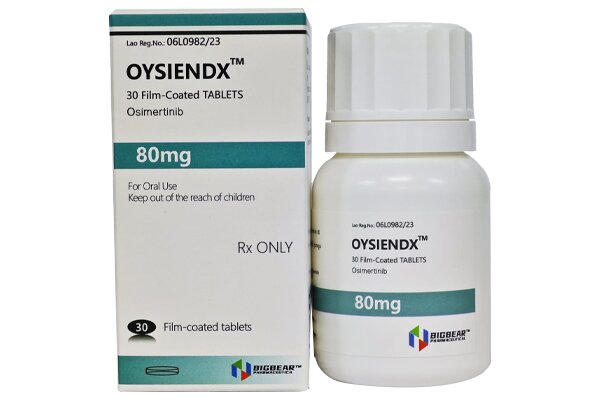
Osimertinib Precautions
1.Interstitial Lung Disease/Pneumonitis
Severe or fatal interstitial lung disease (ILD) or pneumonitis may occur.
(1).For patients who have not received recent definitive platinum-based chemoradiotherapy: if respiratory symptoms suggestive of ILD worsen (e.g., dyspnea, cough, fever), withhold osimertinib and promptly investigate for ILD.If ILD is confirmed,permanently discontinue osimertinib.
(2).For patients who have received recent definitive platinum-based chemoradiotherapy: for Grade 1 ILD/pneumonitis,continue or interrupt osimertinib and restart when appropriate.For Grade ≥2 ILD/pneumonitis,permanently discontinue osimertinib.
2.QT Interval Prolongation
QTc interval prolongation has been reported.
(1).For patients with congenital long QT syndrome,congestive heart failure,or electrolyte abnormalities,and for those taking concomitant medications known to prolong the QT interval and with known risk of torsades de pointes,regular monitoring of electrocardiogram(ECG)and serum electrolytes should be performed.
(2).If QT prolongation occurs,dose reduction,temporary interruption,or permanent discontinuation of osimertinib may be required.
(3).If QT prolongation is accompanied by signs and/or symptoms of life-threatening arrhythmias,permanently discontinue osimertinib.
3.Cardiomyopathy
Cardiomyopathy(e.g.,acute or chronic heart failure,congestive heart failure,pulmonary edema,reduced ejection fraction)has been reported.
(1).For patients receiving osimertinib monotherapy:perform cardiac monitoring(including LVEF assessment)before initiation and periodically during treatment,especially in patients with cardiac risk factors.
(2).For patients receiving osimertinib in combination with pemetrexed and platinum-based chemotherapy:perform cardiac monitoring(including LVEF assessment)in all patients before initiation and periodically during treatment.
(3).Assess LVEF in any patient who develops relevant cardiac signs or symptoms during osimertinib treatment.For patients who develop symptomatic congestive heart failure,permanently discontinue osimertinib.
4.Keratitis
Keratitis has been reported.If signs suggestive of keratitis appear(e.g.,ocular inflammation,lacrimation,photophobia,blurred vision,eye pain,red eye),immediately refer the patient to an ophthalmologist for evaluation.
5.Bullous Erythema Multiforme,Toxic Epidermal Necrolysis,and Stevens-Johnson Syndrome
These skin reactions have been reported in postmarketing cases.If these reactions are suspected,withhold osimertinib;if confirmed,permanently discontinue osimertinib.
6.Cutaneous Vasculitis
Cutaneous vasculitis(e.g.,leukocytoclastic vasculitis,urticarial vasculitis,IgA vasculitis)has been reported in postmarketing cases.If cutaneous vasculitis is suspected,withhold osimertinib and evaluate for systemic involvement;consider consultation with a dermatologist.If no other etiology is identified,consider permanent discontinuation based on severity.
7.Aplastic Anemia
Aplastic anemia has been reported;some cases were fatal.Inform patients of the signs and symptoms of aplastic anemia(e.g.,new or persistent fever,bruising,bleeding,pallor).If suspected,withhold osimertinib and consult a hematologist.If confirmed,permanently discontinue osimertinib.Perform complete blood count with differential before initiation,periodically during treatment,and more frequently as clinically indicated.
8.Fetal/Neonatal Morbidity and Mortality
May cause fetal harm.Animal studies show embryo-fetal toxicity(e.g.,post-implantation loss,early embryonic death,reduced fetal weight).Confirm pregnancy status before initiation.Avoid pregnancy during treatment.Females of reproductive potential should use effective contraception during treatment and for 6 weeks after the final dose.Males with female partners of reproductive potential should use effective contraception during treatment and for 4 months after the final dose.