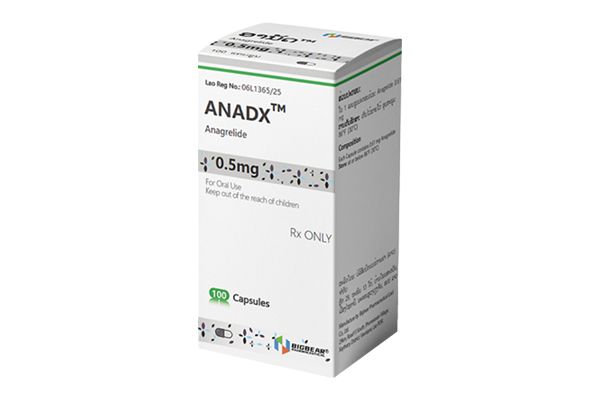
Anagrelide capsules, for oral administration, were first approved for marketing in the United States in 1997. Anagrelide is a thrombocytopenic agent indicated for the treatment of thrombocytosis secondary to myeloproliferative neoplasms.
Indications for Anagrelide
Anagrelide is a thrombocytopenic agent indicated for the treatment of thrombocytosis secondary to myeloproliferative neoplasms to reduce elevated platelet counts and the risk of thrombosis, and to improve related symptoms, including thrombotic bleeding events.
Dosage of Anagrelide
1. Recommended starting dose for adults: 0.5 mg four times daily, or 1 mg twice daily.
2. Recommended starting dose for pediatric patients: 0.5 mg once daily.
3. The starting dose should be maintained for at least one week, then titrated according to the target platelet count.
4. Weekly dose increments should not exceed 0.5 mg/day. The total daily dose should not exceed 10 mg, and a single dose should not exceed 2.5 mg.
5. Patients with moderate hepatic impairment: The starting dose is 0.5 mg once daily. (2.3)
Anagrelide Dosage Forms and Strengths
Capsules: 0.5 mg, 1 mg
Anagrelide Contraindications
None.
Anagrelide Precautions
1. Cardiovascular toxicity: There have been reports of QT interval prolongation and ventricular tachycardia caused by anagrelide. All patients should undergo cardiovascular examination, including an electrocardiogram (ECG), before starting treatment. Monitor patients for cardiovascular effects.
2. Pulmonary hypertension: Assess potential cardiopulmonary disease before starting treatment.
3. Bleeding risk: Monitor patients for bleeding, including those receiving concomitant therapy with other drugs known to cause bleeding.
Anagrelide Adverse Reactions
The most common adverse reactions (incidence ≥5%) include headache, palpitations, diarrhea, fatigue, edema, nausea, abdominal pain, dizziness, headache, dyspnea, cough, flatulence, vomiting, fever, peripheral edema, rash, chest pain, anorexia, tachycardia, malaise, paresthesia, back pain, pruritus, and indigestion.
Anagrelide Drug Interactions
1. Other PDE3 inhibitors: May exacerbate positive inotropic effects.
2. Aspirin and drugs that increase the risk of bleeding: Concomitant use increases the risk of bleeding.
Use in Specific Populations
Lactation: Breastfeeding is not recommended.