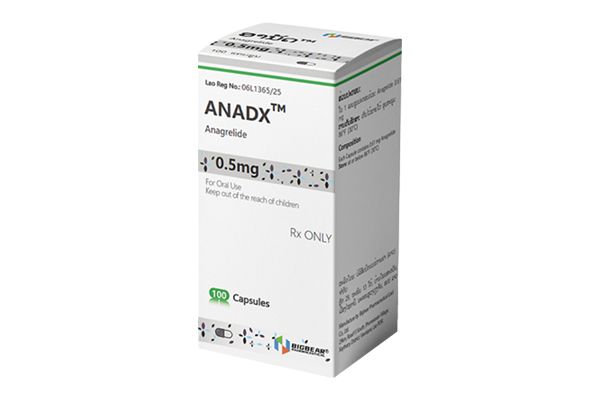
Anagrelide requires close monitoring of its potential side effects, methods of relief, and proper storage to ensure therapeutic efficacy and minimize safety risks.
I. Detailed Explanation of Anagrelide Side Effects
1. Common Adverse Reactions
(1) According to clinical research data, the most common adverse reactions of anagrelide include headache, palpitations, diarrhea, fatigue, edema, nausea, abdominal pain, dizziness, pain, dyspnea, cough, flatulence, vomiting, fever, peripheral edema, rash, chest pain, anorexia, tachycardia, malaise, paresthesia, back pain, itching, and indigestion.
(2) Headache has the highest incidence, reaching 44%, while palpitations and diarrhea occur in 26% of cases.
2. Cardiovascular Toxicity
(1) Anagrelide may cause serious cardiovascular reactions such as QT interval prolongation, tachycardia, and ventricular fibrillation.
(2) This drug is a PDE3 inhibitor and may cause vasodilation, tachycardia, palpitations, and congestive heart failure. (3) Use should be avoided in patients with known risk factors for QT interval prolongation.
3. Bleeding Risk
(1) Clinical monitoring shows that co-administration of anagrelide with aspirin increases the risk of major bleeding events.
(2) Close monitoring for bleeding is necessary during use, especially in patients receiving other medications that may cause bleeding.
4. Pulmonary Toxicity
(1) Post-marketing reports have identified interstitial lung disease associated with anagrelide use, including allergic alveolitis, eosinophilic pneumonia, and interstitial pneumonia.
(2) Most cases present with progressive dyspnea with pulmonary infiltration, with onset ranging from one week to several years after administration.
5. Other Important Adverse Reactions
(1) Adverse reactions with an incidence between 1% and 5% include flu-like symptoms, chills, arrhythmias, angina pectoris, heart failure, syncope, bleeding, hypertension, and orthostatic hypotension.
(2) Other possible side effects include anemia, thrombocytopenia, elevated liver enzymes, joint pain, and muscle pain.
II. Anagrelide Side Effect Relief Measures
1. Clinical Monitoring and Management
(1) Anagrelide treatment requires comprehensive clinical monitoring, including complete blood count, liver and kidney function assessment, and electrolyte testing.
(2) To prevent thrombocytopenia, platelet counts should be monitored every two days during the first week of treatment, and then at least once a week until the maintenance dose is reached.
2. Dosage Adjustment Strategy
(1) The initial dose should be maintained for at least one week, and then the dose should be adjusted according to platelet response.
(2) Weekly dose increments should not exceed 0.5 mg/day, single doses should not exceed 2.5 mg, and the total daily dose should not exceed 10 mg.
(3) Most patients will respond adequately to doses of 1.5 to 3.0 mg/day.
3. Special Population Protection
(1) For patients with moderate hepatic impairment, administration should begin with 0.5 mg daily, and cardiovascular events should be monitored frequently.
(2) Elderly and pediatric patients require dosage adjustments based on individual circumstances, and close monitoring of drug response is necessary.
4. Management of Concomitant Medication
(1) Avoid concomitant use with drugs that may prolong the QT interval, including chloroquine, clarithromycin, haloperidol, methadone, moxifloxacin, amiodarone, disopyramide, procainamide, and pimozide.
(2) Caution should be exercised when using drugs that affect coagulation function.
III. Anagrelide Storage Guidelines
1. Storage Temperature Requirements
Anagrelide should be stored at 25°C (77°F), with permissible fluctuations within the range of 15°C to 30°C (59°F to 86°F), conforming to USP-controlled room temperature standards.
2. Packaging and Light Protection Requirements
(1) The drug is packaged in opaque white capsules marked with a black "063" symbol.
(2) It must be stored in a light-protected container to prevent direct light from affecting drug stability.