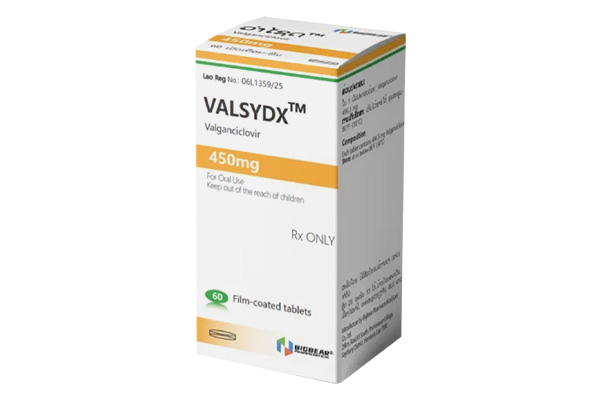
Previously, Genentech, a subsidiary of Roche, announced that its Valcyte (valganciclovir hydrochloride) had been approved by the U.S. Food and Drug Administration (FDA) for long-term treatment of kidney transplant patients at risk of cytomegalovirus (CMV) disease.
Clinical trial results showed that Valcyte reduced the CMV infection rate within one year after kidney transplantation from 36.8% (after 100 days of treatment) to 16.8% (after 200 days of treatment). Therefore, the FDA approved the drug for extended use.
Cytomegalovirus is the leading cause of disease within six months of organ transplantation. Approximately 50% to 80% of adults will be infected with the virus, which may remain dormant for life. When the immune system is weakened, the virus becomes relatively active and causes disease. CMV infection can lead to complications in the lungs, kidneys, nervous system, liver, and gastrointestinal tract.
Despite control of CMV infection, approximately one-third of patients still develop CMV infection after 100 days of prophylactic treatment. Therefore, the approval of this drug provides important new information for critical infection prevention treatment after kidney transplantation.
What are the precautions for valganciclovir tablets?
To ensure the proper efficacy of valganciclovir hydrochloride tablets and reduce side effects, patients should note the following: 1. Valganciclovir hydrochloride tablets should not be used in patients with known hypersensitivity to valganciclovir, ganciclovir, or any other component of the drug. 2. Valganciclovir hydrochloride tablets should not be used concurrently with acyclovir or valacyclovir. 3. Treatment with valganciclovir hydrochloride tablets should not be initiated if the absolute neutrophil count is less than 500 cells/mL, the platelet count is less than 25,000 cells/mL, or the hemoglobin level is less than 8 g/dL. 4. Valganciclovir hydrochloride tablets are not recommended for use in children. In addition, animal studies have shown that ganciclovir has mutagenic, teratogenic, spermatogenic, and carcinogenic effects, but the likelihood of these effects is very small, and patients can take it with confidence.
Can pregnant and breastfeeding mothers use this drug?
Because valganciclovir is rapidly and extensively converted into ganciclovir, its reproductive toxicity studies have not been replicated. In animal studies, ganciclovir caused decreased fertility and teratogenic effects. Women of childbearing age are advised to use effective contraception during treatment. Male patients are advised to use barrier contraception during treatment with valganciclovir hydrochloride tablets and for at least 90 days after discontinuation. There are no safety data for valganciclovir hydrochloride tablets during human pregnancy. Pregnant women should avoid using valganciclovir hydrochloride tablets unless the benefits to the mother far outweigh the potential harm to the fetus. The effects of valganciclovir or ganciclovir on perinatal and postnatal infant development have not been studied, but the possibility of ganciclovir being excreted into breast milk and causing serious adverse reactions in infants must be considered. Therefore, when considering the potential benefits of valganciclovir hydrochloride tablets for breastfeeding mothers, a decision should be made to discontinue the medication or breastfeeding.