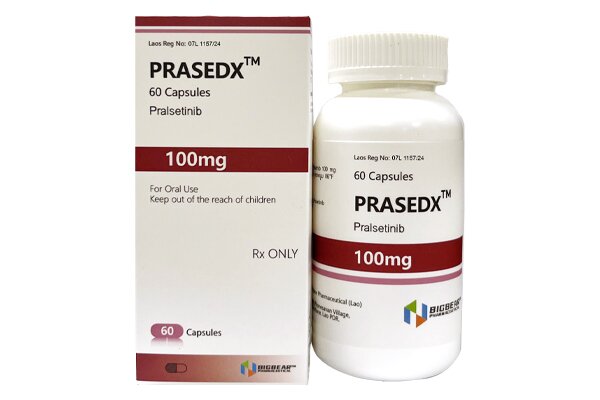
CStone Pharmaceuticals partner Blueprint Medicines recently announced that it has submitted a New Drug Application (NDA) to the US Food and Drug Administration (FDA) for pralsetinib for the treatment of patients with advanced or metastatic RET-mutant medullary thyroid carcinoma (MTC) and RET fusion-positive thyroid cancer. Note: pralsetinib, designed by Blueprint Medicines, is an oral, potent, and highly selective inhibitor of RET fusions and mutations (including predicted resistance mutations).
This NDA was submitted through the Real-Time Oncology Review Pilot Program (RTOR program). This is an initiative launched by the FDA's Center of Oncology Excellence to explore a more efficient review process to ensure patients have access to safe and effective treatments as quickly as possible, while maintaining and improving the quality of FDA reviews.
In May of this year, the FDA and the European Medicines Agency (EMA) accepted the NDA and Marketing Authorization Application (MAA) for pralsetinib for the treatment of locally advanced or metastatic RET fusion-positive non-small cell lung cancer (NSCLC), respectively.
“Preliminary therapies have broad potential to meet the medical needs of cancer patients with RET gene alterations who, despite having known disease drivers in their tumors, have not traditionally benefited from targeted therapies,” said Andy Boral, Chief Medical Officer at Blueprint Medicines. “Currently, our marketing application for pralsetinib in RET-altered non-small cell lung cancer and thyroid cancer is under review. We are working closely with regulatory agencies to bring this promising treatment to patients as quickly as possible.”
The transfection-associated rearrangement (RET) gene is a proto-oncogene that rearranges during transfection, hence its name. It encodes a cell membrane receptor tyrosine kinase called RET, and abnormalities in this gene are rare drivers in many types of tumors.
Activating RET fusions and mutations are key disease drivers in many cancer types, including NSCLC and MTC. RET fusions are involved in approximately 1–2% of NSCLC patients and approximately 10–20% of papillary thyroid carcinoma (PTC) patients, while RET mutations are involved in approximately 90% of advanced MTC patients. In addition, low-frequency RET alterations have been observed in colorectal cancer, breast cancer, pancreatic cancer, and other cancers, and RET fusions have been observed in patients with drug-resistant, EGFR-mutant NSCLC.
Pralsetinib is an orally administered (once-daily), potent, and highly selective precision medicine targeting oncogenic RET mutations. Blueprint Medicines is conducting clinical development of pralsetinib for the treatment of patients with RET-mutant non-small cell lung cancer, medullary thyroid carcinoma, and other solid tumors. In the United States, the FDA has granted pralsetinib Breakthrough Therapy Designation for the treatment of RET-fusion NSCLC that has progressed on platinum-based chemotherapy, and for the treatment of patients with RET-mutant medullary thyroid carcinoma (MTC) requiring systemic therapy and for whom there are no alternative treatment options.
Pralsetinib was designed by the Blueprint Medicines research team based on their proprietary compound library. In preclinical studies, pralsetinib consistently demonstrated sub-nanomolar potency against the most common RET gene fusions, activating mutations, and drug-resistant mutations. Furthermore, pralsetinib exhibits significantly improved selectivity for RET compared to approved multi-kinase inhibitors, with its RET efficacy being over 90-fold higher than that of VEGFR2. By inhibiting both primary and secondary mutations, pralsetinib holds promise for overcoming and preventing the development of clinical resistance. This treatment approach is expected to achieve durable clinical remissions in patients carrying various RET variants, with a favorable safety profile.