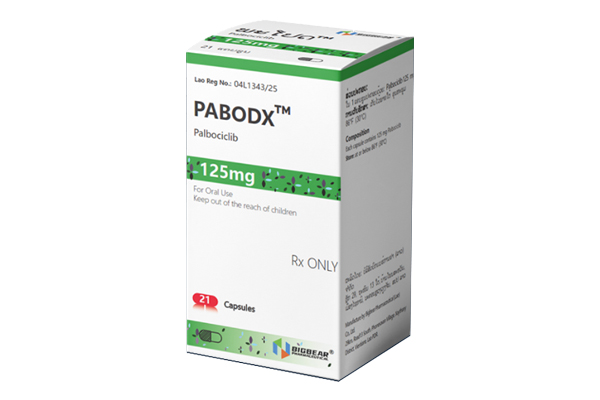
The U.S. Food and Drug Administration (FDA) has approved Ibrance (palbociclib) for the treatment of advanced (metastatic) breast cancer.
Breast cancer is the second most common type of cancer among women in the United States. It forms in breast tissue and, in advanced cases, spreads to surrounding normal tissue. The American Cancer Institute estimates that 232,670 U.S. women were diagnosed with breast cancer and 40,000 died from the disease in 2014.
Ibrance works by involving growth-inhibiting molecules that promote cancer cell growth, called cyclin-dependent kinases (CDKs) 4 and 6. Ibrance is intended for postmenopausal women with estrogen receptor (ER)-positive, human epidermal growth factor receptor 2 (HER2)-negative metastatic breast cancer who have not previously received any endocrine-based therapy. It is also used in combination with letrozole, another FDA-approved product used to treat certain types of breast cancer in postmenopausal women.
“The addition of palbociclib to letrozole provides a novel treatment option for women diagnosed with metastatic breast cancer,” said Richard Pazdur, MD, Director of the Hematology and Oncology Products Lab at the FDA’s Center for Drug Evaluation and Research. “The FDA is committed to expediting the approval of cancer drugs through our accelerated approval regulatory process.”
The FDA granted Ibrance Breakthrough Therapy designation because the sponsoring organization demonstrated through preliminary clinical evidence that the drug provides a substantial improvement beyond what is expected in treatment. It also received Priority Review, which provides accelerated review for drugs intended to provide a significant improvement in safety and efficacy for the treatment of a serious condition or to meet an unmet medical need. Ibrance is being approved two months ahead of the prescription drug user charge target date of April 13, 2015, the date the regulatory agency plans to complete its review of the application.
Ibrance is being approved under the FDA's expedited approval process, which allows approval for a drug to treat a serious or life-threatening disease based on clinical data showing that the drug has an impact on a reasonably predictable surrogate endpoint for patient benefit. This process provides patients with earlier access to promising new drugs while companies conduct confirmatory clinical trials.
The efficacy of the drug was demonstrated in 165 postmenopausal women with ER-positive, HER2-negative advanced breast cancer who had not previously received treatment for their advanced disease. Clinical trial participants were randomized to receive Ibrance with letrozole or letrozole alone. Participants treated with Ibrance plus letrozole survived approximately 20.2 months without disease progression (progression-free survival), compared to approximately 10.2 months for participants receiving letrozole alone. Overall survival information was not available at this time.
The most common side effects of this medication are decreased white blood cell count (neutropenia) in the fight against infection, fatigue, low red blood cell count (anemia), upper respiratory tract infection, nausea, inflammation of the oral cavity walls (stomatitis), hair loss, diarrhea, thrombocytopenia, decreased appetite, vomiting, and weakness, peripheral neuropathy, and epistaxis. Healthcare professionals should inform patients of these risks.
Treatment is recommended to begin with a 125 mg dose for 21 days, followed by 7 days without treatment. Healthcare professionals are advised to monitor complete blood cell counts before treatment begins and at the start of each cycle, as well as on day 14 of the first two cycles and when clinically indicated.