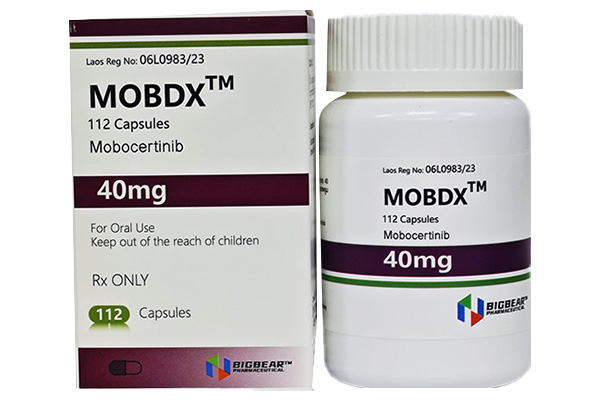
Takeda Pharmaceutical recently presented updated data from a Phase 1/2 clinical trial of its oral targeted anticancer drug mobocertinib (TAK-788) for the treatment of lung cancer at the 21st World Congress on Lung Cancer (WCLC) online in 2020, hosted by the International Association for the Study of Lung Cancer. The study was conducted in patients with metastatic non-small cell lung cancer (NSCLC) who had progressed on prior platinum-based therapy and carried an EGFR exon 20 insertion mutation (EGFRExon20insertion+).
Mobocertinib is a potent small-molecule tyrosine kinase inhibitor (TKI) specifically designed to selectively target EGFR and HER2 exon 20 insertion mutations.
In 2019, the U.S. FDA granted mobocertinib Orphan Drug Designation (ODD) for the treatment of lung cancer patients with HER2-mutated or EGFR-mutated tumors (including exon 20 insertion mutations).
In April 2020, the U.S. FDA granted mobocertinib Breakthrough Therapy Designation for the treatment of metastatic non-small cell lung cancer (NSCLC) patients whose disease has progressed during or after platinum-based chemotherapy and who harbor epidermal growth factor receptor (EGFR) exon 20 insertion mutations.
In October 2020, mobocertinib received Breakthrough Therapy Designation (BTD) from the Center for Drug Evaluation (CDE) of the China National Medical Products Administration (NMPA) for the same indication.
Currently, there are no approved targeted therapies for these patients, and current treatment regimens offer limited benefit. Mobocertinib is a small molecule tyrosine kinase inhibitor (TKI) designed to selectively target EGFR and human EGFR2 (HER2) exon 20 insertion mutations. Of particular note is that mobocertinib has been granted Breakthrough Therapy designation for the treatment of EGFR exon 20 insertion mutation-positive NSCLC in both the United States and China.
The results presented at this meeting showed that mobocertinib treatment demonstrated clinically meaningful antitumor efficacy: (1) the investigator-assessed objective response rate (ORR) was 35% (40/114; 95% CI: 26-45), and the independent review committee (IRC)-assessed ORR was 28% (32/114; 95% CI: 20-37). (2) mobocertinib treatment demonstrated durable response, with a median duration of response (DOR) of 17.5 months (95% CI: 7.4-20.3) as assessed by the IRC. (3) The median progression-free survival (PFS) confirmed by IRC assessment was 7.3 months (95% CI: 5.5–9.2), and the disease control rate (DCR) was 78% (89/114; 95% CI: 69–85).
The safety profile observed in the study was manageable. At the May data cutoff, the most common treatment-related adverse events (TRAEs; ≥20%) in patients pretreated with platinum were diarrhea (90%), rash (45%), paronychia (34%), nausea (32%), decreased appetite (32%), dry skin (30%), and vomiting (30%). Grade ≥3 TRAEs (≥5%) included diarrhea (21%). Nineteen patients (17%) discontinued treatment due to adverse events, the most common being diarrhea (4%) and nausea (4%). The safety profile at the November data cutoff was consistent with that at the May data cutoff.