Study Overview and Release Context
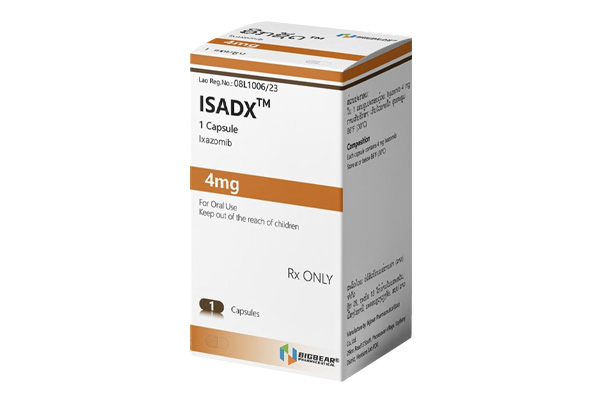
Takeda Pharmaceutical Company Limited, a Japanese pharmaceutical enterprise, recently announced the results of two clinical studies evaluating ixazomib, an oral proteasome inhibitor for multiple myeloma (MM), at the 25th Annual Congress of the European Hematology Association (EHA). The studies include the Phase 3 TOURMALINE-MM4 trial of single-agent ixazomib as first-line maintenance therapy, and the US MM-6 trial investigating class switch from another proteasome inhibitor to ixazomib.
TOURMALINE-MM4 (NCT02312258) Phase 3 Clinical Trial
Study Design
TOURMALINE-MM4 is a randomized, double-blind, placebo-controlled Phase 3 study. A total of 706 patients with newly diagnosed multiple myeloma who had not undergone stem cell transplantation, completed 6 to 12 months of initial therapy and achieved partial response or better were enrolled. The study evaluated the effect of single-agent ixazomib as maintenance therapy versus placebo on progression-free survival (PFS), the primary endpoint.
Primary Efficacy Results
The study met its primary endpoint, demonstrating statistically and clinically significant improvements in PFS in the ixazomib group compared with the placebo group. The median PFS was 17.4 months in the ixazomib group versus 9.4 months in the placebo group (HR=0.659; 95% CI; p<0.001), corresponding to a 34.1% reduction in the risk of disease progression or death. Data for the secondary endpoint of overall survival (OS) are not yet mature, and follow-up is ongoing.
Safety Profile
Ixazomib maintenance therapy demonstrated a favorable safety profile with no adverse impact on patients' quality of life. The safety profile of ixazomib was consistent with previously reported results of single-agent ixazomib, with no new safety signals identified. The most common treatment-emergent adverse events (TEAEs) were nausea, vomiting, diarrhea, rash, peripheral neuropathy (PN) and pyrexia.
Grade ≥3 TEAEs occurred in 36.6% of patients in the ixazomib group and 23.2% of those in the placebo group. The incidence of new primary malignancies was 2% in the ixazomib group and 6.2% in the placebo group. The proportion of patients discontinuing treatment due to TEAEs was low, at 12.9% in the ixazomib group and 8% in the placebo group. Mortality rates were 2.6% in the ixazomib group and 2.2% in the placebo group during the study.
US MM-6 (NCT03173092) Clinical Trial
Study Design
US MM-6 is an ongoing, open-label, single-arm, multicenter study conducted in patients with newly diagnosed multiple myeloma who had received triplet induction therapy based on another proteasome inhibitor, bortezomib (administered via intravenous infusion). The study evaluated the efficacy and safety of class switch, in which patients were transitioned from the bortezomib-based triplet regimen to an oral ixazomib-based triplet regimen (ixazomib + lenalidomide + dexamethasone). The primary endpoint is PFS, with key secondary endpoints including duration of treatment (DOT) and duration of response (DOR).
Clinical Outcomes and Safety
Data showed that transitioning from parenteral bortezomib to ixazomib-based therapy, which allows patients to receive treatment at home, enables long-term use of proteasome inhibitors. This switch led to an increase in overall response rate (ORR) from 62% to 70% and complete response (CR) rate from 4% to 26%. These findings indicate that class switch from intravenous bortezomib to oral ixazomib achieves favorable efficacy without compromising patients' quality of life. The study confirmed a favorable safety profile for ixazomib, with no unexpected safety signals identified.
Global Approval Status and Development Pipeline of Ixazomib
Ixazomib is the world’s first commercially available oral proteasome inhibitor. It was initially approved by the U.S. Food and Drug Administration (FDA) in November 2015 for the treatment of patients with multiple myeloma who have received at least one prior therapy, in combination with lenalidomide and dexamethasone. To date, ixazomib has been approved in more than 60 countries including the United States, Japan and the European Union, with regulatory applications under review in over 10 additional countries. Ixazomib is currently in clinical development for multiple treatment settings in multiple myeloma.