European Commission Approval Announcement
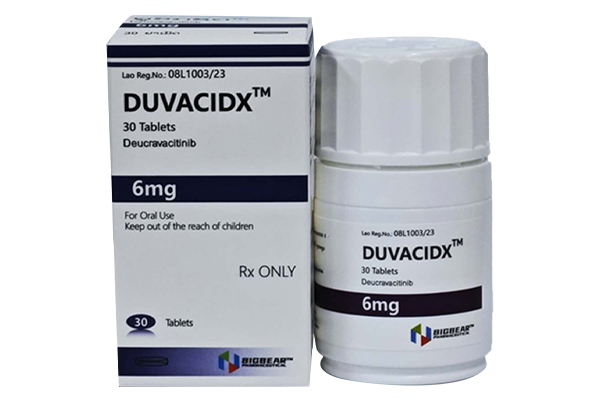
The European Commission (EC) has approved Sotyktu (deucravacitinib) from Bristol-Myers Squibb (BMS) as a once-daily oral tablet for the treatment of adult patients with moderate to severe plaque psoriasis who require systemic therapy. Concomitant use of Sotyktu with other potent immunosuppressive agents is not recommended.
Product Profile and Prior Regulatory Approval
Sotyktu is an oral, highly selective, first-in-class allosteric inhibitor of tyrosine kinase 2 (TYK2). It was previously approved by the U.S. Food and Drug Administration (FDA) in September of the previous year for the treatment of adult patients with moderate to severe plaque psoriasis who are candidates for systemic therapy or phototherapy. Sotyktu represents the first oral therapy with a novel mechanism of action approved for moderate to severe plaque psoriasis in nearly a decade.
Basis for EC Approval: Phase 3 POETYK PSO Trials
The EC approval was based on results from BMS’s Phase 3 POETYK PSO-1 and POETYK PSO-2 clinical trials. These 52-week trials evaluated the safety and efficacy of Sotyktu 6 mg once daily versus placebo and Otezla (apremilast) in a total of 1684 subjects aged 18 years and older.
Primary and Key Secondary Endpoints
The primary endpoints of both trials were the percentage of patients achieving a 75% improvement in the Psoriasis Area and Severity Index (PASI 75) and the percentage of patients achieving a static Physician’s Global Assessment (sPGA) score of 0 or 1 with at least a 2-grade improvement from baseline at Week 16, compared with placebo. Key secondary endpoints included the percentage of subjects achieving PASI 75, PASI 90, and sPGA 0/1 at Weeks 16 and 24 compared with Otezla.
Efficacy Results from POETYK PSO-1 and POETYK PSO-2
At Week 16, the proportion of patients achieving PASI 75 was 58% and 53% in the deucravacitinib groups, compared with 13% and 9% in the placebo groups (both P<0.0001), and 35% (P<0.0001) and 40% (P=0.0004) in the apremilast groups. At Week 24, the proportion of patients achieving PASI 75 was 69% and 58% in the deucravacitinib groups, compared with 38% and 38% in the apremilast groups (both P<0.0001). At Week 16, the proportion of patients achieving PASI 90 was 36% and 27% in the deucravacitinib groups, compared with 4% and 3% in the placebo groups (both P<0.0001), and 20% (P=0.0002) and 18% (P=0.0046) in the apremilast groups. At Week 24, the proportion of patients achieving PASI 90 was 42% and 32% in the deucravacitinib groups, compared with 22% (P<0.0001) and 20% (P=0.0002) in the apremilast groups. At Week 16, the proportion of patients achieving sPGA 0/1 was 54% and 50% in the deucravacitinib groups, compared with 7% and 9% in the placebo groups (both P<0.0001), and 32% and 34% in the apremilast groups (both P<0.0001). At Week 24, the proportion of patients achieving sPGA 0/1 was 59% and 49% in the deucravacitinib groups, compared with 31% and 30% in the apremilast groups (both P<0.0001).
Long-Term Response Durability
In POETYK PSO-1, 82% (n=187/228) of patients who achieved PASI 75 with deucravacitinib at Week 24 maintained their response through Week 52. In POETYK PSO-2, 80% (n=119/148) of patients continuing deucravacitinib maintained PASI 75, compared with only 31% (n=47/150) of patients discontinuing deucravacitinib.
Patient-Reported Symptom Outcomes
In both trials, a higher proportion of patients treated with deucravacitinib achieved a Psoriasis Symptoms and Signs Diary symptom score of 0 (no itching, pain, burning, stinging, or skin tightness) at Week 16 compared with the placebo groups (8% and 1%, respectively).
Safety Profile
In the POETYK PSO trials, the most common adverse reactions (≥1% and higher than placebo) in Sotyktu-treated patients at Week 16 were upper respiratory tract infection (19.2%), elevated blood creatine phosphokinase (2.7%), herpes simplex (2.0%), oral ulceration (1.9%), folliculitis (1.7%), and acne (1.4%). Adverse reactions leading to treatment discontinuation occurred in 2.4% of Sotyktu patients, 3.8% of placebo patients, and 5.2% of Otezla patients.