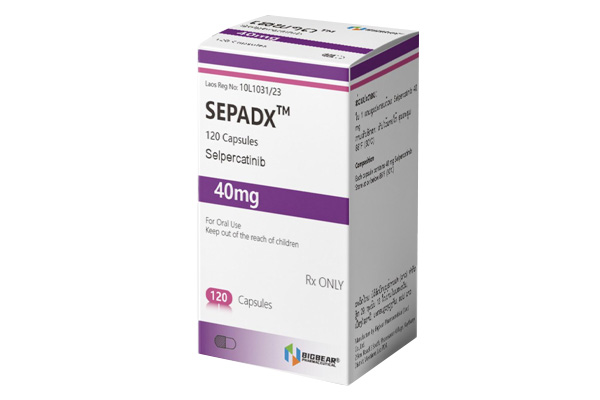
Selpercatinib is a treatment option recommended by the National Comprehensive Cancer Network (NCCN) for certain patients with RET-positive metastatic non-small cell lung cancer (NSCLC) and RET-positive advanced or metastatic thyroid cancer.
Selpercatinib Indications: FDA-Approved RET Fusion-Positive Cancers
Selpercatinib is used to treat certain cancers caused by abnormal RET genes in:
Adults with locally advanced or metastatic non-small cell lung cancer (NSCLC).
Adults and children aged 2 years and older with advanced or metastatic medullary thyroid cancer (MTC) who require systemic therapy (oral or injectable medication).
Adults and children aged 2 years and older with advanced or metastatic thyroid cancer who require systemic therapy and whose cancer has not responded or is no longer responding to radioactive iodine treatment.
Adults and children aged 2 years and older with locally advanced or metastatic solid tumors that have progressed during or after other treatments, or for which no satisfactory alternative treatment options exist.
Your doctor will perform tests to ensure selpercatinib is right for you.
For children under 2 years of age, the safety and effectiveness of selpercatinib remain unknown for treating advanced/metastatic MTC, advanced/metastatic thyroid cancer, or locally advanced/metastatic solid tumors.
Use in Specific Populations
If you are able to become pregnant:
Your doctor will perform a pregnancy test before you start treatment.
You should use effective contraception during treatment and for 1 week after the final dose.
Consult your doctor about appropriate birth control methods. Tell your doctor immediately if you become pregnant or suspect you are pregnant.
Males with partners who can become pregnant should use effective contraception during treatment and for 1 week after the final dose.
These are not all the possible side effects. Consult your doctor if you have concerns or experience any symptoms.
Precautions Before Using Selpercatinib
Before taking selpercatinib, inform your doctor of all your medical conditions, including if you:
Have liver problems, high blood pressure, or bleeding issues.
Have lung or breathing problems (unrelated to lung cancer).
Have heart conditions, including QT interval prolongation.
Plan to have surgery: You should stop taking selpercatinib at least 7 days before a scheduled procedure.
Are breastfeeding or plan to breastfeed: It is unknown if the drug passes into breast milk. Do not breastfeed during treatment and for 1 week after the final dose.
Additionally, tell your doctor about all medications you are taking, including prescription and over-the-counter drugs, vitamins, and herbal supplements, as they may interact with selpercatinib and increase the risk of side effects.