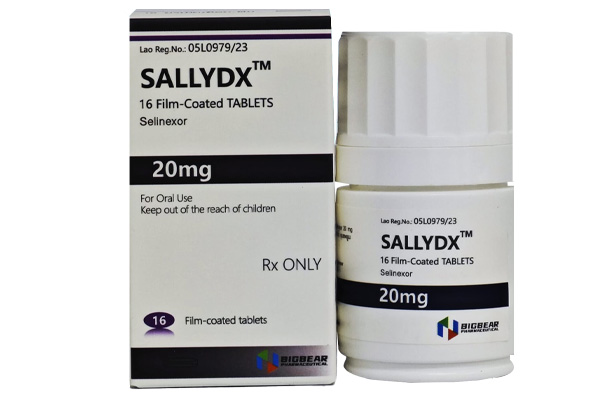
Selinexor is an XPO-1 inhibitor clinically used to treat multiple myeloma and diffuse large B-cell lymphoma. It has shown good efficacy, improving objective response rates and survival rates, and enhancing quality of life. Patients are advised to use this medication under the guidance of a physician.
XPO1 Inhibitor Selinexor Overview
Selinexor is a first-line selective export protein-1 inhibitor. In the EU and US, once-weekly oral selinexor combined with once-weekly subcutaneous bortezomib and twice-weekly oral dexamethasone (selinexor-bortezomib-dexamethasone) is approved for the treatment of adult patients with multiple myeloma who have received at least one prior therapy.
In randomized trials, this regimen significantly prolonged progression-free survival (PFS) in patients with previously treated multiple myeloma compared to the standard bortezomib-dexamethasone regimen.
Celinixol-bortezomib-dexamethasone was generally manageable tolerable and had an acceptable safety profile in Boston, with a lower incidence of peripheral neuropathy compared to bortezomib-dexamethasone.
The triple therapy regimen uses less bortezomib and dexamethasone during the first 24 weeks of treatment. The efficacy and safety of celinixol-bortezomib-dexamethasone, combined with weekly dosing of celinixol and bortezomib, make it a useful additional triple therapy option for previously treated multiple myeloma.
Efficacy of Celinixol in Multiple Myeloma
Despite advancements in treatment, multiple myeloma (MM) remains an incurable disease. Recently, celinixol has shown promising efficacy in relapsed/refractory multiple myeloma (RRMM), and this study evaluated it.
Methods: Clinical trials and real-world studies enrolling patients with multiple myeloma treated with celinixol were included. The pooled hazard ratio (RR) was calculated to compare hazard rates, with 95% confidence intervals (CI) and concurrent p-values assessed.
Results: A total of 16 studies included 817 patients. Compared with first-line treatment, celinisoxol as first-line or early-stage therapy resulted in a higher objective response rate (ORR) (65.9% vs. 23.4%) and a longer pooled progression-free survival (PFS) (median: 12.5 months vs. 2.9 months). Furthermore, earlier administration also led to a consistent trend in overall survival compared with fifth-line therapy (median: 22.7 months vs. 8.9 months).
For RRMM, celinisoxol and dexamethasone (Xd) in combination with protease inhibitors (PIs) or immunomodulatory drugs (…)… The ORRs of celinidox (IMiDs) were superior to those of Xd alone, with ORRs of 56.1%, 52.5%, and 24.6%, respectively.
In summary, celinidox is beneficial for RRMM as a first-line or early-stage treatment. Xd plus PIs or IMiDs is recommended.
Efficacy of Celinidox in the Treatment of Diffuse Large B-Cell Lymphoma
Celinidox is a first-line oral treatment that selectively inhibits nuclear output. It received Fast Track designation from the U.S. Food and Drug Administration for the treatment of relapsed or refractory diffuse large B-cell lymphoma. Large B-cell lymphoma (DLBCL) is being evaluated as a potential treatment for DLBCL.
A study assessed whether the response to celinixol was affected by the number of prior lines of therapy, autologous stem cell transplantation (ASCT), response to first and most recent treatments, and time to disease progression.
Patients: 134 patients with DLBCL who had received 2–5 prior lines of therapy were enrolled in SADAL and received 60 mg celinixol twice weekly.
Results: Median overall survival was 9.0 months, and median progression-free survival was [missing information]. 2.6 months. The best overall response rate (ORR) and disease control rate were observed in patients who had previously received ASCT (42.5% and 50.0%, respectively) or responded to last-line therapy. Patients with primary refractory DLBCL also showed remission (ORR 21.8%).
Celinisox is effective in treating multiple myeloma and diffuse large B-cell lymphoma. Patients can use the medication under the guidance of a physician. During treatment, it is important to monitor for adverse drug reactions and seek medical attention promptly if any abnormalities occur.