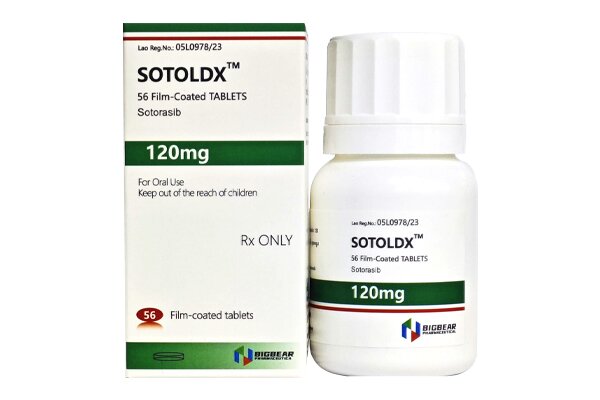
On January 17, 2025, Amgen announced that the U.S. Food and Drug Administration (FDA) has approved Lumakras (sotorasib) in combination with Vectibix (panitumumab) for the treatment of adult patients with metastatic colorectal cancer (mCRC) harboring a KRAS G12C mutation—as detected by an FDA-approved test—who have previously received fluoropyrimidine-, oxaliplatin-, and irinotecan-based chemotherapy. This approval is based on results from the pivotal Phase 3 CodeBreaK 300 study, which demonstrated that, compared to investigator-chosen standard-of-care (SOC) chemotherapy regimens, the combination of Lumakras and Vectibix is the first and only targeted therapy combination to show superior progression-free survival (PFS) in chemotherapy-refractory metastatic colorectal cancer with a KRAS G12C mutation.
"Colorectal cancer is the third leading cause of cancer-related deaths in the United States, and fewer than one in five patients diagnosed with metastatic disease survive more than five years after diagnosis," said Jay Bradner, M.D., Executive Vice President of Research and Development at Amgen. "Lumakras in combination with Vectibix offers a targeted, biomarker-driven combination therapy that is more effective at delaying disease progression compared to investigator-chosen standard-of-care chemotherapy regimens. This new option validates our combination strategy to improve outcomes for patients with advanced metastatic colorectal cancer harboring a KRAS G12C mutation."
The CodeBreaK 300 clinical trial compared the efficacy of two different doses of Lumakras (960 mg daily or 240 mg daily) in combination with Vectibix against investigator-chosen standard-of-care chemotherapy regimens (trifluridine/tipiracil or regorafenib) in patients with chemotherapy-refractory metastatic colorectal cancer harboring a KRAS G12C mutation. Study results showed that the median progression-free survival (PFS) for the group receiving 960 mg daily Lumakras in combination with Vectibix (n=53) was 5.6 months (4.2, 6.3), compared to 2 months (1.9, 3.9) for the group receiving investigator-chosen therapy (n=54), with a hazard ratio (HR) of 0.48 (95% confidence interval [CI]: 0.3, 0.78) and a p-value of 0.005. Furthermore, the overall response rate (ORR) in the combination therapy group was 26% (95% CI: 15, 40), whereas it was 0% (95% CI: 0, 7) in the investigator-chosen therapy group. The study did not achieve statistical significance regarding overall survival (OS). The median overall survival (mOS) for patients treated with Lumakras in combination with Vectibix was not reached (NR) (8.6, NR), compared to 10.3 months (7, NR) in the investigator-chosen therapy group, with an HR of 0.7 (95% CI: 0.41, 1.18); the final analysis of OS did not demonstrate statistical significance. The safety profile was consistent with historical observations for Lumakras and Vectibix. The most common adverse reactions (≥20%) were rash (87%), dry skin (28%), diarrhea (28%), stomatitis (26%), fatigue (21%), and musculoskeletal pain (21%). In the group receiving 240 mg daily Lumakras in combination with Vectibix (n=53), PFS did not reach statistical significance compared to the investigator-chosen therapy group.
The KRAS G12C mutation is present in approximately 3–5% of colorectal cancers, based on FDA-approved biomarker testing methods. This underscores the critical role of comprehensive biomarker testing in metastatic colorectal cancer. By testing for actionable mutations, eligible patients can now access appropriate targeted therapies, potentially leading to improved clinical outcomes. “In metastatic colorectal cancer, compared to tumors without mutations, KRAS mutations have historically been associated with higher mortality rates and poorer prognoses, while standard treatment regimens have demonstrated only marginal benefits,” said Marwan G. Fakih, MD, Principal Investigator and Co-Director of the Gastrointestinal Cancer Program at City of Hope. “The combination of sotorasib and panitumumab is designed to dual-block both the KRAS G12C and EGFR pathways, offering a much-needed new therapeutic option to better overcome cancer’s escape mechanisms. The CodeBreaK 300 study demonstrates that this combination regimen yields superior progression-free survival compared to investigator-chosen standard chemotherapy regimens, delivering clinically meaningful benefits to patients with KRAS G12C-mutated metastatic colorectal cancer.”
“For metastatic colorectal cancer, there is an urgent need for continued innovation and precision medicine to help combat this disease,” said Michael Sapienza, CEO of the Colorectal Cancer Alliance. “This new combination therapy represents a significant breakthrough for patients with KRAS G12C-mutated metastatic colorectal cancer, providing a new and beneficial treatment option for those living with this devastating and challenging disease.”
Investigator-chosen standard chemotherapy regimens included trifluridine/tipiracil or regorafenib.