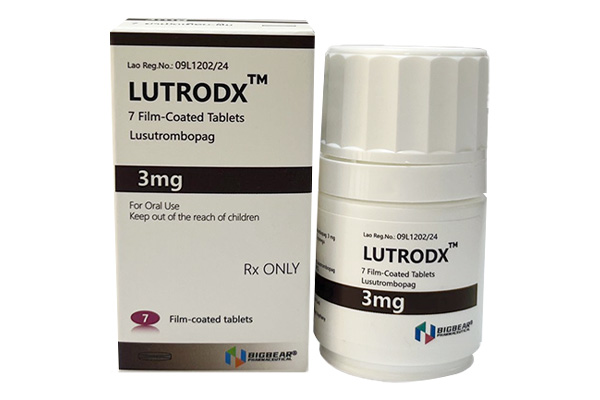
Lusutrombopag is an oral small-molecule thrombopoietin receptor agonist (TPO-RA) that promotes platelet production by activating the thrombopoietin receptor, requiring no injection or dose titration, offering convenient use, and being unaffected by food intake.
What are the purchasing channels for the Lao Bear version of Lusutrombopag
The Lao Bear version of Lusutrombopag is available in the specification of 3mg*7 tablets/box. For specific purchasing methods, we recommend that you contact professional customer service for detailed consultation.
Mechanism of action and therapeutic positioning of Lusutrombopag
Lusutrombopag belongs to the class of thrombopoietin (TPO) receptor agonists. Thrombopoietin is a naturally occurring key hormone in the human body that regulates platelet production, primarily produced by the liver. In patients with chronic liver disease, impaired liver function leads to reduced endogenous TPO production, resulting in insufficient platelet production and subsequent thrombocytopenia. Lusutrombopag mimics endogenous TPO by binding to the TPO receptor on the surface of megakaryocytes in the bone marrow, activating downstream signaling pathways, stimulating megakaryocyte proliferation and differentiation, and ultimately promoting platelet production and release. It is particularly important to emphasize that the indication of lusutrombopag is very clearly defined—it is used in adult patients with chronic liver disease who are scheduled to undergo surgery or invasive procedures, with the goal of raising platelet counts to a safe level in the short term to reduce the risk of bleeding during procedures. Lusutrombopag cannot be used to normalize platelet counts in patients with chronic liver disease. This distinction is critical because long-term over-elevation of platelet counts may increase the risk of thrombotic events. It is currently unknown whether lusutrombopag is safe and effective in pediatric patients.
Safety warnings for Lusutrombopag
Before using lusutrombopag, patients and healthcare providers must fully understand its potential safety risks. The most important warning involves thrombotic/thromboembolic complications. As a TPO receptor agonist, lusutrombopag has been associated with thrombotic and thromboembolic events in patients with chronic liver disease. Clinical reports have documented cases of portal vein thrombosis occurring in patients with chronic liver disease receiving TPO receptor agonist therapy. Blood clots may occur in sites such as the liver. For patients with pre-existing coagulation abnormalities or a history of thrombotic events, the risk of thrombosis during lusutrombopag use may be further increased. Therefore, close monitoring of platelet counts is required during treatment, and early signs of thromboembolic events should be carefully observed, with timely intervention if they occur. Regarding adverse reactions, the most common adverse reaction reported in ≥3% of patients in clinical trials was headache. Other possible adverse reactions include nausea (gastrointestinal system) and rash (skin and subcutaneous tissue). Patients should seek immediate medical attention if they experience severe discomfort or allergic reactions (such as urticaria, dyspnea, facial swelling, etc.). Breastfeeding is not recommended during lusutrombopag treatment and for at least 28 days after the last dose.