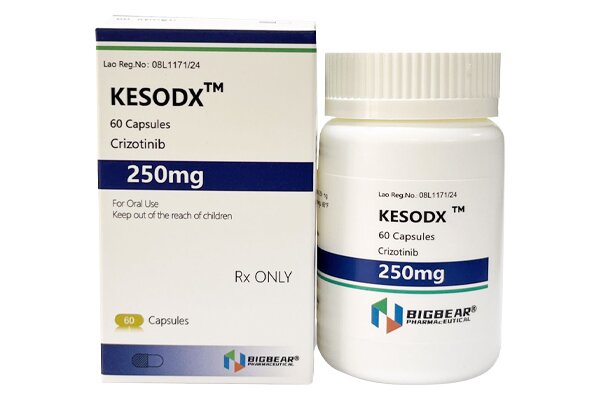
FDA Approval Announcement
March 11, 2016 -- The U.S. Food and Drug Administration (FDA) approved Xalkori (crizotinib) for the treatment of patients with advanced (metastatic) non-small cell lung cancer (NSCLC) whose tumors harbor ROS-1 gene alterations. Xalkori is the first and only FDA-approved treatment for ROS-1 positive NSCLC patients.
Clinical Background of ROS-1 Positive NSCLC
Lung Cancer Epidemiology (2015, U.S.)
According to the National Cancer Institute, lung cancer is the leading cause of cancer-related deaths in the U.S., with an estimated 221,200 new diagnoses and 158,040 deaths.
ROS-1 Gene Alteration Characteristics
ROS-1 gene alterations, which are linked to abnormal cell growth, are detected in approximately 1% of NSCLC patients.
The clinical and pathological characteristics of ROS-1 positive NSCLC are similar to those of ALK-positive NSCLC, for which crizotinib was approved in 2011.
Expert Commentary
Richard Pazdur, M.D., Director of the Office of Hematology and Oncology Products in the FDA’s Center for Drug Evaluation and Research, commented: “Lung cancer is difficult to treat, in part, because patients have different mutations, some of which are rare. The expanded use of Xalkori will provide a valuable treatment option for patients with the rare and difficult to treat ROS-1 gene mutation by giving health care practitioners a more personalized way of targeting ROS-1 positive NSCLC.”
Mechanism of Action
Xalkori is an oral medication that selectively blocks the activity of the ROS-1 protein in tumors with ROS-1 gene alterations. This inhibition may prevent the growth and metastasis of NSCLC cells.
Clinical Trial for Efficacy and Safety
Study Design
A multicenter, single-arm trial enrolling 50 patients with ROS-1 positive metastatic NSCLC. Patients received Xalkori twice daily, with the primary efficacy endpoint being the objective response rate (ORR) (complete or partial tumor shrinkage).
Key Efficacy Results
ORR: 66% of patients achieved complete or partial tumor shrinkage.
Median Duration of Response: 18.3 months.
Safety Profile
The safety results were generally consistent with those observed in 1,669 ALK-positive metastatic NSCLC patients treated with Xalkori.
Adverse Reactions
Common Side Effects
Vision disorders, nausea, diarrhea, vomiting, edema, constipation, elevated transaminases (liver problems), fatigue, decreased appetite, upper respiratory infection, dizziness, and peripheral neuropathy (numbness or tingling in hands/feet).
Serious Side Effects
Liver dysfunction, life-threatening or fatal interstitial lung disease (pulmonary inflammation), cardiac arrhythmias, and partial or complete vision loss in one or both eyes.
FDA Designations and Review Status
Breakthrough Therapy Designation
Priority Review Status
Orphan Drug Designation
These programs are designed to expedite the development and review of drugs for serious or life-threatening conditions, with orphan drug designation providing incentives (e.g., tax credits, user fee waivers, market exclusivity) for rare disease drug development.