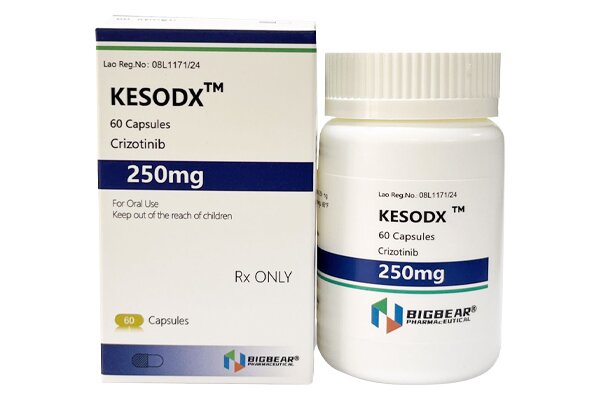
FDA Approval Announcement
NEW YORK--(BUSINESS WIRE) January 14, 2021 -- Pfizer Inc. (NYSE:PFE) announced that the U.S. Food and Drug Administration (FDA) approved the supplemental New Drug Application (sNDA) for Xalkori® (crizotinib) for the treatment of pediatric patients 1 year of age and older and young adults with relapsed or refractory, systemic anaplastic large cell lymphoma (ALCL) that is anaplastic lymphoma kinase (ALK)-positive.
Note: The safety and efficacy of Xalkori have not been established in older adults with relapsed or refractory, systemic ALK-positive ALCL.
Clinical Background of ALCL
ALCL is a rare form of non-Hodgkin lymphoma (NHL), accounting for approximately 30% of NHL cases in young people.
Approximately 90% of ALCL cases in young people are ALK-positive.
Although most patients with ALK-positive ALCL respond well to chemotherapy and achieve long-term remission, some patients will relapse or require alternative treatment approaches.
Expert Statements
Chris Boshoff, M.D., Ph.D.
Chief Development Officer, Oncology, Pfizer Global Product Development, stated: “We are proud to deliver the first biomarker-driven therapy for children and young adults with ALCL. Xalkori offers a meaningful new treatment option for young patients with relapsed or refractory ALK-positive ALCL. Xalkori transformed the treatment of ALK-positive non-small cell lung cancer as the first biomarker-driven therapy for that disease, and this approval is a notable milestone in our journey to continue to follow the science to address cancers with significant unmet need.”
Yael Mossé, M.D.
Associate Professor of Pediatrics at the University of Pennsylvania/ Children’s Hospital of Philadelphia and Principal Investigator for the pivotal study, stated: “With increased attention being placed on the development of targeted agents and the importance of ALK in pediatric patients with ALCL, the approval of Xalkori is a significant victory in our ongoing fight against these cancers that provides an outpatient oral medication with the real possibility of robust and sustained responses. ALK fusions play an important role in the pathology of ALCL, and it’s exciting that Xalkori is able to leverage this dependence to provide a treatment option for young people faced with ALCL disease progression.”
Basis for Approval: Study ADVL0912 (NCT00939770)
Study Design
A multicenter, single-arm, open-label study involving 121 patients aged 1 to 21 years, including 26 patients with relapsed or refractory, systemic ALK-positive ALCL who had received at least one systemic treatment.
Key Efficacy Results
Objective Response Rate (ORR): 88% in patients with relapsed or refractory, systemic ALK-positive ALCL.
Duration of Response: Among the 23 patients who achieved a response, 39% maintained the response for at least 6 months, and 22% maintained the response for at least 12 months.
Safety Profile
The safety profile of Xalkori in ALK-positive ALCL in children and young adults is generally consistent with that observed in patients with ALK-positive and ROS1-positive metastatic NSCLC.
Common Adverse Reactions (≥35%, excluding laboratory abnormalities)
Diarrhea, vomiting, nausea, vision disorder, headache, musculoskeletal pain, stomatitis, fatigue, decreased appetite, pyrexia, abdominal pain, cough, and pruritis.
Common Grade 3 or 4 Laboratory Abnormalities (≥15%)
Neutropenia, lymphopenia, and thrombocytopenia.
Grade 4 Laboratory Abnormalities (≥15%)
Neutropenia (62%), lymphopenia (35%), and thrombocytopenia (19%).
Visual Disorders
Visual disorders occurred in 46% of the 121 patients treated with Xalkori, including 65% of the 26 patients diagnosed with ALCL.