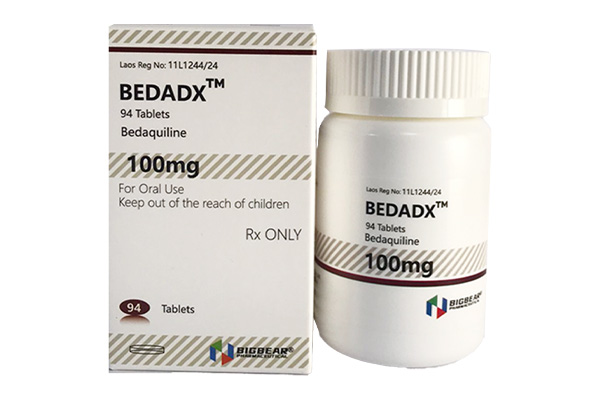
For countless families deeply trapped in the dilemma of drug-resistant tuberculosis, the Lao Daxiong version of Bedaquiline represents not only a therapeutic option but also a ray of light重新shining into the grim tunnel of treatment—offering patients a precious chance for survival through a more affordable economic threshold and strict international quality certification standards.
What are the purchasing channels for the Lao Daxiong version of Bedaquiline?
The Lao Daxiong version of Bedaquiline is available in the specification of 100mg*94 tablets per box. For specific purchase methods, we recommend contacting professional customer service for detailed consultation.
Storage of Bedaquiline
Bedaquiline should be stored in a sealed container, protected from light, and kept dry at temperatures below 25°C, avoiding high temperature and humidity, as the product is sensitive to light and moisture, and degradation products may affect efficacy and safety. Tablets should remain in the original aluminum blister packaging until administration; they should not be removed in advance and placed in a pill box for prolonged exposure to air. It is important to note that this product is not scored and cannot be split. If a half-dose is required (currently without clinical basis), no applicable specification exists; therefore, in practice, it is administered only as whole tablets. When prescribing, physicians should calculate the exact number of tablets based on the patient's treatment cycle to avoid insufficient supply or excessive surplus. For patients with swallowing difficulties, the tablet may be crushed and mixed with soft food or liquid for immediate ingestion, but this may alter pharmacokinetics and should only be used when no alternative is available, with enhanced therapeutic drug monitoring.
Warnings and Precautions for Bedaquiline
The most prominent safety warning for Bedaquiline concerns cardiac repolarization effects, namely QT interval prolongation. This drug can concentration-dependently block the rapid delayed rectifier potassium channel (hERG) in cardiomyocytes, leading to QTcF (Fridericia-corrected) interval prolongation on electrocardiogram and increasing the risk of malignant arrhythmias such as torsades de pointes. Therefore, a baseline electrocardiogram must be obtained before treatment, and regular monitoring (recommended at least at weeks 2, 4, 8, 12, and monthly thereafter) should be performed during therapy, with simultaneous recording of serum potassium and magnesium levels, and prompt correction of hypokalemia or hypomagnesemia. If a patient experiences syncope, palpitations, dizziness, or seizure-like episodes, immediate electrocardiographic examination is required. When the QTcF interval exceeds 500ms, or increases by more than 60ms from baseline, accompanied by clinical evidence of significant ventricular arrhythmias (e.g., polymorphic ventricular tachycardia), Bedaquiline must be discontinued immediately, and other concomitant medications that prolong the QT interval should be evaluated. In addition, co-administration with other drugs known to prolong the QT interval (e.g., fluoroquinolones, macrolides, antipsychotics, class III antiarrhythmics, etc.) may produce additive prolongation effects, requiring more frequent ECG monitoring and consideration of adjustments to the combination regimen. Another important warning is hepatotoxicity. Cases of hepatocellular injury, jaundice, and liver failure have been reported in post-marketing reports and clinical trials, with mechanisms possibly related to mitochondrial toxicity and oxidative stress. Serum transaminases (ALT, AST), total bilirubin, and alkaline phosphatase should be measured before treatment; monthly monitoring during therapy is recommended. If significant liver enzyme elevation (ALT >3× upper limit of normal with bilirubin >2× upper limit of normal) or clinical symptoms of liver injury (fatigue, anorexia, dark urine, scleral icterus) occur, the drug should be paused and causality assessed. Furthermore, non-adherence to the treatment regimen (e.g., dose reduction, missed doses, or premature discontinuation) will directly lead to insufficient bacterial exposure, inducing Bedaquiline resistance mutations, thereby undermining the efficacy of the entire MDR-TB combination regimen; thus, patient education and supportive management must be reinforced.