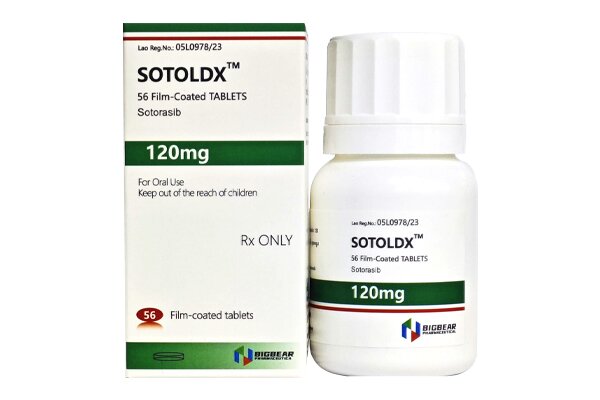
Side Effects of Sotorasib
Hematologic
Very common (≥10%): lymphopenia (up to 48%), decreased hemoglobin (up to 43%), prolonged activated partial thromboplastin time (up to 23%), anemia.
Gastrointestinal
Very common (≥10%): diarrhea (up to 42%), nausea (up to 26%), vomiting (up to 17%), constipation (up to 16%), abdominal pain (including upper and lower abdominal pain, up to 15%).
Frequency not reported: gastric ulcer.
Hepatic
Very common (≥10%): AST increased (up to 39%), ALT increased (up to 38%), hepatotoxicity (including ALT increased, AST increased, blood bilirubin increased, drug-induced liver injury, hepatitis, abnormal liver function tests, transaminases increased, up to 25%).
Clinical data: Among 357 patients treated with this drug, 1.7% developed hepatotoxicity (all grades), and 1.4% developed grade 3 hepatotoxicity; among 359 patients, 17% had ALT/AST elevations (grade 3: 6%; grade 4: 0.6%), with median time to onset of 8-9 weeks (range: 0.3-42 weeks). 7% of patients required dose interruption or reduction due to ALT/AST elevations, and 1.7% discontinued treatment due to this. 5% of patients required concomitant use of corticosteroids for hepatotoxicity.
Other
Very common (≥10%): decreased blood calcium (up to 35%), increased alkaline phosphatase (up to 33%), decreased blood sodium (up to 28%), fatigue (including asthenia, up to 26%), decreased albumin (up to 22%), edema (including generalized edema, localized edema, peripheral edema, periorbital edema, testicular edema, up to 15%), pyrexia.
Common (1%-10%): peripheral edema.
Musculoskeletal
Very common (≥10%): musculoskeletal pain (including back pain, bone pain, chest pain, myalgia, etc., up to 35%), arthralgia (up to 12%).
Genitourinary
Very common (≥10%): increased urine protein (up to 29%).
Common (1%-10%): urinary tract infection.
Respiratory
Very common (≥10%): cough (including cough, productive cough, upper airway cough syndrome, up to 20%), dyspnea (including exertional dyspnea, up to 16%), pneumonia (including aspiration pneumonia, bacterial pneumonia, etc., up to 12%).
Frequency not reported: respiratory failure, pneumonitis, interstitial lung disease (ILD).
Clinical data: Among 359 patients, 0.8% developed ILD/pneumonitis, all grade 3 or 4, with one fatal case; median time to onset was 2 weeks (range: 2-18 weeks). 0.6% of patients discontinued treatment due to this.
Cardiovascular
Common (1%-10%): hypertension.
Frequency not reported: cardiac arrest, heart failure.
Metabolic
Very common (≥10%): decreased appetite (up to 13%).
Common (1%-10%): hypokalemia, hyponatremia, hypocalcemia.
Skin
Very common (≥10%): rash (including dermatitis, acneiform dermatitis, maculopapular rash, etc., up to 12%).
Nervous system
Very common (≥10%): headache.