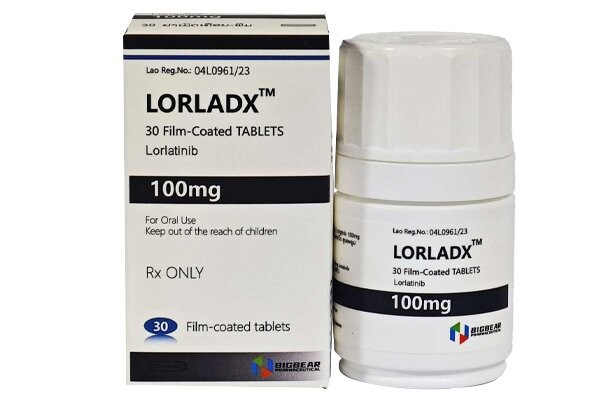
Against the backdrop of prohibitively high targeted drug costs that deter many patients, the lorlatinib generic (trade name LORLADX) launched by Lao Big Bear Pharmaceutical offers an affordable treatment pathway for ALK-positive non-small cell lung cancer patients at a price far lower than the original drug.
What are the purchasing channels for Lao Big Bear version of lorlatinib (Lorlatinib)
The Lao Big Bear version of lorlatinib (Lorlatinib) is available in specific specifications. For detailed purchasing methods, we recommend contacting professional customer service for further consultation.
Lorlatinib (Lorlatinib) dosing guide
Lorlatinib is supplied as oral tablets, with a design that facilitates long-term regular administration. A clear dosing regimen helps improve medication adherence, and the feature of being taken with or without food also provides convenience for patients' daily lives. Mastering the correct usage is fundamental to ensuring efficacy and reducing medication errors.
Drug specification: This product is a film-coated tablet. Each pack contains 30 tablets, and each tablet contains 100 mg of the active ingredient lorlatinib. This dosage strength has been validated through clinical trials and is the standard therapeutic dose.
Recommended dosage: The conventional regimen is 100 mg (i.e., 1 tablet) orally once daily. It is recommended to take the medication at the same time each day to maintain stable blood concentrations.
Administration conditions: This product is not affected by food intake and can be taken with or without meals. If patients experience gastrointestinal discomfort, taking it with food may alleviate symptoms, but the tablet should be swallowed whole and must not be chewed or crushed.
Dose adjustment principles: In clinical practice, physicians may temporarily interrupt treatment or reduce the dose based on patient tolerability and severity of adverse reactions. However, adjustments must not be made by the patient themselves; all changes should be conducted under the guidance of medical professionals.
Missed dose management: If a dose is missed, it should be taken as soon as possible; however, if it is less than 12 hours until the next scheduled dose, skip the missed dose and take the next one at the regular time. Do not double the dose to compensate.
Key precautions for lorlatinib (Lorlatinib)
During the use of lorlatinib, multiple systemic adverse events require close monitoring, among which central nervous system reactions, dyslipidemia, and cardiac toxicity are the three most concerning issues. These adverse reactions may manifest as changes in cognition, mood, metabolism, or heart rhythm, and may necessitate medical intervention or even drug discontinuation in severe cases. Patients and healthcare providers should fully recognize these risks and establish a mechanism for active surveillance and timely communication.
Central nervous system function issues: Many patients may experience cognitive impairments such as confusion, forgetfulness, and difficulty concentrating during treatment, as well as mood disturbances like depression and anxiety. A minority may develop hallucinations or seizures. If any of these symptoms occur, the physician should be informed promptly; severe cases may require treatment interruption.
Elevated blood lipid levels: The vast majority of patients show significant increases in total cholesterol and triglyceride levels after drug administration. Baseline lipid levels should be tested before treatment, with follow-up tests within 1–2 months after initiation and regular monitoring throughout the treatment course.
Concomitant use of lipid-lowering agents: If lipid elevations are pronounced, the physician may initiate lipid-lowering therapy (e.g., statins or fibrates); if the patient is already on such agents, dose adjustments may be needed to control lipids. All adjustments should be based on blood test results.
Cardiac conduction abnormalities: Lorlatinib may cause bradycardia or arrhythmias, presenting as dizziness, fatigue, palpitations, etc. Electrocardiograms should be performed before treatment and periodically during therapy. If severe arrhythmias occur, treatment may need to be paused or even a pacemaker implanted.
Patient self-reporting: Any new or worsening dizziness, syncope, chest tightness, or abnormal heartbeats should be reported immediately to the medical team and not be ignored, so that cardiac safety can be evaluated promptly.