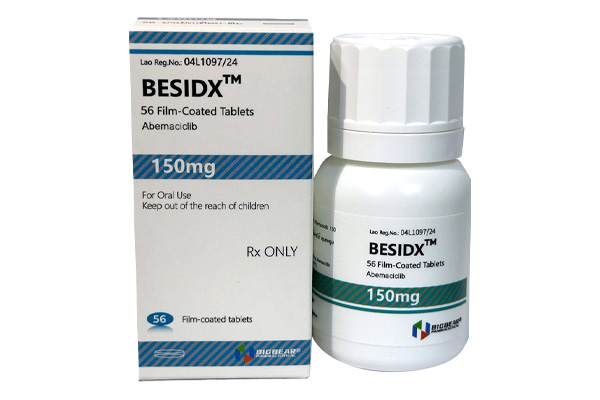
Abemaciclib, marketed under the brand name BESIDX by Bigbear Pharma in Laos, is a CDK4/6 selective inhibitor indicated for hormone receptor (HR)-positive, human epidermal growth factor receptor 2 (HER2)-negative advanced or metastatic breast cancer.
Is there a Lao generic version of Abemaciclib?
Yes, there is a Lao generic version of Abemaciclib. The Lao Bigbear version of Abemaciclib is available in the specification of 150mg*56 tablets/box. For more questions, we recommend you consult our professional customer service for detailed information.
How effective is Abemaciclib?
Based on the randomized, double-blind, placebo-controlled multicenter clinical trial MONARCH 3, VERZENIO (abemaciclib) in combination with an aromatase inhibitor (letrozole or anastrozole) demonstrated significant efficacy advantages in postmenopausal women with HR-positive, HER2-negative advanced or metastatic breast cancer. The study enrolled 493 patients, randomized in a 2:1 ratio to receive VERZENIO (150 mg orally twice daily) or placebo, both in combination with investigator-selected letrozole or anastrozole as background endocrine therapy.
Progression-Free Survival (PFS) Benefit: The median PFS for patients receiving VERZENIO was estimated at 28.2 months (95% CI: 23.5 months to not reached), compared to 14.8 months (95% CI: 11.2 to 19.2 months) in the placebo group. This difference was highly statistically significant, with a hazard ratio (HR) of 0.540 (95% CI: 0.418 to 0.698; p<0.0001),
Clinical Practice Implications: These results establish VERZENIO plus an aromatase inhibitor as one of the standard first-line endocrine therapy options for postmenopausal HR+/HER2- advanced breast cancer, providing robust evidence-based support for initial hormonal treatment.
Rigorous Study Design: The double-blind design ensured objectivity, the multicenter enrollment enhanced generalizability, and the 2:1 randomization helped accumulate more safety data in the treatment arm, providing rich evidence for subsequent dose adjustments and adverse reaction management.
In summary, MONARCH 3 is the pivotal registration study supporting the approval of VERZENIO in combination with an aromatase inhibitor. Its remarkable PFS improvement and manageable safety profile offer clear treatment benefit expectations for clinicians and patients.
Common adverse reactions of Abemaciclib
In the MONARCH 3 study, adverse reactions occurring in ≥20% of patients receiving VERZENIO and at least 2% higher than in the placebo group involved multiple systems, requiring close monitoring and active intervention throughout treatment. Although most of these reactions are grade 1–2, improper management may affect treatment adherence and quality of life.
Gastrointestinal reactions: Diarrhea is the most common, with onset typically in the first month of treatment; some patients may experience severe diarrhea leading to dehydration or secondary infections. Clinical strategies include: initiating antidiarrheal agents (e.g., loperamide) at the first sign of loose stools, increasing oral rehydration solution intake, avoiding hyperosmolar diets; if diarrhea persists or worsens, dose interruption, dose reduction, or treatment discontinuation should be considered.
Hematologic abnormalities: Neutropenia has a high incidence and may increase the risk of serious infections and even death. Regular monitoring of complete blood counts is required before and during treatment, especially every 2 weeks for the first 2 months, then monthly thereafter; if the absolute neutrophil count drops significantly, the next cycle should be delayed or the dose reduced, and febrile neutropenia should be closely monitored.
Other common reactions: Fatigue, nausea, abdominal pain, anemia, vomiting, alopecia, decreased appetite, and leukopenia are also frequently reported. These symptoms can usually be alleviated with symptomatic supportive care (e.g., antiemetics, nutritional support, erythropoietin, etc.). Patients should be educated to report symptom changes promptly for early management adjustments.
Overall, although adverse reactions are common, most patients can maintain treatment and derive benefit through standardized monitoring, prophylactic measures, and dose adjustments. Healthcare providers should develop individualized adverse reaction management plans and strengthen patient self-management education.