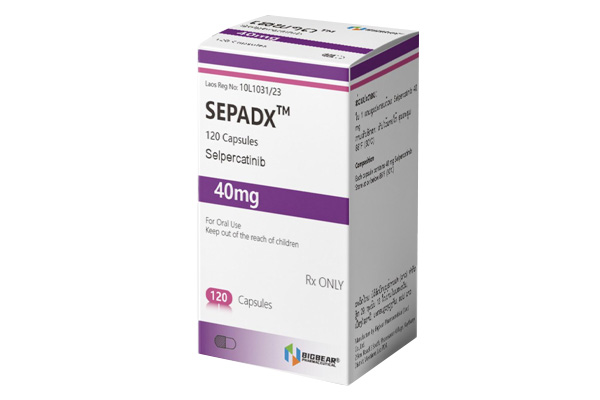
During treatment with Selpercatinib, patients should avoid or stagger the administration of acid-reducing agents (stomach medications) and St. John's wort, avoid strong or moderate CYP3A inhibitors and inducers, withhold the medication for at least 7 days prior to elective surgery, regularly monitor blood pressure, and undergo routine blood tests on schedule.
Simple Daily Routines
1. Monitor Blood Pressure. Control blood pressure prior to initiating treatment; measure once during the first week of treatment, and at least monthly thereafter. Keep a home blood pressure monitor, log the readings, and share them with your physician during follow-up visits. Hypertension has an overall incidence of 43%, making this the task requiring the most active self-management.
2. Undergo Scheduled Blood Tests. Monitor liver function every 2 weeks for the first 3 months, and monthly thereafter; also monitor electrolytes, electrocardiogram (ECG), and thyroid function as prescribed by your physician. "Feeling good" is not a substitute for regular follow-up checks—the vast majority of these laboratory abnormalities are asymptomatic.
3. Maintain Adequate Hydration. Although the incidence of tumor lysis syndrome (TLS) is low (0.9% in medullary thyroid cancer, 0.3% in lung cancer), maintaining adequate fluid intake is the simplest preventive measure.
4. Track Physical Changes. Record the frequency of diarrhea, extent of skin rash, condition of oral mucosa, signs of bleeding, and body weight—logging these in a mobile memo app is far more accurate than relying on memory during follow-up visits.
Pay Attention to Drug Interactions
1. Avoid or Stagger Administration of Acid-Reducing Medications
The absorption of Selpercatinib depends on the gastric environment. Acid-reducing agents can significantly decrease its plasma concentration, potentially diminishing its antitumor activity.
Proton Pump Inhibitors (PPIs): Specific agents include omeprazole, esomeprazole, lansoprazole, dexlansoprazole, pantoprazole, rabeprazole, etc. Concomitant use should ideally be avoided; if unavoidable, take Selpercatinib with food.
H2-Receptor Antagonists: Specific agents include famotidine, nizatidine, cimetidine. Administer Selpercatinib 2 hours before or 10 hours after taking an H2-receptor antagonist.
Locally Acting Antacids: Refers to antacids containing aluminum, magnesium, calcium, simethicone, or buffering agents. Administer Selpercatinib 2 hours before or 2 hours after taking a locally acting antacid.
2. Strong or Moderate CYP3A Inhibitors
Concomitant use should ideally be avoided. If unavoidable: with a moderate inhibitor, reduce the original dosage of 160 mg twice daily to 120 mg twice daily; with a strong inhibitor, reduce to 80 mg twice daily. More frequent ECG monitoring for QT prolongation is also required. After discontinuing the inhibitor, wait 3 to 5 elimination half-lives before restoring Selpercatinib to its original dosage.
3. Strong or Moderate CYP3A Inducers
Avoid concomitant use.
4. St. John's Wort (Hypericum perforatum)
Avoid taking St. John's wort during treatment with Selpercatinib.