
BIGBEAR
PHARMACEUTICALS
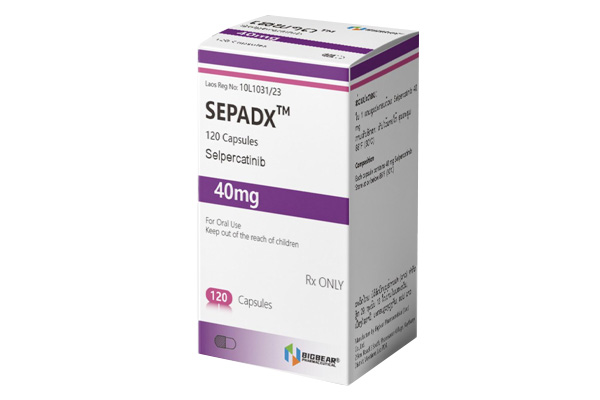
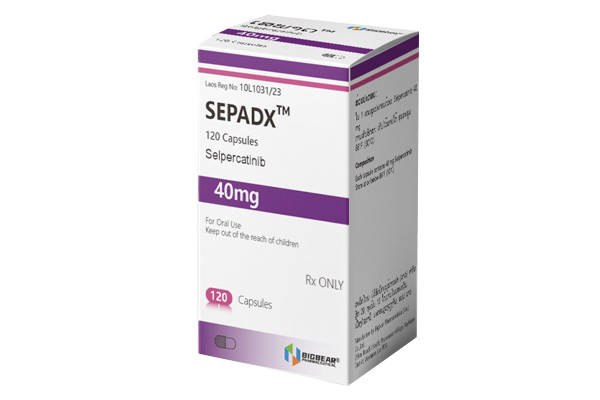
Selpercatinib is a highly selective and potent kinase inhibitor that exerts its therapeutic effect by selectively targeting and inhibiting mutated or fusion forms of the RET gene.

 AuthenticGuaranteeFast DeliveryPrivacy
 Selpercatinib is indicated for patients with confirmed RET gene fusion or RET mutation, including adults and pediatric patients aged 2 years and older, and demonstrates favorable therapeutic efficacy.
1.Non-Small Cell Lung Cancer (NSCLC): For the treatment of adult patients with locally advanced or metastatic RET fusion-positive non-small cell lung cancer.
2.Medullary Thyroid Cancer (MTC) and Differentiated Thyroid Cancer: For the treatment of adults and pediatric patients aged 12 years and older with advanced or metastatic RET-mutant medullary thyroid cancer requiring systemic therapy, and those with advanced or metastatic RET fusion-positive thyroid cancer requiring systemic therapy and refractory to radioactive iodine (if radioactive iodine is appropriate).
These indications are approved conditionally based on objective response rates and duration of response from single-arm RET gene fusion-positive studies. Full approval is contingent on the clinical benefit demonstrated in ongoing confirmatory trials (see Clinical Trials).
This product must be prescribed by a physician experienced in anticancer therapy.
Prior to treatment, it is mandatory to confirm the presence of RET gene fusion (for non-small cell lung cancer or thyroid cancer) or RET mutation (for medullary thyroid cancer) using a validated detection method.
The recommended dosage is based on body weight:
Body weight < 50 kg: 120 mg
Body weight ≥ 50 kg: 160 mg
Administer orally twice daily (approximately 12 hours apart) until disease progression or unacceptable toxicity occurs.
Swallow capsules whole. Do not crush or chew.
Missed dose: If a dose is missed and the next scheduled dose is more than 6 hours away, take the missed dose.
Vomiting after administration: Do not take an additional dose; continue with the next scheduled dose.
Important dosing instructions: May be taken with or without food, except when co-administered with proton pump inhibitors (PPIs) (see Dose Adjustment with Antacids).
For patients < 50 kg:
First reduction: 80 mg twice daily
Second reduction: 40 mg twice daily
Third reduction: 40 mg once daily
For patients ≥ 50 kg:
First reduction: 120 mg twice daily
Second reduction: 80 mg twice daily
Third reduction: 40 mg twice daily
Permanently discontinue treatment in patients who cannot tolerate three dose reductions.
Withhold treatment. Monitor AST and ALT weekly until recovery to Grade 1 or baseline.
Resume treatment at a reduced dose level and continue monitoring AST and ALT weekly for 4 weeks after recovery.
If AST/ALT levels do not recur for at least 2 weeks, increase the dose by one level. If no recurrence occurs for at least 4 weeks, increase to the dose used prior to the Grade 3/4 elevation.
Grade 3: Withhold treatment in patients with persistent Grade 3 hypertension despite antihypertensive therapy. Resume treatment at a reduced dose once hypertension is controlled.
Grade 4: Permanently discontinue treatment.
Grade 3: Withhold treatment until recovery to baseline, Grade 0, or Grade 1. Resume treatment at a reduced dose.
Grade 4: Permanently discontinue treatment.
Withhold treatment until recovery to baseline, Grade 0, or Grade 1.
Permanently discontinue treatment for severe or life-threatening hemorrhagic events.
Withhold treatment until resolution. Initiate corticosteroid therapy.
Resume treatment at a dose reduced by 3 levels, continuing corticosteroid therapy.
Increase the dose by one level weekly until reaching the dose prior to the reaction, then gradually taper corticosteroids.
Withhold treatment until recovery to baseline, Grade 0, or Grade 1.
Resume treatment at a reduced dose.
Avoid co-administration with PPIs, H2-receptor antagonists, or local antacids. If unavoidable:
With PPIs: Administer with food.
With H2-receptor antagonists: Take 2 hours before or 10 hours after the H2-receptor antagonist.
With local antacids: Take 2 hours before or 2 hours after the antacid.
Avoid co-administration. If unavoidable:
Current dose 120 mg twice daily: Reduce to 40 mg twice daily.
Current dose 160 mg twice daily: Reduce to 80 mg twice daily.
After discontinuing the strong CYP3A inhibitor, resume the original dose after 3–5 elimination half-lives of the inhibitor.
Based on animal studies and its mechanism of action (see Pharmacology and Toxicology), this product may cause fetal harm when administered to pregnant women. There are no available data in pregnant women to inform drug-related risks.
In pregnant rats dosed during organogenesis at maternal exposures approximating human exposure at the clinical dose of 160 mg twice daily, embryo-fetal death and malformations were observed. Pregnant women should be informed of the potential risk to the fetus.
It is unknown whether this product or its metabolites are excreted in human milk. There are no data on the effects of this product on breastfeeding infants or milk production.
Due to the potential for serious adverse reactions in breastfeeding infants, lactating women are advised to discontinue breastfeeding during treatment with this product and for 1 week after the last dose.
The safety and efficacy of this product have been established in pediatric patients aged 12 years and older with:
Medullary thyroid cancer (MTC) requiring systemic therapy, and
Advanced RET fusion-positive thyroid cancer requiring systemic therapy and refractory to radioactive iodine (if radioactive iodine is appropriate).
The findings are supported by adequate and well-controlled studies in adults, as well as pharmacokinetic and safety data in pediatric patients aged 12 years and older (see Adverse Reactions, Pharmacokinetics, and Clinical Trials).
The safety and efficacy of this product in pediatric patients younger than 12 years for these indications, and for other indications, have not been established.
Monitor growth in adolescents with open growth plates. Consider interrupting or discontinuing treatment based on the severity of growth plate abnormalities and individual risk-benefit assessment.
Of 702 patients treated with this product, 34% (239 patients) were ≥65 years of age, and 10% (67 patients) were ≥75 years of age.
No overall differences in safety or efficacy were observed between patients aged ≥65 years and younger patients.
Severe hepatic impairment:
Current dose 120 mg twice daily: Reduce to 80 mg twice daily.
Current dose 160 mg twice daily: Reduce to 80 mg twice daily.
Mild or moderate hepatic impairment: No dose adjustment is recommended. Monitor for adverse reactions.
Mild to moderate renal impairment (eGFR 15–89 mL/min): No dose adjustment is recommended.
End-stage renal disease (ESRD): The recommended dosage has not been established.
33% of patients treated with this product experienced severe adverse reactions. The most common severe adverse reactions (occurring in ≥2% of patients) were infectious pneumonia.
3% of patients experienced fatal adverse reactions. Fatal adverse reactions occurring in more than one patient included sepsis (n=3), cardiac arrest (n=3), and respiratory failure (n=3).
5% of patients permanently discontinued treatment due to adverse reactions. The adverse reactions leading to permanent discontinuation included increased ALT (0.4%), sepsis (0.4%), increased AST (0.3%), drug hypersensitivity (0.3%), fatigue (0.3%), and thrombocytopenia (0.3%).
42% of patients temporarily interrupted treatment due to adverse reactions. The adverse reactions leading to temporary interruption in ≥2% of patients included increased ALT, increased AST, hypertension, diarrhea, pyrexia, and QT prolongation.
31% of patients had their dose reduced due to adverse reactions. The adverse reactions leading to dose reduction in ≥2% of patients included increased ALT, increased AST, QT prolongation, and fatigue.
The most common adverse reactions (including laboratory abnormalities) were increased AST, increased ALT, increased blood glucose, leukopenia, decreased albumin, hypocalcemia, dry mouth, diarrhea, increased creatinine, increased alkaline phosphatase, hypertension, fatigue, edema, thrombocytopenia, increased total cholesterol, rash, hyponatremia, and constipation.
This product is contraindicated in patients with known hypersensitivity to the active ingredient or any of its excipients.
2.6% of patients treated with this product experienced severe hepatic adverse reactions. 51% of patients developed increased AST, including 8% with Grade 3 or 4 events; 45% developed increased ALT, including 9% with Grade 3 or 4 events (see Adverse Reactions).
The median time to first onset of increased AST was 4.1 weeks (range: 5 days to 2 years), and for increased ALT, it was 4.1 weeks (range: 6 days to 1.5 years).
Monitoring: Before initiating treatment, monitor AST and ALT. During the first 3 months of treatment, monitor every 2 weeks, then monthly thereafter or as clinically indicated.
Management: Withhold, reduce the dose, or permanently discontinue this product based on the severity of hepatic toxicity (see Dosage and Administration).
35% of patients developed hypertension, including 17% with Grade 3 hypertension and 1 patient (0.1%) with Grade 4 hypertension (see Adverse Reactions). Overall, 4.6% of patients temporarily interrupted treatment and 1.3% had their dose reduced due to hypertension. Hypertension during treatment is usually controllable with antihypertensive medications.
Monitoring: Do not initiate treatment in patients with uncontrolled hypertension. Optimize blood pressure before starting treatment. Monitor blood pressure 1 week after initiation, then monthly thereafter or as clinically indicated. Initiate or adjust antihypertensive therapy as needed.
Management: Withhold, reduce the dose, or permanently discontinue this product based on the severity of hypertension (see Dosage and Administration).
This product can cause concentration-dependent QT interval prolongation (see Pharmacology). QT interval prolongation to >500 ms occurred in 6% of patients, and an increase of ≥60 ms from baseline occurred in 15% of patients (see Adverse Reactions). No studies have been conducted in patients with clinically significant active cardiovascular disease or recent myocardial infarction.
Monitoring: Monitor patients at significant risk for QTc prolongation, including those with known long QT syndrome, clinically significant bradycardia, or severe or uncontrolled heart failure. Assess QT interval, electrolytes, and TSH at baseline and periodically during treatment, adjusting the frequency based on risk factors such as diarrhea. Correct hypokalemia, hypomagnesemia, and hypocalcemia before and during treatment.
Management: When co-administering with strong CYP3A inhibitors or drugs known to prolong the QTc interval, monitor the QT interval more frequently. Withhold, reduce the dose, or permanently discontinue this product based on the severity of QT prolongation (see Dosage and Administration).
Severe (including fatal) hemorrhagic events can occur during treatment. 2.3% of patients treated with this product experienced Grade ≥3 hemorrhagic events, including 3 patients (0.4%) with fatal events (intracranial hemorrhage, tracheostomy site hemorrhage, and hemoptysis, 1 case each).
Management: Permanently discontinue this product in patients with severe or life-threatening hemorrhagic events (see Dosage and Administration).
4.3% of patients treated with this product experienced hypersensitivity reactions, including 1.6% with Grade 3 reactions. The median time to onset was 1.7 weeks (range: 6 days to 1.5 years). Signs and symptoms included fever, rash, and arthralgia or myalgia, often accompanied by thrombocytopenia or transaminase elevation.
Management: If a hypersensitivity reaction occurs, withhold treatment and initiate corticosteroid therapy at 1 mg/kg prednisone (or equivalent). After resolution of the reaction, resume treatment at a reduced dose and increase the dose by one level weekly until reaching the dose prior to the reaction. Continue corticosteroid therapy until the target dose is achieved, then gradually taper. Permanently discontinue treatment if the reaction recurs (see Dosage and Administration).
The above information is not exhaustive. For additional details, please refer to the full prescribing information of the medicinal product.
If any issues arise, please contact us immediately.
Email:haiousales@gmail.com

Take the dose as soon as you remember. However, skip the missed dose if your next scheduled dose is in less than 6 hours. Do not double the dose to make up for a missed one.
Seek immediate emergency medical assistance or call the Poison Control Helpline.
Do not take any medications to reduce stomach acid without first consulting your doctor. Use only those products specifically recommended by your healthcare provider.
Avoid using herbal supplements that contain St. John’s Wort.
Certain medications should not be used concomitantly due to safety risks. Some drugs may alter the blood concentrations of other medications you take, potentially increasing side effects or reducing therapeutic efficacy.
Selpercatinib may cause serious cardiac adverse reactions. Your risk may be elevated if you are also taking certain medications for infections, asthma, cardiac disorders, hypertension, depression, psychiatric conditions, cancer, malaria, or HIV.
Some medications can significantly reduce the effectiveness of selpercatinib if taken together. If you use any of the following, separate their administration from your selpercatinib dose:
Antacids containing aluminum, magnesium, calcium, simethicone, or buffered formulations: take selpercatinib at least 2 hours before or 2 hours after the antacid.
Gastric acid–reducing agents (such as cimetidine, famotidine, nizatidine, and others): take selpercatinib at least 2 hours before or 10 hours after these medications.
Numerous medications may interact with selpercatinib, including prescription and over‑the‑counter drugs, vitamins, and herbal supplements. Not all potential interactions are listed here. Inform your doctor of all medications you are currently using.
Copyright2024@ BIGBEAR All right reserved BIGBEAR


