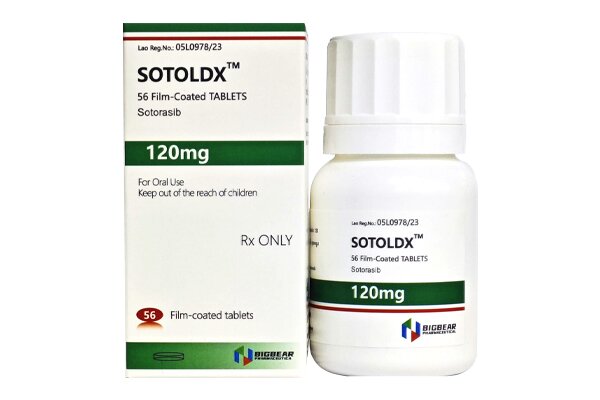
On May 28, 2021, Amgen (NASDAQ: AMGN) announced that the U.S. Food and Drug Administration (FDA) has approved sotorasib for the treatment of adult patients with locally advanced or metastatic non-small cell lung cancer (NSCLC) harboring the KRAS G12C mutation—as detected by an FDA-approved test—who have received at least one prior systemic therapy. Sotorasib received accelerated approval based on overall response rate (ORR) and duration of response (DoR). Continued approval for this indication may be contingent upon verification and description of clinical benefit in a confirmatory trial.
The FDA approval of sotorasib marks a breakthrough moment for patients with KRAS G12C-mutated NSCLC, as there is now a targeted treatment for this common yet previously elusive mutation, said David M. Reese, M.D., Executive Vice President of Research and Development at Amgen. KRAS has challenged cancer researchers for more than 40 years, with many considering it 'undruggable.' The sotorasib development program was a race against cancer for Amgen scientists and clinical trial investigators, who worked together to successfully bring this new medicine to market in less than three years—from the first patient dosed to U.S. regulatory approval.
The FDA's approval of sotorasib is based on results from a subset of patients in the CodeBreaK 100 trial, the largest clinical trial conducted to date specifically for patients with the KRAS G12C mutation. The trial demonstrated favorable efficacy and tolerability in 124 patients with KRAS G12C-positive NSCLC whose disease had progressed following treatment with immunotherapy and/or chemotherapy. In the trial, the overall response rate (the proportion of patients with tumor shrinkage of ≥30%) for Sotorasib administered orally once daily at a dose of 960 mg was 36% (95% confidence interval: 28–45), and 81% (95% confidence interval: 73–87) of patients achieved disease control (the proportion of patients with a complete response, partial response, or stable disease lasting more than three months). The median duration of response (DoR) was 10 months. The most common adverse reactions (≥20%) were diarrhea, musculoskeletal pain, nausea, fatigue, hepatotoxicity, and cough. Adverse reactions leading to permanent discontinuation of Sotorasib occurred in 9% of patients.
Sotorasib represents a major advancement in oncology, transforming the treatment paradigm for KRAS G12C-mutated non-small cell lung cancer, said Bob T. Li, MD, PhD, MPH, a principal investigator at Memorial Sloan Kettering Cancer Center. Patients with non-small cell lung cancer who have failed first-line therapy face a poor prognosis and limited treatment options. Sotorasib offers a new therapeutic option for these patients and is the first KRAS-targeted therapy to be approved following nearly four decades of research.
Non-small cell lung cancer accounts for approximately 84% of the 2.2 million new lung cancer diagnoses worldwide each year, including approximately 236,000 new cases in the United States. KRAS G12C is one of the most common driver mutations in non-small cell lung cancer; approximately 13% of patients with non-squamous non-small cell lung cancer in the United States harbor the KRAS G12C mutation.