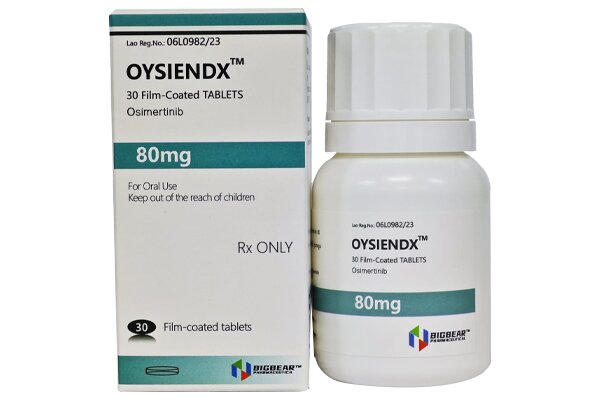
Osimertinib is indicated for the treatment of various types of non-small cell lung cancer (NSCLC). Before initiating treatment, an FDA-approved diagnostic test is required to determine eligibility for its indications.
Osimertinib Indications
Non-Small Cell Lung Cancer (NSCLC)
FDA-approved indications for osimertinib:
(1) Osimertinib is used as adjuvant therapy in adult patients with non-small cell lung cancer who, after tumor resection, are found by an FDA-approved diagnostic test to carry an epidermal growth factor receptor (EGFR) exon 19 deletion (del19) or exon 21 (L858R) mutation.
(2) Osimertinib is used to treat adult patients with locally advanced, unresectable (stage III) non-small cell lung cancer whose disease has not progressed during or after concurrent or sequential platinum-based chemoradiotherapy and whose tumors have been found to have an EGFR exon 19 deletion or exon 21 L858R mutation as detected by an FDA-approved diagnostic test.
(3) Osimertinib is used as first-line treatment for adult patients with metastatic non-small cell lung cancer who have been found to have an EGFR exon 19 deletion (del19) or exon 21 (L858R) mutation as detected by an FDA-approved diagnostic test.
(4) Osimertinib is used to treat adult patients with metastatic non-small cell lung cancer whose disease has progressed during or after EGFR tyrosine kinase inhibitor therapy and whose tumors have been found to have an EGFR T790M mutation as detected by an FDA-approved diagnostic test.
(5) Osimertinib, in combination with pemetrexed and platinum-based chemotherapy, is used as first-line treatment for adult patients with locally advanced or metastatic non-small cell lung cancer whose tumors have been found to have EGFR exon 19 deletion or exon 21 L858R mutation as detected by an FDA-approved diagnostic test.
Osimertinib Dosage and Administration
1. Administration Method
(1) Oral Administration
Operate once daily, regardless of food intake; swallow whole, do not crush.
(2) Management of Swallowing Difficulties
For patients with difficulty swallowing solids, the tablet can be dispersed in a container containing 60 mL (2 oz) of non-carbonated water (do not use other liquids) and swallowed immediately.
To ensure full dose is delivered, rinse the container with an additional 120-240 mL of water and drink immediately.
When preparing the drug dispersion, do not crush, heat, or sonicate the tablet.
(3) Nasogastric Tube Administration
For nasogastric tube administration, disperse the tablets in a container containing 15 mL of non-carbonated water and draw the dispersion into a syringe;
Rinse the container with an additional 15 mL of water to transfer any residual drug into the syringe;
Administer the resulting 30 mL of drug dispersion through the nasogastric tube, then flush the tube with an appropriate amount of water (approximately 30 mL);
Repeat this step until no tablet fragments remain in the syringe;
Administer the dispersion and any remaining drug within 30 minutes of adding the tablets to the water.
(4) Management of Missed Doses
If a dose is missed, take the next dose at the usual time; do not take the missed dose retroactively.
2. Common Dosage for Adult Non-Small Cell Lung Cancer
(1) Adjuvant Therapy for EGFR Mutation-Positive Non-Small Cell Lung Cancer
Administer 80 mg orally once daily. Continue treatment for up to 3 years, or until disease recurrence or unacceptable toxicity.
(2) Locally advanced, unresectable (stage III) EGFR mutation-positive non-small cell lung cancer
Administer 80 mg orally once daily after platinum-based chemoradiotherapy. Continue treatment until disease progression or unacceptable toxicity.
(3) First-line treatment for EGFR mutation-positive metastatic non-small cell lung cancer
Administer 80 mg orally once daily. Continue treatment until disease progression or unacceptable toxicity.
(4) First-line treatment for EGFR mutation-positive locally advanced or metastatic non-small cell lung cancer
Administer 80 mg orally once daily in combination with pemetrexed and platinum-based chemotherapy. Continue treatment until disease progression or unacceptable toxicity. Refer to the prescribing information for pemetrexed, cisplatin, or carboplatin.
(5) Previously treated EGFR T790M mutation-positive metastatic non-small cell lung cancer
Administer 80 mg orally once daily. Continue treatment until disease progression or unacceptable toxicity.
Adverse Reactions of Osimertinib
1. Adverse Reactions of Osimertinib as Monotherapy (Incidence > 20%)
Leukopenia, lymphopenia, anemia, diarrhea, rash, musculoskeletal pain, neutropenia, nail toxicity, dry skin, stomatitis, fatigue.
2. Adverse Reactions of Osimertinib Combined with Platinum-Based Chemotherapy (Incidence > 20%)
Lymphopenia, leukopenia, ILD/pneumonia, thrombocytopenia, neutropenia, rash, diarrhea, nail toxicity, musculoskeletal pain, cough, COVID-19.
3. Adverse Reactions of Osimertinib Combined with Pemetrexed and Platinum-Based Chemotherapy (Incidence > 20%)
Leukopenia, thrombocytopenia, neutropenia, lymphopenia, rash, diarrhea, stomatitis, nail toxicity, dry skin, elevated creatinine.
Osimertinib Precautions
1. Interstitial Lung Disease/Pneumonia
(1) Severe or fatal interstitial lung disease (ILD) or pneumonia may occur.
(2) For patients receiving osimertinib treatment who have not recently received definitive platinum-based chemoradiotherapy, if (3) respiratory symptoms suggestive of ILD worsen (e.g., dyspnea, cough, fever), osimertinib treatment should be discontinued and ILD should be investigated promptly.
(4) If ILD is diagnosed, this product should be permanently discontinued. For patients who have recently received definitive platinum-based chemoradiotherapy, if grade 1 ILD/pneumonia occurs, osimertinib treatment should be continued or discontinued depending on the clinical situation.
(5) If these patients develop ≥ grade 2 ILD/pneumonia, osimertinib should be permanently discontinued.
2. QT Interval Prolongation
(1) There are reports of QTc interval prolongation. For patients with congenital long QT syndrome, congestive heart failure, electrolyte abnormalities, or those receiving medications known to prolong the QT interval and carry a risk of torsades de pointes, regular ECG and serum electrolyte monitoring is recommended.
(2) If QT prolongation occurs, dose reduction, temporary interruption, or permanent discontinuation of treatment may be necessary.
(3) If QT prolongation is accompanied by signs and/or symptoms of life-threatening arrhythmias, permanent discontinuation of this product is recommended.
3. Cardiomyopathy
(1) Reports of cardiomyopathy (e.g., acute or chronic heart failure, congestive heart failure, pulmonary edema, decreased ejection fraction).
(2) For patients receiving osimertinib monotherapy with cardiac risk factors, regular cardiac monitoring (including LVEF assessment) should be performed before initiation of treatment and during treatment. (3) For all patients receiving osimertinib in combination with pemetrexed and platinum-based chemotherapy, cardiac monitoring (including LVEF assessment) should be performed regularly before and during treatment.
(4) For patients who develop relevant cardiac signs or symptoms during treatment, LVEF should be assessed. If symptomatic congestive heart failure occurs, the product should be permanently discontinued.
4. Keratitis
Reports of keratitis have been received. If signs suggestive of keratitis appear (e.g., conjunctivitis, tearing, photophobia, blurred vision, eye pain, red eye), the patient should be promptly referred to an ophthalmologist for evaluation.
5. Erythema multiforme, toxic epidermal necrolysis, and Stevens-Johnson syndrome
(1) Post-marketing case reports of erythema multiforme, toxic epidermal necrolysis, and Stevens-Johnson syndrome have been received.
(2) If these conditions are suspected, discontinue osimertinib; if diagnosed, permanently discontinue osimertinib.
6. Cutaneous vasculitis
(1) Post-marketing case reports of cutaneous vasculitis (e.g., leukocytoclastic vasculitis, urticarial vasculitis, IgA vasculitis).
(2) If cutaneous vasculitis is suspected, discontinue osimertinib and assess the patient for systemic involvement; consider consulting a dermatologist.
(3) When no other cause is found, consider permanently discontinuing osimertinib based on severity.
7. Aplastic anemia
(1) There are reports of aplastic anemia, some of which have resulted in death. Inform the patient of the signs and symptoms of aplastic anemia (e.g., new or persistent fever, bruising, bleeding, pallor).
(2) If suspected, discontinue osimertinib and seek hematological counseling. If diagnosed, permanently discontinue osimertinib.
(3) Perform complete blood counts (including differential) before starting treatment, periodically during treatment, and more frequently as clinically necessary.
8. Fetal/Neonatal Morbidity and Mortality
(1) Potential harm to the fetus. Verify pregnancy status before treatment. Avoid pregnancy during treatment.
(2) Women of reproductive potential should use effective contraception during treatment and for 6 weeks after discontinuation.
(3) Men whose partners are women of reproductive potential should use effective contraception during treatment and for 4 months after discontinuation.
Osimertinib Use in Special Populations
1. Pregnancy
There are no data on its use in pregnant women; animal studies and the mechanism of action suggest potential harm to the fetus. Inform the patient of the potential fetal harm if used during pregnancy or if the patient becomes pregnant during treatment.
2. Lactation
It is unclear whether the drug is distributed in human breast milk or whether it affects milk production or breastfed infants.
3. Women and Men of Reproductive Potential
Confirm the pregnancy status of women of reproductive potential before treatment and inform them to use effective contraception during osimertinib treatment and for 6 weeks after discontinuation. Additionally, men whose partners are women of reproductive potential should use effective contraception during treatment and for 4 months after discontinuation. Animal studies suggest that osimertinib may impair fertility in both women and men.
4. Pediatric Use
Safety and efficacy have not been established.
5. Elderly Use
Efficacy is generally comparable in older patients to younger patients, but safety and tolerability challenges are greater in older patients.
6. Hepatic Impairment
Mild to moderate hepatic impairment has no effect on the pharmacokinetics of osimertinib. Studies have not been conducted in patients with severe hepatic impairment.
7. Renal Impairment
Mild to severe renal impairment has no effect on the pharmacokinetics of osimertinib. No studies were conducted in patients with end-stage renal disease.
Osimertinib Drug Interactions
1. Drugs transported via breast cancer resistance proteins
Pharmacokinetic interactions may exist (increased plasma substrate concentration). Adverse reactions to BCRP substrates should be monitored.
2. Drugs affected by the P-glycoprotein transport system
Pharmacokinetic interactions may exist (increased plasma substrate concentration). Adverse reactions to P-gp substrates should be monitored.
3. Drugs that prolong the QT interval
Pharmacological interactions may exist (additive effect on QT interval prolongation). Concomitant use should be avoided. If concomitant use cannot be avoided, regular monitoring of ECG and electrolytes is necessary.
4. Drugs affecting gastric acid
Clinically significant pharmacokinetic interactions are unlikely.
5. Certain Medications
Fexofenadine, itraconazole, omeprazole, rifampin, rosuvastatin, simvastatin, etc., may interact with osimertinib. Please consult your doctor before taking them together.