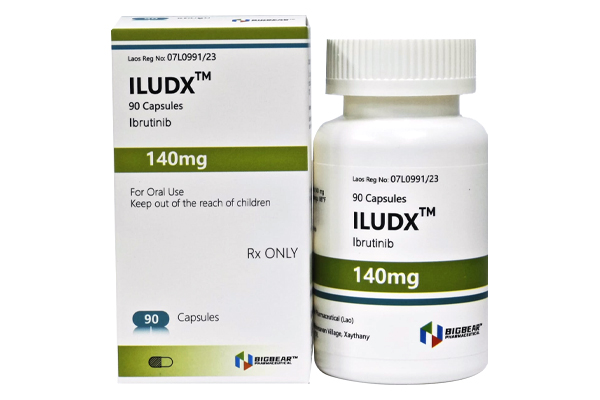
Ibrutinib is a small molecule that acts as an irreversible and potent inhibitor of Burton's tyrosine kinase. It is used to treat chronic lymphocytic leukemia, mantle cell lymphoma, and Waldenström macroglobulinemia.
Used Adult Dosages for Ibrutinib:
1. Chronic Lymphocytic Leukemia: 420 mg orally once daily until disease progression or unacceptable toxicity.
2. Waldenström Macroglobulinemia: 420 mg orally once daily until disease progression or unacceptable toxicity.
3. Graft-versus-host Disease (cGVHD): 420 mg orally once daily until progression of chronic graft-versus-host disease (cGVHD), recurrence of underlying malignancy, or unacceptable toxicity.
Ibrutinib Dosage in Children
1. Common Dosage for Graft-versus-Host Disease (cGVHD)
Children aged 1 to 12 years: 240 mg orally once daily until progression of chronic graft-versus-host disease (cGVHD), recurrence of underlying malignancy, or unacceptable toxicity.
2. Body Surface Area (BSA)-Based Dosage for CGVHD
(1) Oral Suspension
BSA-based dosage (to reach 240 mg/m²):
BSA greater than 0.3 to 0.4 m²: 84 mg orally once daily.
BSA greater than 0.4 to 0.5 m²: 105 mg orally once daily.
BSA greater than 0.5 to 0.6 m²: 133 mg orally once daily.
BSA greater than 0.6 to 0.7 m²: 154 mg orally once daily.
Body surface area greater than 0.7 to 0.8 square meters: 182 mg orally once daily.
Body surface area greater than 0.8 to 0.9 square meters: 203 mg orally once daily.
Body surface area greater than 0.9 to 1 square meter: 231 mg orally once daily.
Body surface area greater than 1 to 1.1 square meters: 252 mg orally once daily.
Body surface area greater than 1.1 to 1.2 square meters: 280 mg orally once daily.
Body surface area greater than 1.2 to 1.3 square meters: 301 mg orally once daily.
Body surface area greater than 1.3 to 1.4 square meters: 322 mg orally once daily.
Body surface area greater than 1.4 to 1.5 square meters: 350 mg orally once daily.
Body surface area greater than 1.5 to 1.6 square meters: 371 mg orally once daily.
(1) Body surface area greater than 1.6 m²: 420 mg orally once daily.
(2) Capsules/Tablets
Dosage based on body surface area (BSA) (to reach 240 mg/m²):
Body surface area greater than 0.7 to 1 m²: 210 mg orally once daily.
Body surface area greater than 1 to 1.3 m²: 280 mg orally once daily.
Body surface area greater than 1.3 to 1.6 m²: 350 mg orally once daily.
Body surface area greater than 1.6 m²: 420 mg orally once daily.
12 years and older: 420 mg orally once daily.
Ibrutinib Precautions
1. Dosage Recommendations
(1) Take at approximately the same time each day.
(2) Swallow the whole capsule or tablet with a glass of water.
(3) Do not open, break, or chew the capsule.
(4) Do not cut, crush, or chew the tablets.
(5) Discard any remaining oral suspension 60 days after first opening.
(6) Avoid consuming grapefruit and oranges and their products during treatment.
2. Monitoring Recommendations
(1) Cardiovascular
History and function of heart disease (at baseline); for heart rhythm and function; blood pressure.
(2) Hematology
For bleeding symptoms; monthly complete blood count (CBC).
(3) Infection
For infection and fever.
(4) Metabolism
For tumor lysis syndrome.
3. Diarrhea/Missed Dosage Management
Diarrhea: Diarrhea may occur; if diarrhea persists, contact your doctor. Stay well hydrated.
Missed Dosage: If you miss a dose, take it as soon as possible on the same day and resume normal use the following day; do not take extra medication to compensate for the missed dose.
4. Storage Requirements
Capsules: Store the bottle at 20°C to 25°C; exposure to 15°C to 30°C is permissible. Keep in original packaging before dispensing.
Oral suspension: Store vials at 2°C to 25°C; do not freeze. Dispense in the original sealed container.
Tablets: Store in original packaging at 20°C to 25°C; brief exposure to 15°C to 30°C is permissible.
Ibrutinib Dosage Adjustment for Special Populations
1. Dosage Adjustment in Renal Impairment
Mild and moderate renal impairment (creatinine clearance greater than 25 mL/min): No dose adjustment is recommended.
Severe renal impairment (creatinine clearance less than 25 mL/min): No data available.
2. Dosage Adjustment in Hepatic Impairment
(1) Adult Patients with B-cell Malignancies
Mild hepatic impairment (Child-Pugh A): Oral, 140 mg once daily.
Moderate hepatic impairment (Child-Pugh B): Oral, 70 mg once daily.
Severe hepatic impairment (Child-Pugh C): Not recommended.
(2) Patients with chronic graft-versus-host disease: Total bilirubin greater than 1.5 to 3 times the upper limit of normal: Unless caused by non-hepatic or Gilbert's syndrome:
Patients 12 years and older: Oral, 140 mg once daily.
Patients 1 to 12 years and younger: Oral, 80 mg/m² once daily.
Total bilirubin greater than 3 times the upper limit of normal: Not recommended unless caused by non-hepatic or Gilbert's syndrome.
Dosage adjustment for Ibrutinib adverse reactions
Treatment with this product should be discontinued if adverse reactions occur. Once adverse reactions improve to grade 1 or baseline (recovery), the recommended dose adjustment regimen should be followed. Follow your doctor's instructions carefully.