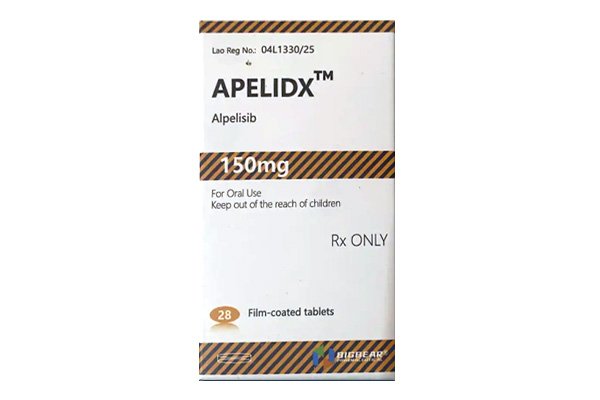
During treatment, if adverse reactions such as rash, hyperglycemia, diarrhea or colitis, or other toxicities occur, the dosage should be adjusted according to the specific clinical situation.
Rash and Severe Cutaneous Adverse Reactions (SCARs)
Grade 1, involving less than 10% of body surface area (BSA): No dose adjustment of alpelisib is required. Initiate topical corticosteroid treatment, and oral antihistamines may be added for symptomatic relief. If active rash does not improve after 28 days of appropriate treatment, add low-dose systemic corticosteroids.
Grade 2, involving 10% to 30% BSA: No dose adjustment required. Initiate or intensify topical corticosteroid and oral antihistamine treatment; low-dose systemic corticosteroids may be considered. If the rash improves to Grade 1 or lower within 10 days, systemic corticosteroids can be discontinued.
Grade 3, such as severe rash with no improvement following appropriate treatment, or involving more than 30% BSA: Withhold alpelisib. Initiate or intensify topical or systemic corticosteroids and oral antihistamines. If it is not a severe cutaneous adverse reaction, resume at the next lower dose level once improved to Grade 1 or lower.
Grade 4, such as severe bullous, blistering, or exfoliative skin lesions, affecting any BSA, accompanied by widespread secondary infection requiring intravenous antibiotics, or life-threatening consequences: Permanently discontinue alpelisib.
Hyperglycemia
Assessed solely by fasting blood glucose values—dose adjustment rules are based only on fasting blood glucose (fasting plasma glucose or fasting blood glucose) and not on random postprandial values. For unit conversion: 160 mg/dL corresponds to 8.9 mmol/L, 250 mg/dL to 13.9 mmol/L, and 500 mg/dL to 27.8 mmol/L.
Grade 1, fasting blood glucose above the upper limit of normal (ULN) up to 160 mg/dL (or >ULN to 8.9 mmol/L): No dose adjustment required; initiate or intensify anti-hyperglycemic treatment.
Grade 2, >160 to 250 mg/dL (or >8.9 to 13.9 mmol/L): No dose adjustment required; initiate or intensify anti-hyperglycemic treatment. If blood glucose is not reduced to ≤160 mg/dL or ≤8.9 mmol/L after 21 days of appropriate anti-hyperglycemic treatment, reduce alpelisib by one dose level, then manage according to the rules corresponding to the fasting blood glucose values.
Grade 3, >250 to 500 mg/dL (or >13.9 to 27.8 mmol/L): Withhold alpelisib. If reduced to ≤160 mg/dL or ≤8.9 mmol/L within 3 to 5 days under appropriate anti-hyperglycemic treatment, resume at the next lower dose level; if not reduced within 3 to 5 days, consultation with a physician experienced in managing hyperglycemia is recommended; if target levels are still not achieved after 21 days of regular anti-hyperglycemic therapy, permanently discontinue alpelisib.
Grade 4, >500 mg/dL (or >27.8 mmol/L): Withhold alpelisib, intensify anti-hyperglycemic treatment, and recheck fasting blood glucose within 24 hours. If reduced to ≤500 mg/dL or ≤27.8 mmol/L, proceed according to the Grade 3 rules; if confirmed to remain >500 mg/dL or >27.8 mmol/L, permanently discontinue alpelisib.
Diarrhea or Colitis
Grade 1: No dose adjustment required; initiate appropriate medical treatment and monitor as clinically indicated.
Grade 2: Withhold alpelisib until improvement to Grade 1 or lower, then resume at the same dose level. If Grade 2 or higher recurs, withhold and resume at the next lower dose level upon improvement. Simultaneously initiate or intensify medical treatment.
Grade 3: Withhold alpelisib until improvement to Grade 1 or lower, then resume at the next lower dose level. Simultaneously initiate or intensify medical treatment.
Grade 4: Permanently discontinue alpelisib.
Other Toxicities (Excluding Hyperglycemia, Rash/SCARs, Diarrhea, or Colitis)
Grade 1 or Grade 2: No dose adjustment required; initiate appropriate treatment and monitor as clinically indicated.
Grade 3: Withhold alpelisib until improvement to Grade 1 or lower, then resume at the next lower dose level.
Grade 4: Permanently discontinue alpelisib.
Friendly Reminder: Grade 2 or Grade 3 Pancreatitis: Withhold alpelisib until improvement to lower than Grade 2, then resume at the next lower dose level. Dose reduction for pancreatitis is permitted only once; if toxicity recurs, permanently discontinue treatment.