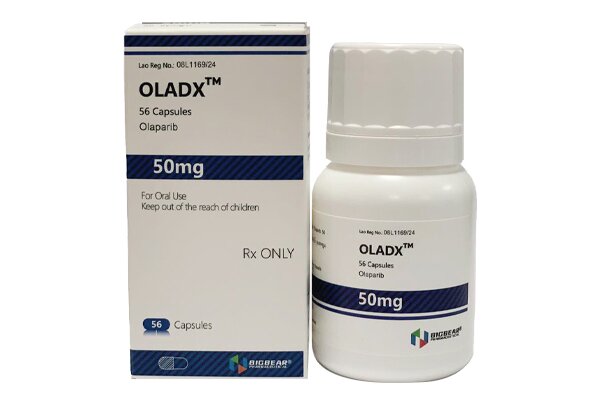
Key Approval Highlights
The Lynparza combination demonstrated a clinically meaningful reduction in the risk of disease progression or death in the Phase 3 PROpel trial.
This is the first approval of a PARP inhibitor combined with a new hormonal agent for mCRPC.
FDA Approval Announcement
RAHWAY, N.J.--(BUSINESS WIRE) June 1, 2023 -- AstraZeneca and Merck (known as MSD outside of the United States and Canada) announced that the U.S. Food and Drug Administration (FDA) has approved Lynparza (olaparib) in combination with abiraterone and prednisone or prednisolone (abi/pred) for the treatment of adult patients with deleterious or suspected deleterious BRCA-mutated (BRCAm) metastatic castration-resistant prostate cancer (mCRPC).
Patients should be selected for therapy based on an FDA-approved companion diagnostic for Lynparza.
Basis for Approval: Phase 3 PROpel Trial Data
The approval was based on an exploratory subgroup analysis of the Phase 3 PROpel trial, focusing on patients with BRCAm mCRPC. Key results are as follows:
BRCAm Subgroup (n=85)
Radiographic Progression-Free Survival (rPFS): HR=0.24 (95% CI, 0.12-0.45); Median rPFS was not reached (NR) in the Lynparza + abi/pred group, compared to 8 months (95% CI, 6-15) in the placebo + abi/pred group.
Overall Survival (OS): HR=0.30 (95% CI, 0.15-0.59); Median OS was NR in the Lynparza + abi/pred group, compared to 23 months (95% CI, 18-34) in the placebo + abi/pred group.
Full Intention-to-Treat (ITT) Population (n=796)
A statistically significant improvement in rPFS was observed. Exploratory analyses showed that the improvement in the ITT population was primarily attributed to the BRCAm subgroup (non-BRCA subgroup rPFS HR=0.77 [95% CI, 0.63-0.96]; non-BRCA subgroup OS HR=0.92 [95% CI, 0.74-1.14]).
Safety Profile (ITT Population)
The most common adverse reactions (ARs) (≥10%) in patients receiving Lynparza plus abi/pred were:
Anemia (48%), fatigue (38%), nausea (30%), diarrhea (19%), decreased appetite (16%)
Lymphopenia and dizziness (14% each), abdominal pain (13%)
Treatment-related outcomes due to ARs:
16% permanently discontinued Lynparza
48% had a dosage interruption of Lynparza
21% had a dose reduction of Lynparza
Clinical Background of mCRPC
In the U.S., prostate cancer is the second most common cancer in men.
Despite more available therapies for mCRPC, five-year survival remains low; many patients can only receive one line of therapy due to rapid disease progression.
Approximately 10% of mCRPC patients have BRCA mutations, which are associated with poor prognosis and worse outcomes.
Expert Statement
Andrew Armstrong, MD, ScM, from Duke Cancer Institute (Durham, N.C.) and a trial investigator, stated: “Preventing or delaying radiographic progression is an important clinical endpoint in assessing cancer treatment and is very important to patients, their caregivers and their families. The PROpel results showed the Lynparza combination demonstrated a notable clinically meaningful benefit that should rapidly be considered as the standard of care treatment for patients with BRCAm mCRPC.”