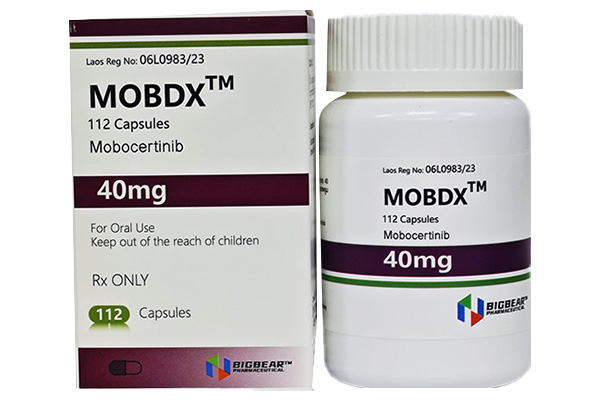
Mobotinib is an oral targeted therapy primarily used to treat locally advanced or metastatic non-small cell lung cancer (NSCLC) harboring specific gene mutations. Its core mechanism of action is to inhibit abnormal signaling caused by EGFR exon20 insertion mutations, thereby blocking cancer cell growth and spread. Strict adherence to doctor's instructions is required.
Main Efficacy and Actions
Targeting Specific Gene Mutations
Mobotinib is specifically used to treat lung cancer patients with confirmed EGFR exon20 insertion mutations. This mutation is relatively rare in non-small cell lung cancer, and traditional EGFR-targeted drugs (such as gefitinib) have limited efficacy against it.
Inhibiting Tumor Growth
As a tyrosine kinase inhibitor (TKI), mobotinib selectively binds to mutant EGFR proteins, blocking downstream signaling pathways (such as MAPK and PI3K-AKT), inhibiting cancer cell proliferation, and inducing apoptosis.
Prolonging Progression-Free Survival (PFS)
Clinical trials have shown that mobotinib significantly prolongs progression-free survival and improves objective response rate (ORR) in patients with EGFRexon20 insertion mutations who have failed prior platinum-based chemotherapy.
Indications and Usage
Indications: Adult patients diagnosed with locally advanced or metastatic non-small cell lung cancer and confirmed by genetic testing to have EGFRexon20 insertion mutations.
Prerequisites for Use: Usually used as second-line therapy, i.e., after failure of platinum-based chemotherapy.
Contraindications: Careful evaluation is required in patients with hypersensitivity to any drug component or severe hepatic or renal impairment.
Precautions and Adverse Reactions
Monitoring as directed by a physician is necessary.
Regular monitoring of electrocardiogram (ECG) (may cause QT interval prolongation), electrolyte levels, and liver function is required during treatment. Immediate medical attention is needed for severe diarrhea, interstitial lung disease, or cardiac abnormalities.
Common Side Effects
Gastrointestinal reactions: Diarrhea (may require antidiarrheal medication), nausea, vomiting.
Skin reactions: Rash, paronychia. Systemic symptoms: fatigue, decreased appetite.
Drug interactions:Avoid concomitant use with potent CYP3A4 inhibitors (such as clarithromycin) or inducers (such as rifampin), as this may affect efficacy or increase toxicity.
Mobotinib provides a precision treatment option for lung cancer patients with specific gene mutations, but the mutation type must be confirmed through genetic testing and used under the guidance of a physician. Close monitoring for adverse reactions is necessary during treatment, and the medication regimen should be adjusted promptly.