
BIGBEAR
PHARMACEUTICALS
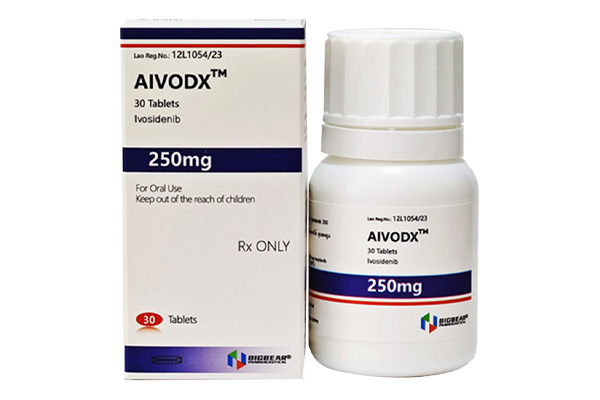
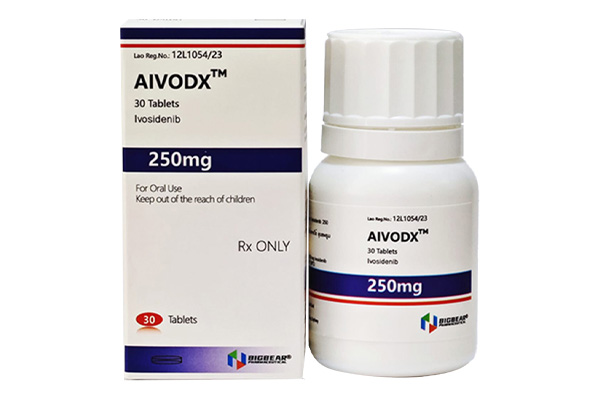
Ivosidenib can reduce the production of the oncogenic metabolite 2-HG by selectively targeting and inhibiting the activity of the mutant IDH1 enzyme.

 AuthenticGuaranteeFast DeliveryPrivacy
 Ivosidenib is an oral isocitrate dehydrogenase-1 (IDH1) inhibitor that induces differentiation of malignant cells and inhibits tumor growth, and is indicated for adult patients with susceptible IDH1 mutations confirmed by an FDA-approved test.
This product is indicated for the treatment of adult patients with relapsed or refractory acute myeloid leukemia (AML) who are diagnosed with a susceptible isocitrate dehydrogenase-1 (IDH1) mutation using a well-validated detection method.
The requirements for IDH1 mutation testing are detailed in Dosage and Administration.
This product is a clinically urgent need and was granted conditional marketing authorization based on the response rate from a single-arm clinical trial conducted abroad and pharmacokinetic data from Chinese subjects. The efficacy and safety of this product in the treatment of Chinese patients remain to be further confirmed post-marketing.
Before initiating treatment with this product for adult patients with relapsed or refractory acute myeloid leukemia (AML), the presence of an isocitrate dehydrogenase-1 (IDH1) mutation must be confirmed in the patient’s bone marrow or peripheral blood using a well-validated detection method. Only patients whose IDH1 mutation status is confirmed as positive by a hospital or laboratory are eligible for treatment. Re-testing of IDH1 mutation status using an investigational companion diagnostic assay at a laboratory designated by Shijishi Pharmaceutical (Suzhou) Co., Ltd. is required to confirm the presence of IDH1 mutation before continuing treatment.
The recommended dose of this product is 500 mg administered orally once daily until disease progression or unacceptable toxicity occurs. Patients without disease progression or unacceptable toxicity should receive at least 6 months of treatment to fully observe clinical response.
This product may be administered with or without food. Avoid high-fat meals when taking this product to prevent an increase in blood drug concentration.
Do not break or crush this product.
This product should be taken at the same time each day.
If vomiting occurs after administration, do not take an additional dose; continue with the next scheduled dose.
If a dose is missed or not taken at the scheduled time, take it as soon as possible unless the next scheduled dose is within 12 hours. In that case, skip the missed dose and resume the regular dosing schedule the next day. Do not take 2 doses within 12 hours.
Monitor complete blood cell counts and biochemistry weekly for the first month of treatment, every two weeks for the second month, and monthly thereafter.
Monitor creatine phosphokinase (CPK) weekly during the first month of treatment.
Perform electrocardiogram (ECG) at least weekly for the first three weeks of treatment, and at least monthly thereafter. Promptly manage any abnormal findings.
Dosing should be interrupted or reduced based on the severity of adverse reactions.
If differentiation syndrome is suspected, administer systemic corticosteroids and initiate hemodynamic monitoring until symptoms resolve and persist for at least 3 days.
If severe signs and/or symptoms persist for more than 48 hours despite systemic corticosteroid therapy, temporarily interrupt this product.
Resume treatment when signs and symptoms improve to Grade 2 or lower.
Administer hydroxyurea according to institutional guidelines if clinically indicated, and perform leukapheresis if necessary.
Temporarily interrupt this product if leukocytosis persists despite hydroxyurea therapy. Resume treatment at 500 mg daily once leukocytosis resolves.
Gradually taper the dose of hydroxyurea after leukocytosis resolves.
Temporarily interrupt this product.
Monitor and correct electrolytes as clinically indicated.
Review and adjust concomitant medications known to prolong the QTc interval.
Resume treatment at 500 mg daily when the QTc interval returns to ≤480 msec.
Monitor ECG at least weekly for 2 weeks after QTc interval prolongation resolves.
Temporarily interrupt this product.
Monitor and correct electrolytes as clinically indicated.
Review and adjust concomitant medications known to prolong the QTc interval.
Resume treatment at 250 mg daily when the QTc interval returns to within 30 msec of baseline or ≤480 msec.
Monitor ECG at least weekly for 2 weeks after QTc interval prolongation resolves.
Consider re-escalating the dose to 500 mg daily if an alternative cause for QTc interval prolongation is identified.
Permanently discontinue this product.
Permanently discontinue this product.
Temporarily interrupt this product until toxicity resolves to Grade 2 or lower.
Resume treatment at 250 mg daily; if toxicity resolves to Grade 1 or lower, re-escalate to 500 mg daily.
Permanently discontinue this product if Grade 3 or higher toxicity recurs.
If co-administration with a strong CYP3A4 inhibitor is unavoidable, reduce the dose of this product to 250 mg once daily. After discontinuing the strong CYP3A4 inhibitor for at least 5 elimination half-lives, the dose may be re-escalated to the recommended 500 mg once daily.
Female patients of reproductive potential and male patients with female partners of reproductive potential should use effective contraception during treatment and for at least 1 month after the last dose. Since co-administration with this product may reduce the concentration of hormonal contraceptives, patients should use an alternative method of contraception during treatment and for at least 1 month after the last dose. Females of reproductive potential should undergo a pregnancy test before starting treatment with this product.
Administration of this product to pregnant women may cause fetal harm. If this product is used during pregnancy, or if the patient becomes pregnant while taking this medication, the patient should be advised of the potential risk to the fetus.
There are no data on the presence of this product or its metabolites in human milk, the effects on the breastfed infant, or the effects on milk production. Because many drugs are excreted in human milk and because of the potential for serious adverse reactions in breastfed infants, advise women to discontinue breastfeeding during treatment with this product and for at least 1 month after the last dose.
No animal or human fertility toxicity studies have been conducted with this product.
No dose adjustment is required for patients with mild or moderate hepatic impairment (Child-Pugh A or B).
The pharmacokinetics and safety of ivosidenib in patients with severe hepatic impairment (Child-Pugh C) are unknown. Consider the risks and potential benefits before initiating treatment in patients with pre-existing severe hepatic impairment.
No dose adjustment is required for patients with mild or moderate renal impairment (eGFR ≥ 30 mL/min/1.73m², MDRD).
The pharmacokinetics and safety of ivosidenib in patients with severe renal impairment (eGFR < 30 mL/min/1.73m², MDRD) or those requiring dialysis are unknown. Consider the risks and potential benefits before initiating treatment in patients with pre-existing severe renal impairment or those requiring dialysis.
No dose adjustment is required in elderly patients.
Clinical data on the use of this product in patients under 18 years of age are not available.
the most common adverse reactions (≥20%), including laboratory abnormalities, were: decreased hemoglobin, fatigue, arthralgia, decreased calcium, decreased sodium, leukocytosis, diarrhea, decreased magnesium, edema, nausea, dyspnea, increased uric acid, decreased potassium, increased alkaline phosphatase, mucositis, increased aspartate aminotransferase, decreased blood phosphate, electrocardiogram QT interval prolongation, rash, increased creatinine, cough, decreased appetite, myalgia, constipation, and pyrexia.
This product is contraindicated in patients with known hypersensitivity to the active ingredient or any of its excipients.
In clinical trials, differentiation syndrome occurred in 19% (34/179) of patients with relapsed or refractory AML treated with ivosidenib tablets.
Differentiation syndrome is associated with rapid proliferation and differentiation of myeloid cells and can be life-threatening or fatal if untreated. Signs and symptoms in treated patients include non-infectious leukocytosis, peripheral edema, fever, dyspnea, pleural effusion, hypotension, hypoxia, pulmonary edema, pulmonary inflammation, pericardial effusion, rash, fluid overload, tumor lysis syndrome, and elevated creatinine. Of the 34 patients with relapsed or refractory AML who developed differentiation syndrome, 27 (79%) recovered during treatment or after temporary interruption of this product. Differentiation syndrome typically occurs within 1 day to 3 months of starting treatment and may not be accompanied by leukocytosis.
If differentiation syndrome is suspected, administer dexamethasone 10 mg intravenously every 12 hours (or an equivalent oral or parenteral corticosteroid) and initiate hemodynamic monitoring until symptoms resolve. If non-infectious leukocytosis occurs, administer hydroxyurea therapy or perform leukapheresis as clinically indicated. After symptom resolution, continue corticosteroid therapy for at least 3 days before tapering the dose of corticosteroids and hydroxyurea. Premature discontinuation of corticosteroids and/or hydroxyurea may lead to recurrence of differentiation syndrome. If severe signs and/or symptoms persist for more than 48 hours despite corticosteroid therapy, temporarily interrupt this product until the severity of symptoms and signs improves to non-severe.
QTc interval prolongation and ventricular arrhythmias may occur in patients treated with this product. In a clinical trial of 258 patients with malignant hematologic diseases treated with this product, a QTc interval > 500 msec occurred in 9% of patients, and a 60 msec increase from baseline in QTc occurred in 14% of patients. One patient experienced ventricular fibrillation related to this product. This clinical trial excluded patients with a baseline QTc ≥ 450 msec (unless due to a pre-existing bundle branch block), long QT syndrome, or uncontrolled or severe cardiovascular disease.
Concomitant use of this product with drugs known to prolong the QTc interval (e.g., antiarrhythmics, fluoroquinolones, triazole antifungals, 5-HT₃ receptor antagonists) and CYP3A4 inhibitors may increase the risk of QTc interval prolongation. Monitor ECG and electrolytes closely. Patients with congenital long QTc syndrome, congestive heart failure, electrolyte abnormalities, or those taking drugs known to prolong the QTc interval may require more frequent monitoring.
If QTc increases to > 480 msec and < 500 msec, temporarily interrupt treatment with this product. If QTc increases to ≥ 500 msec, temporarily interrupt treatment and reduce the dose subsequently. Permanently discontinue this product in patients who develop QTc interval prolongation with life-threatening ventricular arrhythmia signs or symptoms.
In clinical studies, Guillain-Barré syndrome occurred in <1% (2/258) of patients treated with this product. Monitor patients taking this product for new signs or symptoms of motor and/or sensory neuropathy, such as unilateral or bilateral weakness, sensory changes, paresthesias, or difficulty breathing. Permanently discontinue this product in patients diagnosed with Guillain-Barré syndrome.
In the Chinese clinical study, hypokalemia occurred in 50% (15/30) of patients treated with this product. Monitor electrolyte levels routinely before and during treatment and check for the presence of hypokalemia. Promptly correct hypokalemia if it occurs before or during treatment and intensify electrolyte monitoring. For patients with hypokalemia, monitor for QTc interval prolongation and adjust the dose of this product or temporarily interrupt treatment as needed, in accordance with the general principles for managing other treatment-related toxicities and the guidelines for QTc interval prolongation.
If any issues arise, please contact us immediately.
Email:haiousales@gmail.com

Take the medication as soon as you remember. However, skip the missed dose if your next scheduled dose is in less than 12 hours. Do not take two doses within a 12‑hour period.
Get emergency medical help immediately or call the Poison Help line.
Follow all dietary, beverage, and activity restrictions provided by your doctor.
Ivosidenib may cause a severe heart condition. Your risk may be increased if you also take certain other medications used to treat infections, asthma, heart conditions, high blood pressure, depression, psychiatric disorders, cancer, malaria, or HIV.
Many other drugs can interact with ivosidenib, including prescription and over‑the‑counter medicines, vitamins, and herbal supplements. Be sure to tell your doctor about all medications you are currently taking.
Copyright2024@ BIGBEAR All right reserved BIGBEAR


