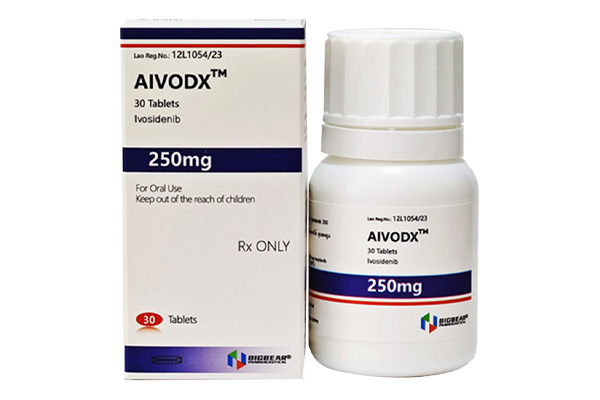
In addition to its expected therapeutic effects, some adverse side effects may occur during treatment with ivosidenib. While not all side effects will occur, medical intervention may be necessary if they do.
Common Side Effects of Ivosidenib
These include black, tarry stools, bleeding gums, blood in urine or stool, blurred vision, burning/tingling/numbness or pain in the hands/arms/feet or legs, chest pain or tightness, chills, confusion, cough, decreased urination, difficulty breathing or shortness of breath, and difficulty moving.
Other side effects include dizziness/lightheadedness or unsteadiness when suddenly rising from a lying or sitting position, eye pain, fainting, fever, general malaise, headache, recurrent irregular heartbeat, and joint pain/stiffness or swelling.
Lower back/side or stomach pain, muscle aches/cramps/pain or stiffness, painful or difficult urination, pale skin, pinpoint red spots on the skin, rapid weight gain, rash, tingling sensation, sore throat, sores/ulcers or white spots on the lips/tongue or inside the mouth, sudden tingling sensation, swelling of the arms/feet or calves, unusual bleeding or bruising, unusual fatigue or weakness.
Rare side effects of ivosidenib
Including inability to move arms and legs, sudden numbness and weakness in arms and legs.
Other side effects of ivosidenib
Some side effects of ivosidenib usually do not require medical attention. These side effects may disappear as the body adapts to the drug during treatment. In addition, a healthcare professional may be able to advise on how to prevent or reduce certain side effects.
If any of the following side effects persist, bother you, or you have any questions about them, please consult a healthcare professional:
Including chapped lips, decreased appetite, diarrhea, difficulty swallowing, nausea, vomiting.
Management of Ivosidenib Side Effects for Healthcare Professionals
1. Common Adverse Events
(1) The most common adverse reactions reported in patients with acute myeloid leukemia include: leukopenia, diarrhea, decreased hemoglobin, thrombocytopenia, increased blood glucose, fatigue, increased alkaline phosphatase, edema, decreased potassium, nausea, vomiting, decreased phosphate, decreased appetite, and decreased sodium.
Leukocytosis, decreased magnesium, increased aspartate aminotransferase (AST), arthralgia, dyspnea, increased uric acid, abdominal pain, increased creatinine, mucositis, rash, prolonged QT interval on ECG, differentiation syndrome, decreased calcium, neutropenia, and myalgia.
(2) The most common adverse reactions reported in patients with cholangiocarcinoma include fatigue, nausea, abdominal pain, diarrhea, cough, decreased appetite, ascites, vomiting, anemia, rash, decreased hemoglobin, increased AST, and increased bilirubin.
2. Cardiovascular System
(1) Very common (10% or more): QT interval prolongation on ECG (up to 26%), hematoma (including hematoma, ocular hematoma, catheter site hematoma, oral mucosal hematoma, spontaneous hematoma, drug site hematoma, injection site hematoma, periorbital hematoma; up to 15%), hypertension (including elevated blood pressure, essential hypertension, and high blood pressure; up to 13%), hypotension (including hypotension and orthostatic hypotension; up to 12%).
(2) Unreported frequencies: Ventricular fibrillation, pericardial effusion.
3. Dermatological System
Very common (10% or more): Rash (including acneiform dermatitis, dermatitis, rash, maculopapular rash, urticaria, erythematous rash, macules, pruritic rash, generalized rash, papules, desquamation, skin ulcers, erythema, generalized exfoliative dermatitis, drug eruption, drug allergy; up to 26%), pruritus (up to 14%).
4. Gastrointestinal System
(1) Very common (10% or more): Diarrhea (up to 61%), nausea (up to 42%), vomiting (including vomiting and dry heaving; up to 41%), abdominal pain (including abdominal pain, upper abdominal pain, abdominal discomfort, abdominal tenderness, lower abdominal pain, upper abdominal discomfort, gastrointestinal pain; up to 35%).
Mucositis (including oral ulcers, esophageal pain, esophagitis, gingivitis, gingivitis, oral ulcers, mucosal inflammation, oral pain, oropharyngeal pain, rectal pain, stomatitis; up to 28%), ascites (up to 23%), constipation (up to 21%), indigestion (up to 11%).
(2) Not reported frequency: Stomatitis, intestinal obstruction.
5. Hematologic System
(1) Very common (10% or more): Leukopenia (up to 65%), decreased hemoglobin (up to 60%), thrombocytopenia (up to 58%), leukocytosis (including leukocytosis, increased WBC count, hyperleukocytosis; up to 38%), neutropenia (up to 25%), neutropenia (up to 25%), lymphocytosis (up to 24%), anemia (up to 18%).
(2) Not reported frequency: Thrombocytopenia.
6. Hepatic System
(1) Very common (10% or more): Elevated aspartate aminotransferase (AST) (up to 37%), elevated bilirubin (up to 30%), elevated alanine aminotransferase (ALT) (up to 15%).
(2) Not reported frequency: Elevated transaminases, hyperbilirubinemia, cholestatic jaundice, hepatic encephalopathy.
7. Metabolic System
(1) Very common (10% or more): Elevated blood glucose (up to 56%), decreased appetite (up to 39%), elevated uric acid (up to 32%).
(2) Common (1% to 10%): Tumor lysis syndrome.
(3) Unreported frequency: Fluid overload.
8. Musculoskeletal System
Very common (10% or more): Arthralgia (including limb pain, joint pain, back pain, musculoskeletal stiffness, cancer pain, neck pain; up to 36%), Myalgia (including myalgia, muscle weakness, musculoskeletal pain, musculoskeletal chest pain, musculoskeletal discomfort, intercostal myalgia; up to 25%).
9. Nervous System
(1) Very common (10% or more): Dizziness (up to 21%), headache (up to 16%), neuropathy (including burning sensation, lumbosacral plexus neuropathy, peripheral neuropathy, paresthesia, peripheral motor neuropathy, ataxia, gait disturbance, Guillain-Barré syndrome, peripheral sensory neuropathy, sensory disturbance; up to 14%), peripheral neuropathy (including peripheral neuropathy, peripheral sensory neuropathy, paresthesia; up to 11%).
(2) Uncommon (0.1% to 1%): Guillain-Barré syndrome.
(3) Not reported frequency: Cerebral ischemia, posterior reversible encephalopathy syndrome, progressive multifocal leukoencephalopathy.
10. Tumor-related
(1) Very common (10% or more): Differentiation syndrome (up to 25%).
Differentiation syndrome is often associated with other events such as peripheral edema, leukocytosis, fever, dyspnea, pleural effusion, hypotension, hypoxemia, pulmonary edema, pneumonia, pericardial effusion, rash, fluid overload, tumor lysis syndrome, and elevated creatinine.
(2) Other
Very common (10% or more): fatigue (including asthenia, weakness; up to 50%), elevated alkaline phosphatase (up to 46%), edema (including edema, facial edema, fluid overload, fluid retention, hypervolemia, peripheral edema, facial swelling; up to 43%), and hypokalemia (up to 43%). Decreased serum phosphate (up to 41%), decreased serum sodium (up to 39%), decreased serum magnesium (up to 38%), decreased serum calcium (up to 25%), increased serum potassium (up to 24%), fever (up to 23%), chest pain (including angina, chest pain, chest discomfort, and non-cardiac chest pain; up to 16%), and weight loss (up to 11%).
(3) Unreported frequency: sepsis, peripheral edema.
11. Mental System
Very common (10% or more): insomnia (up to 18%).
12. Renal System
(1) Very common (10% or more): elevated creatinine (up to 29%).
(2) Unreported frequency: acute kidney injury.
13. Respiratory System
(1) Very common (10% or more): Dyspnea (including dyspnea, exertional dyspnea, hypoxemia, respiratory failure; up to 33%), cough (including cough, sputum production, upper airway cough syndrome; up to 27%), pleural effusion (up to 13%).
(2) Unreported frequency: Pneumonia, pulmonary embolism, hypoxemia, pulmonary edema.