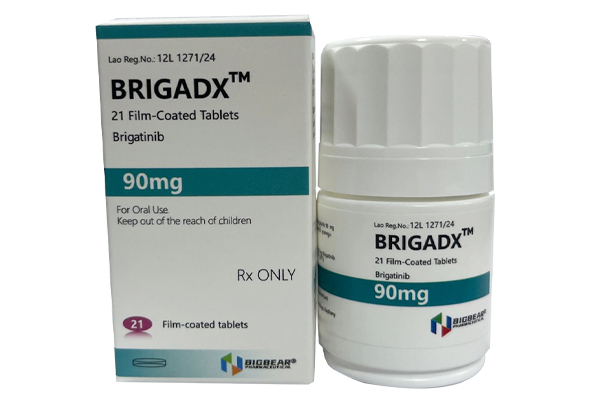
FDA Approval Announcement
CAMBRIDGE, Mass. & OSAKA, Japan--(BUSINESS WIRE) May 22, 2020 -- Takeda Pharmaceutical Company Limited (TSE:4502/NYSE:TAK) today announced that the U.S. Food and Drug Administration (FDA) has approved Alunbrig (brigatinib) for adult patients with anaplastic lymphoma kinase-positive (ALK+) metastatic non-small cell lung cancer (NSCLC), as detected by an FDA-approved test. This approval expands Alunbrig’s current indication to include the first-line treatment setting. Alunbrig is a potent and selective next-generation tyrosine kinase inhibitor (TKI) designed to target ALK molecular alterations.
Takeda’s Statement on the Approval
“We’re extremely proud of the positive results Alunbrig has shown for newly diagnosed ALK+ NSCLC patients, particularly those with brain metastases,” said Teresa Bitetti, President of the Global Oncology Business Unit at Takeda. “Through a robust clinical development program and ongoing investigations across the NSCLC treatment landscape, Takeda is committed to uncovering solutions for people living with devastating forms of lung cancer in need of new options. We believe this approval for Alunbrig is a substantial step in the right direction and represents significant progress for Takeda’s broader lung cancer portfolio.”
Basis for Approval: Phase 3 ALTA 1L Trial
The FDA approval is based on results from the Phase 3 ALTA 1L trial, which evaluated the safety and efficacy of Alunbrig versus crizotinib in adult patients with ALK+ locally advanced or metastatic NSCLC who had not received prior ALK inhibitor therapy.
Key Efficacy Results
After more than two years of follow-up, the ALTA 1L trial demonstrated that Alunbrig was superior to crizotinib, with significant anti-tumor activity observed, especially in patients with baseline brain metastases:
Progression-Free Survival (PFS): Alunbrig reduced the risk of disease progression or death by 51% compared with crizotinib (PFS hazard ratio = 0.49). The median PFS was 24 months for Alunbrig versus 11 months for crizotinib, as assessed by a blinded independent review committee (BIRC).
Overall Response Rate (ORR): The confirmed ORR was 74% (95% CI: 66–81) for Alunbrig and 62% (95% CI: 53–70) for crizotinib (BIRC assessment).
Intracranial Response: For patients with measurable baseline brain metastases, the confirmed intracranial ORR was 78% (95% CI: 52–94) for Alunbrig versus 26% (95% CI: 10–48) for crizotinib.
Expert Commentary on Clinical Impact
“Results from the ALTA 1L trial add brigatinib to the very short list of first-line treatment options for ALK+ lung cancer patients that have proven to be superior to crizotinib. Compared to crizotinib, brigatinib demonstrated superior efficacy, especially among those with brain metastases at baseline, and a low pill burden, at one pill a day, which is an important factor when we could be controlling disease for years,” said Ross Camidge, MD, PhD, Joyce Zeff Chair in Lung Cancer Research at the University of Colorado Cancer Center. “These data have established brigatinib’s potential in the first-line setting, and I’m confident the FDA approval will open a new window of possibilities for physicians and their patients.”
Patient Advocacy Perspective
“As with many forms of lung cancer, ALK+ NSCLC is a complex and aggressive cancer that presents various treatment challenges for patients who are newly diagnosed, including those whose disease has spread to their brain,” said Andrea Stern Ferris, President and CEO of the LUNGevity Foundation. “Having this option for newly diagnosed patients is exciting news for the ALK+ NSCLC community and adds to the remarkable progress we have witnessed in lung cancer treatment over the past decade.”