
BIGBEAR
PHARMACEUTICALS
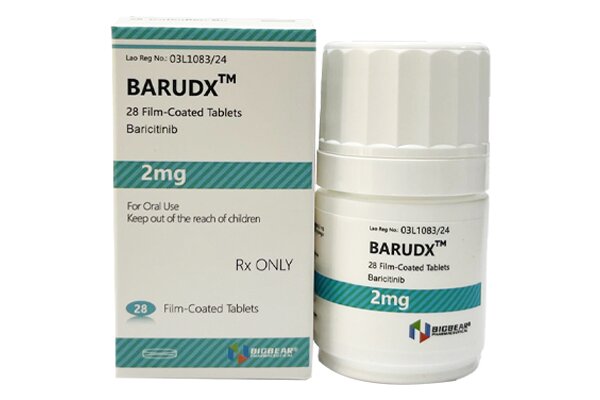
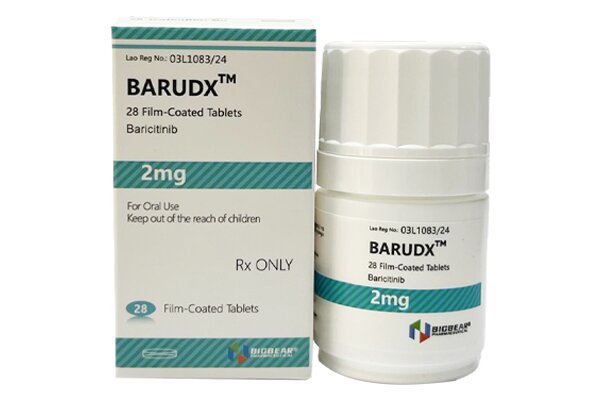
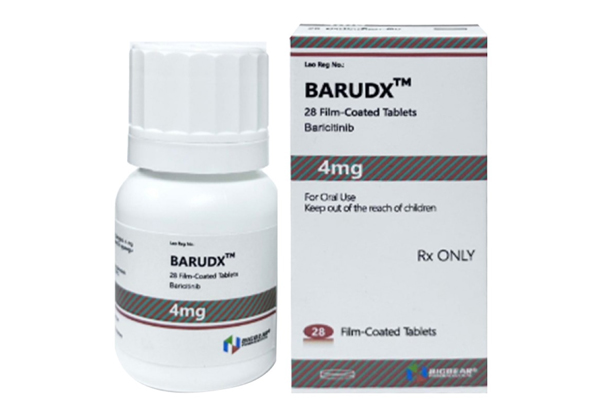
Baricitinib blocks the JAK-STAT signaling pathway and inhibits the intracellular signal transduction of multiple inflammatory cytokines.

 AuthenticGuaranteeFast DeliveryPrivacy
 Baricitinib is an immunomodulatory drug belonging to the class of Janus kinase (JAK) inhibitors. Its main component acts by suppressing the overactivity of the immune system, and it is primarily indicated for the treatment of adult patients with moderate-to-severe rheumatoid arthritis who have had an inadequate response to other antirheumatic drugs.
Baricitinib is specifically indicated for the treatment of adult patients with moderate-to-severe active rheumatoid arthritis, particularly those who have experienced an inadequate therapeutic response or cannot tolerate the side effects of one or more conventional antirheumatic drugs (e.g., methotrexate).
This drug can be used either as monotherapy or in combination with conventional antirheumatic drugs. Common clinical regimens include combination with methotrexate or other non-biologic antirheumatic agents.
This medication effectively improves a variety of symptoms caused by rheumatoid arthritis:
Swelling and pain in joints: Especially swelling and tenderness in small joints such as fingers and wrists.
Limited joint mobility: Manifested as morning stiffness, difficulty in extension and flexion.
Joint deformity: Structural changes in joints caused by chronic inflammation, such as enlargement of finger joints.
In addition to rheumatoid arthritis, baricitinib has the following applications:
1.Treatment of severe COVID-19: For adult hospitalized patients requiring oxygen therapy, mechanical ventilation, or extracorporeal membrane oxygenation (ECMO), to help control excessive immune responses.
2.Treatment of severe alopecia areata: For adult patients with extensive hair loss on the scalp, face, or body, typically presenting as sudden, large-scale areas of hair loss.
Before using this medication, the following key points should be noted:Baricitinib must be used under the guidance of a physician experienced in the treatment of rheumatoid arthritis.
Contraindications: Hypersensitivity to the active ingredient or any excipient, and pregnancy.
Severe hepatic or renal impairment: Avoid use.
Mild to moderate hepatic or renal impairment: Dose adjustment is required.
Lactation: Suspend breastfeeding during treatment.
Elderly patients: Monitor renal function closely.
Drug interactions: Inform your doctor of all current medications to avoid risks.
The standard dosage of baricitinib is 2 mg once daily. This medication can be taken with or without food, and the administration time can be chosen according to personal habit (morning, noon, or evening).
However, the physician may increase the dosage to 4 mg once daily in the following two specific patient populations:
1.Adult patients with moderate-to-severe active rheumatoid arthritis who have previously received conventional antirheumatic drugs (e.g., methotrexate) with inadequate response or intolerance. These patients should be treated with 2 mg once daily for 3 months before considering dose adjustment if there is no significant improvement.
2.Patients who have previously received tumor necrosis factor inhibitors (e.g., adalimumab) with inadequate response.
Flexible administration time: Can be taken before meals, after meals, or on an empty stomach.
Once-daily dosing: The specific time can be chosen based on personal preference.
Dose adjustment: Must be performed under medical supervision; do not increase or decrease the dose independently.
For patients requiring dose adjustment, the physician will determine the optimal treatment plan by comprehensively considering factors such as disease severity, prior treatment response, and individual differences. If any abnormal reactions occur during treatment, contact the attending physician promptly.
If a dose is missed, manage it flexibly based on the time elapsed:
If the delay is short (e.g., the dose was due at 8 AM and only 2 hours have passed), take the missed dose immediately.
If the next scheduled dose is approaching (e.g., the usual dosing interval is 12 hours and 8 hours have passed since the missed dose), skip the missed dose and resume the regular dosing schedule.
Important Note
Do not take a double dose to make up for a missed dose, as this may increase the risk of overdose. If there is any doubt about the dosing schedule, consult a physician or pharmacist promptly.
Special attention is required when taking baricitinib: this medication may increase the risk of infections (e.g., herpes zoster), cardiovascular events, and allergic reactions. Patients should closely monitor for any changes in their condition during treatment. If symptoms such as persistent fever, vesicular rash, chest tightness, shortness of breath, or pruritus occur, discontinue treatment immediately and seek medical attention promptly.
To avoid the drug passing to the infant via breast milk, breastfeeding is recommended to be suspended during treatment and for 4 days after the last dose (equivalent to 5–6 half-lives for complete elimination).
Age-related decline in renal function may require dose adjustment; regular monitoring of renal function is recommended.
Not recommended.
Not recommended if creatinine clearance is <30 mL/min.
No dose adjustment needed.
Mild: No dose adjustment.
Moderate: 2 mg once daily (half the standard dose).
Severe: 1 mg once daily (one-quarter the standard dose).
Possible bodily reactions include:
Nausea, stomach discomfort, abdominal pain, and other gastrointestinal symptoms.
May trigger life-threatening infections such as pneumonia and sepsis requiring hospitalization. Continuous monitoring for signs of infection (e.g., fever, increased cough) is necessary during and after treatment.
Isolated case reports indicate the occurrence of malignant tumors such as lymphoma.
Increased incidence of deep vein thrombosis (DVT) and pulmonary embolism (PE).
The following two groups of patients are strictly prohibited from using baricitinib:
1.Patients with hypersensitivity to the active ingredient or any excipient in the formulation.
2.Pregnant women.
Two main scenarios require immediate treatment cessation:
During severe infection: Especially in patients concurrently receiving immunosuppressants such as methotrexate or corticosteroids, treatment must be suspended until the infection is fully controlled.
Allergic reaction: If severe allergic symptoms occur (e.g., dyspnea, laryngeal edema, generalized rash), discontinue treatment immediately and seek emergency care.
If any issues arise, please contact us immediately.
Email:haiousales@gmail.com

Copyright2024@ BIGBEAR All right reserved BIGBEAR


